

Add Row
Add Element
NC Wellness Hub
update
North Carolina Wellness Hub
update
Add Element
  • Home
  • Categories
    • Wellness
    • General Health
    • Holistic
    • News
    • Living & Travel
    • Lifestyle
    • Fitness & Exercise
    • Mental Health
    • Stress Management
    • FEATURE
    • Sleep
    • Allergies
    • Medicines & Supplements
    • Weight Loss
    • Kids Health
    • Fertility & Pregnancy
    • Cancer
    • Heart Health
    • Skin & Hair
    • Arthritis
    • Dental
    • Vision
  • Bone Health
  • Digestive
July 20.2025
3 Minutes Read

Unlocking Memory Enhancement: Top Supplements and What to Avoid

Confident woman showcasing memory support supplements for cognitive health.


A Closer Look at Memory and Supplements

Have you ever found yourself wandering into a room, only to draw a blank on why you went there? If so, you’re not alone. These memory lapses can become more frequent due to factors like fatigue, stress, and busy lives. Many are turning to brain supplements for a cognitive boost, but with so many products on the market, how can you discern which ones truly support memory? Based on the compelling insights shared in Powerful Brain Supplements That Actually Boost Your Memory (and 3 to Avoid), let’s explore scientifically validated supplements that can enhance your memory and some that you should reconsider investing in.

In Powerful Brain Supplements That Actually Boost Your Memory (and 3 to Avoid), the discussion dives into effective supplements and those overhyped, exploring key insights that sparked deeper analysis on our end.

Why Memory Matters

Memory plays a crucial role in our lives beyond just remembering names or locating misplaced items. It’s essential for learning, emotional regulation, and effective decision-making. When your memory is functioning optimally, you're more adaptable and efficient, which equips you to thrive in life's challenges. Therefore, enhancing memory using both lifestyle strategies and the right supplements can lead to significant improvements in overall well-being.

Effective Supplements That Support Memory

According to Dr. Tracey Marks, several supplements have science-backed benefits for cognitive health. Here are five that stand out:

  • Omega-3 Fatty Acids: DHA and EPA, found in fish oil, are pivotal for brain health. Studies reveal that they improve memory performance, particularly in older adults.

  • Citicoline: This supplement aids acetylcholine production, enhancing learning and attention. It's been utilized for cognitive impairments in Europe and Japan.

  • Vitamin D: Beyond supporting bone health, vitamin D is crucial for maintaining cognitive function. Many Americans are deficient, making supplementation beneficial.

  • B Vitamins: Vitamins B6, B9, and B12 work collectively to support brain health and lower dementia risk. Deficiencies are common, especially in older adults.

  • Magnesium L-Threonate: This unique form of magnesium aids in neuroplasticity, improving memory and cognitive functions.

Supplements to Be Wary Of

While many supplements offer real benefits, some are overhyped or simply ineffective. Here are three to skip:

  • Ginkgo Biloba: Once popular for its supposed memory-boosting properties, research shows its benefits are limited.

  • Proprietary Brain Boost Blends: These often contain minimal effective doses of their ingredients, making their claims dubious.

  • High Caffeine Nootropics: While these may boost alertness temporarily, they can interfere with sleep and ultimately harm memory consolidation.
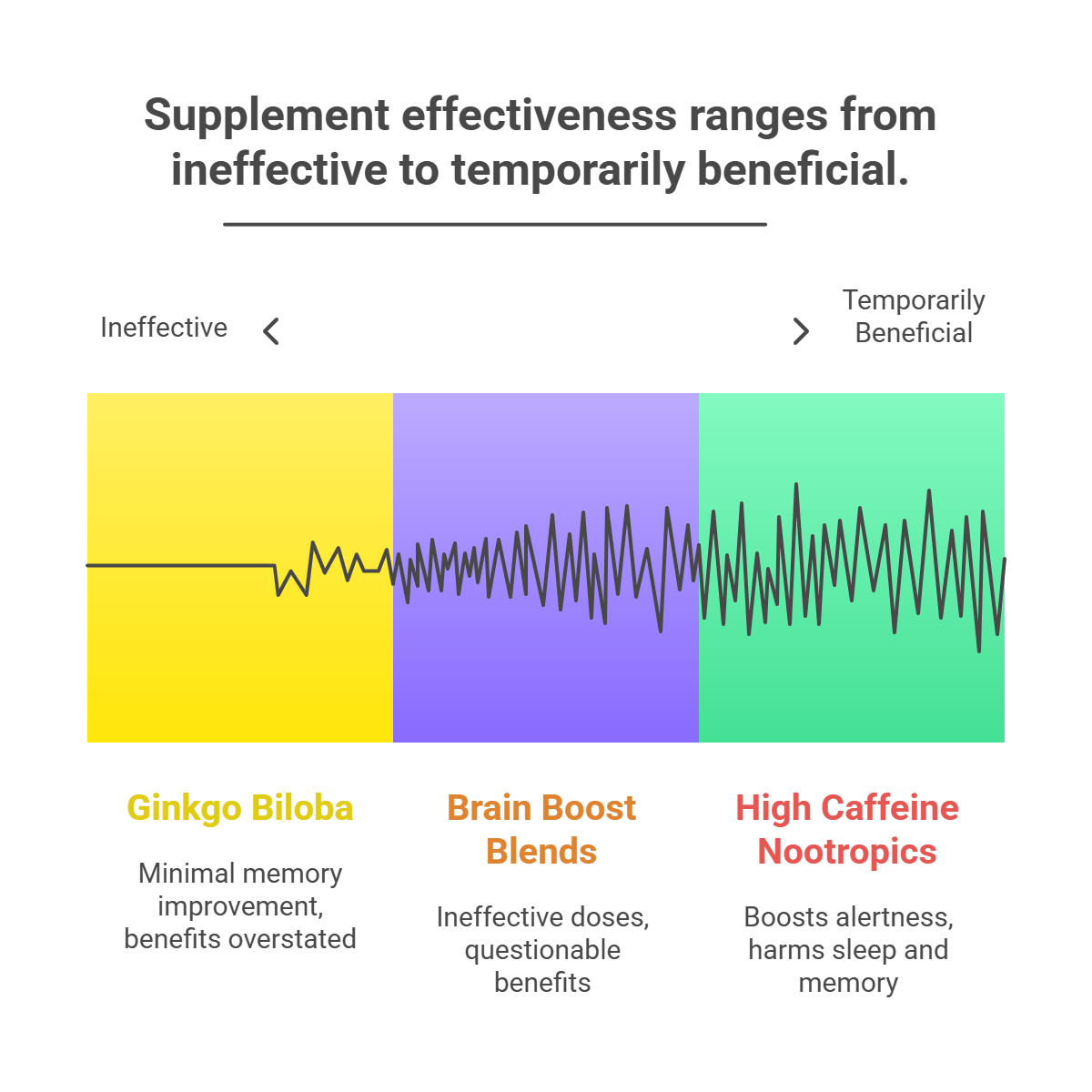

Supplement effectiveness

Building a Strong Foundation for Brain Health

Before jumping into supplements, consider laying a solid foundation with proper nutrition, regular exercise, and adequate sleep. Supplements work best in conjunction with a healthy lifestyle rather than as a quick fix for neglect. Testing for deficiencies, particularly in vitamin D and B12, can provide a clearer path forward. It’s essential to approach supplementation judiciously: introduce one at a time, track changes, and choose quality products from reputable brands.

Final Thoughts: Taking Charge of Your Cognitive Health

By understanding which supplements genuinely support cognitive functions, you can take charge of your brain health with confidence. For optimal results, pair your supplement regimen with a healthy lifestyle. Your brain deserves the best, and taking informed steps can lead to significant cognitive improvements over time. Let's embrace the journey towards sharper memory and better overall mental health!


Disclaimer: The information provided on this website is for general informational purposes only and should not be considered medical advice, diagnosis, or treatment. Always consult a qualified healthcare professional before making any decisions or taking actions related to your health, including but not limited to medical conditions, treatments, diets, supplements, or exercise programs. The content on this site is not intended to replace professional medical guidance. The website and its authors are not responsible for any actions taken based on the information provided. Ask your doctor or licensed medical professional first.

Mental Health Medicines & Supplements

0 Comments

Write A Comment

*
*
Please complete the captcha to submit your comment.
Related Posts All Posts

Side Effects of Valerian Root: What You Need to Know Now

Are you using valerian root for sleep or anxiety without knowing its side effects? Understanding the potential risks of this popular herbal remedy is crucial, whether you’re considering valerian root as a sleep aid, an anxiety solution, or part of your wellness routine. While valerian root is marketed as a “natural” solution, even the most trusted herbal supplements can come with unexpected side effects and adverse effects. Let’s uncover what you need to know about valerian root’s impact—before it impacts you.Understanding the Side Effects of Valerian Root: An Essential GuideAre You Aware of the Side Effects of Valerian Root?The side effects of valerian root are often overlooked by those seeking a gentle, plant-based approach to better sleep and relaxation. However, just like any dietary supplement, valerian root comes with its own set of mild to sometimes serious reactions. Many believe that being “natural” means being “harmless”—but this isn’t always true. Adverse effects, ranging from day-to-day symptoms like drowsiness or a dry mouth to more severe health concerns involving the heart or liver, can occur. Factors such as dosage, duration of use, and potential drug interactions can all influence the type and severity of side effects experienced. Before you take valerian root, it’s imperative to understand these risks and the signs of possible complications to ensure your safety and well-being.Opening Hook: Why Knowing the Side Effects of Valerian Root MattersKnowing the side effects associated with valerian root isn’t just about avoiding discomfort—it’s about protecting your long-term health, especially if you also use other sleep aids, prescription medications, or dietary supplements. The effect of valerian on your body can vary according to individual health factors. Educating yourself puts you in control, allowing you to make informed decisions, prevent drug interactions, and recognize when to seek help from a health care provider. Let’s explore everything you need to know about how valerian root affects the body, so you can use this herbal supplement wisely.What You'll Learn About the Side Effects of Valerian RootComprehensive overview of the side effects of valerian rootPotential risks and adverse effects associated with valerian root as a sleep aidInteractions with other dietary supplements and medicationsExpert-backed recommendations for safe valerian root useValerian Root Overview: Uses, Popularity, and FormsWhat is Valerian Root?Valerian root comes from the plant Valeriana officinalis, native to Europe and parts of Asia. It has a long history as an herbal remedy, used for centuries to treat sleep disorders, anxiety, and even headaches. Today, you’ll find valerian root extract available as a dietary supplement in several forms—capsules, tablets, teas, tinctures, and powders—making it easy to incorporate into daily wellness routines. Unlike pharmaceutical sedatives, valerian is marketed for its mild to moderate calming effects and minimal risk of dependence. However, like many other sleep aids, valerian’s natural status does not eliminate its potential for side effects or adverse interactions.Common Uses: Sleep Aid, Anxiety Relief, and MoreValerian root’s most popular use is as a sleep aid for people experiencing insomnia or poor sleep quality. Several studies and systematic reviews have evaluated the efficacy of valerian root for sleep disorders, with some reporting improvement in sleep duration and quality, and others showing mixed results. Beyond sleep support, valerian root is also used for anxiety relief, stress reduction, and, occasionally, relief of headaches and menopausal symptoms. Its perceived safety as a natural therapeutic agent makes it a top choice in the growing market of dietary supplements. However, questions persist on how the root extract interacts with other prescription medications and whether the benefits outweigh the side effects of valerian root.If you’re interested in how other supplements compare in terms of effectiveness and safety, you might find it helpful to explore the evidence behind fat burning supplements and their real impact on health and weight loss. Understanding the broader landscape of dietary aids can help you make more informed choices about your wellness routine.Valerian Root in Dietary SupplementsToday’s market offers an abundance of valerian root products, often blended with other herbs like melatonin, hops, or passionflower for enhanced sleep quality. As a dietary supplement, valerian root is not strictly regulated by the Food and Drug Administration (FDA), so potency, purity, and recommended dosage can vary widely. This variability makes it even more important for consumers to be aware of possible side effects, adverse effects, and the risk of taking high doses, especially when combined with other supplements or medications. Always review ingredient labels and consult your health care provider before starting any new supplement protocol.Common Side Effects of Valerian RootMild Side Effects of Valerian RootDrowsinessHeadacheDry mouthStomach upsetLike any herbal sleep aid, valerian root is not without its side effects. The most frequently reported reactions are mild and temporary, such as drowsiness (sometimes extending into the morning after use), headache, dry mouth, and digestive discomfort like nausea or stomach upset. These effects typically arise when first starting valerian or when using a higher dosage than recommended. Some users may experience these symptoms more than others, depending on their sensitivity, current medications, or pre-existing conditions. While most mild side effects resolve quickly, ongoing discomfort should be discussed with a health care provider to rule out more serious complications.Exploring the Effects of Valerian: How Side Effects OccurThe effects of valerian on the central nervous system are primarily related to its ability to increase the availability of gamma-aminobutyric acid (GABA), a neurotransmitter that promotes relaxation and sleep. While this mechanism is responsible for valerian’s effect as a sleep aid, it can also induce side effects by slowing brain activity, interfering with alertness, or affecting other neurotransmitter systems. Additionally, impurities in supplements or high doses of valerian root extract can increase the risk of symptoms like dizziness, vivid dreams, or mild mental fog. Understanding the underlying mechanisms helps consumers recognize both the benefit and risk of these popular dietary supplements.Comparison Table: Common Side Effects of Valerian Root and Other Herbal Sleep AidsSide EffectValerian RootOther Sleep Aids (e.g., Melatonin, Chamomile)DrowsinessCommonCommonHeadachePossiblePossibleDry MouthOccasionalRareStomach UpsetPossibleRareVivid DreamsSometimesRareInsight from Medical Expert on the Side Effects of Valerian Root"While valerian root is often considered safe for short-term use, even natural remedies can have adverse effects or interact with other supplements" – Dr. Smith, Clinical PharmacologistSerious and Adverse Effects of Valerian RootAdverse Effects and Drug InteractionsAlthough uncommon, serious adverse effects can occur from valerian root, particularly when mixed with other medicines, alcohol, or high doses of sedative supplements. Reports have linked valerian root with drug interactions that can increase drowsiness, impair liver function, or potentiate the effects of benzodiazepines or prescription sleep aids. Drug administration alongside dietary supplements like St. John’s wort, melatonin, or antihistamines can further elevate the risk of complications. These risks highlight the importance of medical advice when integrating valerian root into your wellness plan, especially if you have underlying conditions or take medications for sleep disorders, mood, or pain management.Rare and Serious Side Effects of Valerian RootLiver damageCardiac disturbancesSevere allergic reactionsRare cases have linked valerian root to liver damage (especially in high doses or with prolonged use), cardiac disturbances like irregular heartbeat, and severe allergic reactions including swelling, rash, or breathing difficulty. Individuals with pre-existing liver or heart conditions are at greater risk, and may require routine monitoring by a health care provider if using valerian. These serious side effects are uncommon, but their possibility underscores the importance of vigilance, dosage control, and prompt discontinuation of the supplement if symptoms develop.Valerian Root Allergies: Itching, Rash, and HypersensitivityWhile generally safe for most, some users are susceptible to allergic reactions triggered by valerian root. Mild symptoms like itching or rash may occur, and in rare instances, severe hypersensitivity reactions (such as anaphylaxis) demand immediate emergency care. If you experience swelling, hives, trouble breathing, or severe skin irritation after taking valerian root, stop the supplement and contact a health care provider right away. If you have a history of allergies to other herbal supplements, consult your physician before starting valerian.Factors Affecting the Side Effects of Valerian RootDosage Considerations and Side Effect RiskThe dosage of valerian is a major factor impacting the risk of side effects and adverse effects. Most studies and supplement manufacturers recommend starting with the lowest effective dose and gradually increasing only as needed under medical supervision. High doses (especially above 900 mg/day of valerian extract) or prolonged use increase the chances of experiencing dizziness, vivid dreams, dry mouth, or even liver toxicity. Age, kidney function, liver health, and concurrent medication use can all affect individual tolerance levels. Always check product labels for concentration, and use a dosage tracker if needed to avoid accidental excessive intake. A health care provider can help determine the best dose for your needs and monitor for any untoward effects.Effects of Combining Valerian Root with Dietary Supplements and MedicationsCombining valerian root with other dietary supplements or medications can amplify sedative effects, leading to excessive drowsiness, impaired coordination, or dangerous respiratory depression. These risks are especially elevated when valerian is mixed with alcohol, prescription sleep aids, antidepressants, anti-anxiety drugs, or other supplements with CNS depressant properties. Drug interactions are not always predictable, and adverse effects may manifest even when each supplement is taken at the recommended dosage. If you’re taking prescription medications, consult your health care provider before starting valerian root or any new dietary supplements to avoid harmful interactions and ensure your regimen supports, rather than undermines, your overall well-being.Who Should Avoid Valerian Root? Health Risks and PrecautionsContraindications and Special PopulationsValerian root is not ideal for everyone. People with a history of liver disease, epilepsy, or severe psychiatric disorders are generally advised to avoid valerian root due to the increased risk of adverse effects, including liver injury and unpredictable interactions with psychiatric medications. Individuals scheduled for surgery or those taking medications metabolized through the liver should also avoid valerian supplements, as the combined effects may complicate anesthesia or recovery. If you fall into any of these categories or have other significant medical conditions, a thorough discussion with your healthcare provider is essential before considering valerian root extract as part of your sleep or relaxation strategy.Children, Pregnant & Breastfeeding Women, and the ElderlySafety data are limited for children, pregnant or breastfeeding women, and the elderly. For these groups, the side effects of valerian root are less understood and potentially more severe due to underdeveloped or declining organ function. No controlled trials have evaluated the long-term safety of valerian root in children or during pregnancy and breastfeeding. Older adults, already at risk of falls and cognitive changes, may experience enhanced drowsiness or confusion. To date, most medical advice recommends avoiding valerian root in these sensitive populations, opting instead for physician-supervised interventions.Is Valerian Root Safe for Long-Term Use?Research Insights: Long-term Safety and Effects of Valerian RootLong-term use of valerian root as a sleep aid or anxiety reliever has not been extensively studied in large-scale controlled trials. Most available research and systematic reviews examine short- to moderate-term use (up to 4-8 weeks), showing mild to moderate efficacy and a generally low risk of dependency. However, concerns have been raised about the possible development of tolerance, diminished effectiveness, and subtle organ toxicity with chronic, high-dose usage. Periodic reassessment with a health care provider is recommended to balance the benefits and potential risks, especially among users considering daily valerian extract supplementation for sleep disorders or ongoing stress management.Best Practices for Minimizing Side Effects of Valerian RootTo mitigate the side effects of valerian root, start with the smallest possible dose, avoid mixing with other sedative agents, and take periodic breaks from supplementation. Use a dosage tracker or smartphone app to help prevent accidental overuse. Report any new or unusual symptoms—especially severe headaches, jaundice, or palpitations—to your health care provider immediately. Only purchase products from reputable brands that detail the concentration and extraction processes of their valerian supplements. Following these simple precautions can enhance safety and allow you to reap the potential sleep or anxiety benefits with less risk.People Also Ask: What should you not take with valerian root?Answer: Medications, supplements, and substances that should be avoided with valerian root to prevent adverse effects and drug interactions.To avoid dangerous interactions and adverse effects, do not combine valerian root with prescription sleep aids (like benzodiazepines, zolpidem), anti-anxiety medications, antidepressants, barbiturates, antihistamines, alcohol, or other supplements and herbs with sedative properties (such as melatonin or kava). Mixing these substances can amplify drowsiness, cause confusion, slow breathing, and may even result in serious health risks. Always review your medications and supplements with a healthcare provider before taking valerian root to ensure safety and avoid unwanted drug administration issues.People Also Ask: Can valerian affect your heart?Answer: A detailed look at the potential cardiac effects of valerian root and risk factors for users with heart conditions.Valerian root’s primary action is to calm the central nervous system, but it may inadvertently affect cardiac function in rare cases. Some reports link high doses or prolonged use with changes in heart rhythm or mild palpitations. Individuals with pre-existing heart conditions or those on cardiac medications should consult their health care provider before starting valerian root, as the risk of cardiac disturbances, though rare, is higher in these populations. Monitoring for palpitations, chest pain, or unusual heart symptoms is recommended, and users experiencing these effects should discontinue valerian and seek medical care promptly.People Also Ask: Is valerian root safe to take every night?Answer: Examining the safety of daily use and the possible cumulative side effects of valerian root as a sleep aid.While valerian root is marketed as a mild, non-addictive sleep aid, taking it every night for an extended period may increase the risk of mild to moderate side effects, reduced effectiveness, or rare cases of organ toxicity. Most experts recommend limiting use to occasional or short-term support unless otherwise directed by your care provider. Periodic breaks, dose adjustments, and ongoing assessment can help prevent tolerance or the build-up of adverse effects. Always consult with your health care provider if you plan to use valerian root nightly, especially if you have underlying health concerns.People Also Ask: Can valerian root cause itching?Answer: Discussion about allergic reactions like itching and when to consult a healthcare provider.Yes, valerian root can rarely trigger allergic reactions, with symptoms like itching, skin rash, or, in extreme cases, hives and swelling. These effects often manifest soon after your first dose or subsequent exposures. If itching occurs, stop taking the supplement and reach out to your health care provider for evaluation. Severe or rapidly progressing allergic symptoms, including difficulty breathing or throat swelling, require emergency medical attention.FAQs on the Side Effects of Valerian RootHow quickly do side effects occur after taking valerian root?Side effects often appear within 1-2 hours after taking valerian root, particularly drowsiness, headache, or stomach upset. Allergic reactions can occur even faster. If you notice unusual symptoms soon after a dose, monitor closely and consult a healthcare provider if symptoms worsen.Are there any foods to avoid while taking valerian root dietary supplements?While no specific foods are universally contraindicated, it’s wise to avoid alcohol, excessive caffeine, and other sedative foods or ingredients that could compound valerian’s calming effects or interact unpredictably with its active compounds.Is valerian root addictive?Valerian root is not known to cause physical dependence or addiction. However, psychological reliance is possible if you routinely use it for sleep without addressing the root cause of sleep disorders. Rotate supplements and consult a sleep specialist for persistent issues.Does valerian root interact with prescription sleep aids or other medications?Yes, valerian root can interact with a variety of prescription sleep aids, medications for anxiety or depression, muscle relaxants, and some pain medications. Drug interactions can increase sedation or cause unpredictable effects—always consult your healthcare provider.Key Takeaways on the Side Effects of Valerian RootAlways consult your healthcare provider before starting valerian rootMonitor for side effects of valerian root like dry mouth, headache, and dizzinessAvoid combining valerian root with other sleep aids or medications without guidanceAllergic reactions and rare side effects of valerian root require immediate medical attentionConclusion: Making an Informed Choice About Valerian Root and Its Side EffectsBalanced View: Weighing the Benefits and Side Effects of Valerian RootValerian root can be a helpful tool for improving sleep quality and managing mild anxiety, but staying mindful of possible side effects is key to safe and effective use. The best results come when you combine informed caution with professional guidance.Final Thoughts: Safe Use and Next StepsTalk to your healthcare provider before trying valerian root, monitor for any unusual effects, and use the supplement sparingly to enjoy its benefits with confidence and safety.If you’re seeking a more holistic approach to your overall well-being, consider exploring time-tested natural remedies that address not just sleep, but also chronic discomfort and daily vitality. Our in-depth guide on holistic solutions for back pain using ancient remedies offers practical strategies and insights that can complement your journey toward better health. By broadening your understanding of natural therapies, you empower yourself to make choices that support both immediate relief and long-term wellness.Take Charge of Your Health: Learn More About Side Effects of Valerian Root and Safer AlternativesYour health is your priority. Research thoroughly, discuss with professionals, and consider all alternatives to ensure the best outcome on your wellness journey.Sourceshttps://ods.od.nih.gov/factsheets/Valerian-HealthProfessional/https://www.nccih.nih.gov/health/valerianhttps://www.sleepfoundation.org/sleep-aids/valerian-roothttps://www.mayoclinic.org/drugs-supplements-valerian/art-20364674When considering valerian root for sleep or anxiety relief, it’s essential to be aware of potential side effects. The article “4 Potential Side Effects of Valerian Root” from Healthline outlines that valerian root may cause vivid dreams, heart palpitations, dry mouth, and upset stomach, especially at higher doses. (healthline.com) Additionally, the Mayo Clinic’s article “Valerian: A safe and effective herbal sleep aid?” highlights that while valerian may help improve sleep quality, it can also lead to headaches, dizziness, and stomach problems in some individuals. (mayoclinic.org) If you’re considering valerian root, these resources provide valuable insights into its potential side effects and safety considerations. NCWellnessHub.com

The Steady Anchor: Why Building Stable Self-Worth Matters More Than Being Happy

Ready to anchor your life in lasting value? This comprehensive guide explores how building stable self-worth can help young adults navigate social media pressures, overcome negative thoughts, and build enduring mental health—with real-life examples, therapy techniques, and expert insights to back you upRethinking Happiness vs. Building Stable Self-Worth for Young AdultsWhat if happiness is fleeting but building stable self-worth endures?"Happiness depends on happenings; self-worth depends on something deeper."For young adults feeling lost in the pursuit of happiness, it’s time to consider something more substantial. While happiness can make us feel good in the moment, those feelings are often shaped by external factors—grades, likes on social media, or approval from friends. In contrast, building stable self-worth serves as your emotional anchor.Imagine having a healthy sense of personal worth that isn’t easily shaken by rejection or setbacks. This foundational confidence comes from your core beliefs, not passing moments. In this article, we’ll show you why investing in stable self-worth is the true game-changer for resilience, mental health, and personal growth as a young adult.“A more genuine and stable self-worth is based upon validating, affirming, and valuing ourselves as we are.” — Leon F. Seltzer, PhD, psychologistWhat You'll Learn About Building Stable Self-WorthThe difference between happiness and stable self-worthPractical steps to nurture core belief systemsHow young adults can resist the negative impact of social mediaIntegrating cognitive behavioral therapy and behavioral therapy techniquesHow childhood experiences shape self-worthDefining Building Stable Self-Worth: Core Belief Foundations for Young AdultsWhat Is Stable Self-Worth?Stable self-worth is an internal measure of your value that remains steady even as life’s circumstances change. Unlike happiness, which tends to be temporary or driven by external validation, building stable self-worth is rooted in how you see yourself at the core—your core belief system. For young adults, developing this means understanding that your value doesn’t fluctuate based on your latest achievement or mistake. Instead, a healthy sense of self-worth is about believing you have lasting worth, regardless of the ups and downs of daily life.When you have stable self-worth, you build emotional resilience. Challenges like academic pressure, social media comparisons, or relationship setbacks are less likely to shake your confidence. You’re anchored by an internal dialogue that tells you, “I matter, just as I am.” This makes you resilient against anxiety, depression, and feelings of inadequacy that so often affect young adults today. Ultimately, building stable self-worth means you’re not just feeling good in happy moments—you’re equipped to stand strong, even in tough times.As you work on strengthening your core beliefs and emotional resilience, it’s also important to recognize how your daily habits and environment can influence your mental health. For example, the foods you choose can have a surprising impact on your brain chemistry and emotional well-being—explore how nutrition supports mental wellness in this guide to how food changes your brain chemistry.How Core Beliefs Influence Your Self-WorthYour core beliefs are the deep-seated assumptions you hold about yourself, others, and the world. These beliefs—often shaped by childhood experiences, family values, and formative events—directly impact your sense of self-worth. If those beliefs are positive (“I am enough,” “My mistakes don’t define me”), your self-worth remains strong, even when you face criticism or setbacks. But negative beliefs (“I must be perfect to be valued,” “Failures mean I’m not good enough”) can lead to a fragile sense of worth, easily hurt by everyday challenges.“Your worth, your ability to experience joy, happiness, and love is inherent in you. You are worthy right now as you are, achievements or no achievements. You were worthy of love from the moment you were born.” — David Tian, PhD, psychotherapist and psychologistFor young adults, becoming aware of these core beliefs is the first step in creating a stronger sense of personal worth. Reflecting on your internal dialogue—those automatic thoughts and feelings that pop up when you succeed, fail, or are rejected—can reveal what you truly believe about yourself.With support from cognitive behavioral strategies or therapy, you can start to challenge negative thought patterns and reinforce healthier core beliefs that support stable self-worth.The Young Adult Perspective: Navigating Social Media and Self-Value"Stable self-worth is not what you own or achieve, but who you believe you are."Social media puts young adults on a constant stage, comparing likes, looks, and lifestyles. These virtual interactions can make personal worth seem tied to digital approval. Instead, building stable self-worth means learning to separate your value from these external measures. Managing the pressures of social media involves setting boundaries, being mindful of your triggers for negative thoughts, and consciously unfollowing accounts that spark feelings of inadequacy.Navigating this digital landscape with a resilient sense of self makes a real difference. It helps you recognize that your worth isn’t dictated by what you post, how many followers you have, or how you measure up to someone else’s highlight reel. Stable self-worth empowers you to feel good from within—and protects your mental health, even when social media trends shift.Temporary Happiness vs. Building Stable Self-Worth: A Comparison TableAspectTemporary HappinessBuilding Stable Self-WorthSourceExternal events & achievementsInternal beliefs & core valuesDurationShort-livedLong-term stabilityImpact on Mental HealthBrief uplift, vulnerable to setbacksStronger emotional resilience, protects against anxiety and depressionInfluence of Social MediaHigh—driven by likes, comments, validationLow—defined by inner confidenceRole in Personal GrowthLittle; can discourage effort after setbacksEncourages learning, growth, and self-acceptanceFulfillmentSuperficial & fleetingDeep & lastingWhy Building Stable Self-Worth Is Critical for Mental Health in Young AdultsProtecting Against Anxiety and DepressionYoung adults experience high rates of stress, anxiety, and depression—often because their sense of worth rises and falls with grades, relationships, or social likes. Building stable self-worth serves as a buffer, protecting against these mental health struggles.When you see your value as intrinsic, you’re less likely to be shaken by external events or the critical inner voice that fuels negative thought cycles. A steady anchor of self-worth offers emotional resilience, helping you manage setbacks without spiraling into self-doubt or despair.Research shows that individuals with a healthy sense of personal worth experience fewer symptoms of anxiety and depression because they interpret challenges as opportunities for personal growth—not as proof of their inadequacy. Journaling, reflecting on positive affirmations, and talking through tough emotions are all practical ways to reinforce your core belief that you are worthy, regardless of your circumstances.The Science: Neurological and Psychological Benefits"Stable self-worth is the best immunity for your mental health."Neuroscientific studies reveal that people with stable self-worth activate neural pathways associated with self-regulation and emotional control more efficiently. This means young adults who consistently nurture their core beliefs about self-worth are better able to calm their nervous systems, process setbacks, and avoid the chronic stress that erodes mental health. Over time, practicing positive affirmations, reframing negative beliefs, and cultivating self-compassion physically reshape brain circuits for well-being.“Self-compassion is unconditional, free of judgement, and focused on accepting ourselves as we are. Thus, self-compassion provides a more stable and sustainable foundation for self-love.” — Optimum Joy Counseling clinicians (licensed therapists)Psychologically, stable self-worth fosters a positive feedback loop: the more you practice seeing your value in everyday moments, the stronger your emotional resilience, confidence, and long-term mental health become. Behavioral therapy and cognitive behavioral techniques are especially effective for reinforcing these benefits in young adults, offering tools to consciously challenge old thought patterns and adopt new, healthier narratives of self-value.Building Stable Self-Worth Through Childhood Experiences and Their Lasting ImpactChildhood Experiences as the Bedrock of Core BeliefsOur earliest experiences—how we were treated by caregivers, celebrated for effort, or soothed after failure—plant the seeds of our self-worth. Childhood experiences form the bedrock of our core beliefs about ourselves. When young adults grow up in supportive environments that encourage exploration and affirm intrinsic worth, they are far more likely to develop a stable, healthy sense of personal value.Unfortunately, negative or neglectful backgrounds can instill deep-seated doubts, negative beliefs, or feelings of inadequacy. Still, those patterns can be changed. Recognizing how past experiences influence your present thought patterns is the first step toward rewriting your internal dialogue and building a stronger sense of self-worth.Overcoming Past Mistakes and Negative ThoughtsNo one grows up without making mistakes or internalizing negative thoughts. But stable self-worth comes from learning to see past mistakes as opportunities for learning—not proof of your inadequacy. Thought patterns developed in childhood can often drive anxiety, perfectionism, or an overly critical inner voice. With conscious effort, young adults can use behavioral therapy, positive affirmations, and self-reflection to challenge negative beliefs and replace them with supportive core beliefs.A practical step is regular journaling about negative thoughts and actively reframing them: if you catch yourself thinking, “I always mess up,” try challenging that with, “Everyone makes mistakes, and I can learn from them.” Over time, these new beliefs become the steady foundation for your personal worth and lasting confidence.“Embracing your unconditional self-worth is a foundation for making an impact on the world. Focusing on trying to prove our worth is a distraction that can keep us from doing what we are truly here to do in this life.” — Adia Gooden, PhD, licensed clinical psychologistReal Personal Experience: Turning Past Pain into Lasting ValueReal change often begins with one personal experience—a setback, a moment of vulnerability, or an honest reflection. Many young adults have used therapy or trusted mentors to address past pain and transform it into a source of strength. By focusing on growth over perfection and viewing each hurdle as a building block, you can turn yesterday’s challenges into tomorrow’s confidence.Keep in mind, your journey from negative thought patterns and feelings of inadequacy to healthy self-worth is a testament to your resilience. Each time you respond to difficulty by reaffirming your value and practicing self-compassion, you anchor yourself more deeply in stable self-worth.The Detrimental Effects of Social Media on Stable Self-Worth in Young AdultsComparisons and Self-Esteem: Unpacking the ConsequencesSocial media has become a powerful force shaping young adults’ perceptions of themselves. When your self-worth hinges on external validation—likes, comments, and shares—every scroll exposes you to a highlight reel that can trigger feelings of inadequacy. Research links frequent social comparison on these platforms to increased anxiety, negative thoughts, and even depression.Internal dialogue often turns negative after seeing carefully curated posts of seemingly perfect lives. It’s crucial to remember: these snapshots don’t reflect the full story, nor do they determine your worth. Building stable self-worth means understanding that the number of followers or reactions can’t replace your intrinsic value and focusing your attention on real, meaningful self-connection.Practical Strategies: Setting Boundaries & Digital DetoxTo reclaim your value from social media’s influence, practice setting boundaries around usage. This might mean limiting screen time, silencing notifications, or unfollowing accounts that spark negative beliefs or thought patterns. A digital detox—even a short one—can help you realign with your sense of self and ease the split focus that often undermines self-worth.Try replacing time spent scrolling with activities that reinforce your core beliefs, such as journaling, reading, reconnecting with friends offline, or volunteering. These real-world connections ground you in authentic relationships and achievements that truly matter. Remember: your value thrives when it’s measured by your own standards, not the fleeting metrics of social media.Breaking the Cycle: Cognitive Behavioral Therapy and Behavioral Therapy for Building Stable Self-WorthWhat Is Cognitive Behavioral Therapy for Self-Worth?Cognitive behavioral therapy (CBT) is a proven approach for helping young adults identify and reshape negative beliefs about themselves. CBT works by challenging the automatic negative thought patterns that undermine self-worth and replacing them with realistic, supportive beliefs. Through structured sessions, you learn to recognize distorted thinking, keep a journal of your thoughts and feelings, and practice positive affirmations to reinforce a healthier sense of value.Many therapists use CBT to help clients unpack the influence of past experiences and the critical inner voice on their present self-image. Over time, these techniques foster a stronger, more consistent core belief system, empowering you to withstand setbacks and build a lasting sense of self-worth.Using Behavioral Therapy to Challenge Negative Thought PatternsBehavioral therapy focuses on encouraging positive behavioral change by creating new, supportive habits. For young adults, this could mean gradually facing situations that trigger negative thoughts, practicing self-affirmations out loud, or deliberately engaging in activities that promote personal growth. With each conscious action, you gather evidence for your brain that “I am capable, resilient, and worthy,” gradually weakening the grip of old, negative thought patterns.Integrating cognitive and behavioral therapy methods is especially powerful for building stable self-worth. Cognitive techniques help target persistent negative thoughts, while behavioral approaches support real-world changes in how you act and react, reinforcing your healthy sense of personal value.Cognitive techniques to address persistent negative thoughtsBehavioral therapy methods for cultivating core belief changePractical Steps for Building Stable Self-Worth Every DayRecognize and challenge negative thoughts regularlyPractice daily self-affirmations rooted in core beliefsSet boundaries with toxic influences—including social mediaFocus on progress over perfection when processing past mistakesEngage in activities that promote personal growth and positive mental healthPracticing these daily steps shifts your focus from fleeting happiness to steady self-worth. By becoming aware of your internal dialogue, replacing negative beliefs with empowering ones, and protecting your mind from toxic influences, you anchor your confidence in something lasting. Simple rituals—like writing down daily achievements, setting boundaries with harsh critics, and celebrating personal milestones—reinforce stable self-worth.Remember, the journey isn’t about reaching perfection but about progress. Each positive action, affirmation, and boundary draws you closer to the resilient, confident person you’re meant to be.The Role of Support Systems in Building Stable Self-Worth for Young AdultsSeeking Mentorship and Positive Role ModelsStable self-worth flourishes in healthy environments. Having mentors, trusted adults, or older peers to turn to provides invaluable encouragement and perspective for young adults on their journey. Positive role models can gently challenge your negative self-talk and offer new ways to see yourself—especially during moments of self-doubt. Being part of a community where self-worth comes from participation, kindness, and authenticity creates a safe space to nurture your core beliefs.If you’re seeking to build your own support system, consider joining peer groups, after-school programs, or volunteering. Not only does this expand your social circle, but these experiences also affirm your value based on character—not external achievements.Community, Therapy, and Group Work"Your environment determines the shape of your self-worth."Individual therapy, group work, and community engagement all play a pivotal role in reinforcing stable self-worth. In group therapy, young adults can share stories, swap coping strategies, and learn from personal experience—showing that confidence is built over time and setbacks are shared, not solitary.Whether your support comes from therapy, school counselors, or close friendships, making your environment one of acceptance and understanding is a powerful way to strengthen your self-worth. Over time, this collective reinforcement makes it easier to maintain healthy beliefs and challenge negative thought patterns.Key Challenges to Building Stable Self-Worth in Modern LivingPressure from Academic and Career DemandsAcademic and career pressures often push young adults to tie their sense of value to performance. The realities of deadlines, competition, and expectations can trigger a spiral of negative thoughts, especially when things don’t go as planned. Failing a test or being passed over for a job isn’t a reflection of your worth—it’s part of the journey.Building stable self-worth here means celebrating effort as much as results, reframing failures as learning moments, and separating self-value from achievements. When you view challenges as growth opportunities, you lay the groundwork for sustained personal and professional confidence.“The more you work on your relationship with yourself, the more you will be able to do vulnerable things, and pick yourself up when you inevitably fall.” — Adia Gooden, PhD, clinical psychologistNavigating Failures, Rejection, and Past MistakesPerfectionism: Setting unrealistically high standards for selfComparison: Measuring worth against others’ achievementsNegative internal dialogue: Persistent self-criticismFear of rejection: Believing mistakes make you unworthySocial isolation: Believing you don’t belongNegative thought cycles are often set off by these common triggers, but stable self-worth is your best defense. Accepting that everyone makes mistakes, and using each as motivation for growth, helps break the cycle of self-judgment. Over time, the sting of setbacks fades, replaced by a deeper trust in yourself and your journey.Building stable self-worth means not letting your critical inner voice define you—your past doesn’t predict your future.Real Stories: Young Adults Overcoming Negative Thought PatternsPersonal experience: Learning from setbacks and mental health journeysHearing real stories from peers who have overcome negative thought patterns and built lasting confidence proves that change is possible. Whether it’s a young adult who struggled with perfectionism or one who found stability after a tough childhood, these journeys are a source of inspiration and hope. Their success isn’t measured by being happy every day—but by having an unshakeable, stable sense of self-worth, ready to face whatever comes next.Maintaining Building Stable Self-Worth: Long-Term Core Belief PracticesConsistency in Core Belief ReinforcementBuilding and maintaining stable self-worth requires regular reinforcement of positive core beliefs. Practice daily affirmations, track your achievements (no matter how small), and revisit your progress every month. These habits prevent setbacks from eroding your confidence over time and help rewire your brain for resilience and positivity.Set reminders to check in with yourself, especially after facing criticism or failure. Each conscious effort to support your healthy sense of worth builds emotional muscle that strengthens you for the long haul.Ongoing Self-Reflection and Self-AcceptanceAsk yourself: “What am I proud of today?” “What did I learn from this mistake?” Practice self-acceptance by embracing your imperfections—and seeing them as opportunities for growth, not reasons for self-doubtGrowth is gradual. Celebrate every moment you choose compassion over criticism—you’re affirming the core belief that you are enough, just as you are.People Also Ask: Answers to Common Questions about Building Stable Self-WorthWhat are the 3 C's of self-esteem?The 3 C’s of self-esteem are Confidence, Competence, and Connection. Confidence refers to believing in your abilities and value. Competence means trusting your skills through experience and effort. Connection is about building healthy relationships with others and feeling a sense of belonging—each reinforces stable self-worth.How to build a strong sense of self-worth?To build strong self-worth, identify and challenge negative thought patterns, practice positive affirmations daily, and cultivate supportive relationships. Engage in activities that excite and fulfill you. Setting personal boundaries, especially with social media and toxic influences, also helps maintain a healthy sense of value.What is the root cause of low self-worth?The root cause of low self-worth often lies in negative childhood experiences, repeated criticism, or comparison. When criticism is internalized as a core belief, it becomes a critical inner voice. Therapy and conscious self-reflection can help identify and shift these underlying beliefs.How to build stable self-esteem?Building stable self-esteem requires consistent self-reflection, setting realistic goals, and reframing self-critical thoughts into positive affirmations. Engage in cognitive behavioral therapy or behavioral therapy to address persistent negative beliefs, and build a diverse support system to encourage growth and acceptance.Summary of These AnswersStable self-worth and self-esteem are built on recognizing your value, actively challenging negative thoughts, and surrounding yourself with supportive mentors and peers. Change takes time, but each step toward self-acceptance matters.List: Quick Tips for Building Stable Self-WorthReject perfectionism; embrace growth.Reframe past mistakes as growth opportunities.Lean on supportive relationships.Practice gratitude for personal achievements.Limit social media to reduce negative thoughts.FAQs about Building Stable Self-WorthWhat is the fastest way to build self-worth? – Daily positive affirmations and challenging negative self-talk can quickly boost stable self-worth. Long-term change is built with consistency.How does building stable self-worth affect mental health? – It acts as a buffer against anxiety and depression, creating emotional resilience, especially for young adults.Is stable self-worth possible after traumatic childhood experiences? – Yes, with therapy, support systems, and conscious practice, anyone can develop stable self-worth over time.Does building stable self-worth improve relationships? – Absolutely; healthy self-worth supports healthier boundaries and deeper, more authentic connections.How can behavioral therapy reinforce stable self-worth? – By encouraging new habits, challenging negative beliefs, and providing practical exercises to anchor your personal value.Key Takeaways: Building Stable Self-Worth vs. HappinessStable self-worth provides resilience and lasting fulfillment.Happiness is often temporary; self-worth is foundational.Cognitive and behavioral therapy, positive core beliefs, and supportive environments all play a role.Final Thoughts on Building Stable Self-Worth: The Steady Anchor for Young Adults"Anchor your worth; happiness will follow."Remember that investing in your self-worth is a lifelong journey and pays dividends across mental health, relationships, and overall life satisfaction.If you’re inspired to continue your journey toward greater self-worth and holistic well-being, consider exploring how healing from the past can open doors to deeper connections in every area of life.Discover essential steps for building meaningful relationships and unlocking love after personal growth in this in-depth article on finding love after healing.By integrating emotional healing with self-worth practices, you’ll be better equipped to foster authentic connections and lasting fulfillment. Take the next step and see how your inner transformation can positively impact your relationships and your future.Find more quality content at: NCWellnessHub.comArticle SourcesPsychology Today – https://www.psychologytoday.com/us/basics/self-esteemNational Institutes of Health – https://www.ncbi.nlm.nih.gov/pmc/articles/PMC6422462/Anxiety and Depression Association of America – https://adaa.org/understanding-anxiety/related-illnesses/other-related-conditions/low-self-esteem

What is Passive Aggressive Behavior in Relationships? Find Out Now

Ready to identify these hidden signs and transform your interactions for the better? Let's explore the impact it has and how to overcome itUnveiling Passive Aggressive Behavior in RelationshipsPassive aggressive behavior in relationships is a hidden force that can quietly erode trust, create emotional distance, and sabotage genuine communication, making it a critical issue to address in any romantic relationship. Unlike overt aggression, passive aggression masks itself behind indirect behaviors—such as silent treatment, procrastination, or backhanded compliments.If you've ever felt confused by your partner’s mixed messages or sensed resistance without open conflict, you're likely encountering passive aggressive patterns, a common sign of passive aggression in romantic relationships. Understanding the roots, signs, and impacts of this behavior is crucial for fostering authentic connections and navigating challenges within a romantic relationship or any close partnership.In this comprehensive guide, we’ll break down what passive aggressive behavior in relationships really means. We’ll examine how it differs from direct aggression, explore psychological origins, and offer proven advice on recognizing, responding to, and overcoming these patterns. Whether you’re on the receiving end or suspect these tendencies in yourself, knowledge is the first step toward healthier ways of relating. Let's dive in for clarity, insight, and actionable solutions.What You'll Learn About Passive Aggressive Behavior in RelationshipsDefinition of passive aggressive behavior in relationshipsRecognizing signs of passive aggressive aggressionExamples of passive aggressive behavior in adultsThe root causes and psychological backgroundImpacts on romantic relationshipsEvidence-based strategies to respondResearch-backed insights and expert commentaryDefining Passive Aggressive Behavior in RelationshipsPassive aggressive behavior involves expressing negative feelings, anger, or resentment indirectly rather than openly addressing the issue, which distinguishes it from more overt aggressive behavior. In relationships, this often means avoiding direct confrontation about frustrations. Instead, one partner may hide their anger through actions like procrastination, sulking, deliberate forgetfulness, or subtle digs that undermine the other person emotionally. This negative behavior can quietly escalate, damaging trust and making open dialogue increasingly difficult.The core of passive aggressiveness lies in its covert nature—hiding hostile or resentful feelings behind a façade of compliance or indifference. Unlike aggressive people, who fail to show restraint in expressing anger, the passive aggressive individual relies on psychological manipulation and plausible deniability. This creates an environment where the recipient feels hurt, confused, or inadequate but cannot directly address the problem, leading to cycles of frustration for both partners.It's important to note that passive aggressive patterns often emerge or intensify during periods of heightened stress, which can impact both emotional responses and communication styles. If you're interested in understanding how stress manifests physically and emotionally, you may find it helpful to explore key wellness insights on recognizing the signs your body is stressed and how this awareness can support healthier relationships.Passive Aggress vs. Aggressive Behavior: Key DifferencesAspectPassive Aggressive BehaviorAggressive BehaviorExpression of AngerIndirect, hidden, subtle actions (e.g., sulking, procrastination)Direct, open, often verbal or physical outburstsCommunication StyleAvoids confrontation, relies on hints or sarcasmConfrontational, blunt, unambiguousImpact on PartnerCauses confusion, distrust, emotional withdrawalCreates fear, hurt, and sometimes resentmentResolutionIssues remain unresolved, cycle may repeatMay lead to temporary, dramatic conflict and faster resolutionPsychological Roots: Why Passive Aggressive Behavior Develops in RelationshipsUnderstanding the roots of passive aggressive behavior in relationships is key to addressing and overcoming it. According to clinical psychologists, passive aggression often develops in environments where direct confrontation is discouraged or even punished. Individuals may learn early on that openly expressing anger or negative feelings is unsafe or unacceptable, leading them to find indirect ways to communicate their resentment or opposition. Family dynamics, cultural expectations, or previous experiences of emotional abuse can contribute to this coping mechanism.Research also links passive aggressive tendencies to certain personality traits, mental health issues, or underlying fears—such as a fear of losing control within relationships. For some, indirect behavior is an attempt to avoid hurt or protect oneself from perceived emotional threats. Unfortunately, these patterns, while intended as self-protection, often result in loneliness and isolation, undermining the relationship’s foundation of trust and mutual respect."Passive aggressive tendencies often arise from environments where direct communication is discouraged or unsafe." — Dr. Lisa Moritz, Clinical PsychologistCommon Signs of Passive Aggressive Behavior in RelationshipsRecognizing the signs of passive aggressive behavior is essential for stopping its damaging cycle and improving communication in romantic relationships. Common manifestations in relationships include the infamous silent treatment, where one partner withdraws emotionally and refuses to communicate. Other behaviors involve intentional procrastination—delaying tasks or responsibilities to express resistance without outright saying “no.”Backhanded compliments and sarcasm are forms of disguised hostility, while deliberate forgetfulness—such as “forgetting” an anniversary or important task—becomes a subtle way to convey discontent. Some may withhold affection or refuse to engage in meaningful conversation as a form of covert punishment. The results are always the same: confusion, emotional pain, and a growing divide between partners.Silent treatmentIntentional procrastinationBackhanded complimentsDeliberate forgetfulnessWithholding affection or communication"You may be experiencing passive aggressive behavior if you feel confused by mixed messages or notice chronic subtle resistance to requests," notes Dr. Josh Nguyen, Relationship Therapist.Spotting Passive Aggressive Behavior in Romantic RelationshipsDistinguishing between occasional irritability and chronic passive aggressiveness in a romantic relationship can be tricky. In early stages, these patterns might look like minor annoyances—missed texts, forgotten plans, or sarcastic remarks.Over time, however, the signs of passive aggressiveness become more pronounced: persistent avoidance of direct communication, regular withholding of affection, and repeated procrastination around important relationship commitments. These behaviors create an environment of emotional ambiguity, where one partner may feel they “can’t win” or are walking on eggshells.Spotting passive aggressive behavior in relationships also means noticing when conflicts never seem fully resolved, a key indicator of passive aggressiveness that can harm emotional intimacy. Instead of healthy discussion, issues surface as grudges, resentment, or emotional withdrawal. The result is a partnership eroded by psychological manipulation and a sharp decline in intimacy and trust. Recognizing these patterns early is vital for choosing healthier ways to relate and communicate.Signs of Passive Aggressive in Romantic PartnershipsIn romantic partnerships, signs of passive aggression can be subtle yet deeply damaging. One partner may commonly “forget” important matters, dodge tough conversations, or agree to things and then undermine them indirectly. These repeated negative behaviors—masked as harmless mistakes or jokes—chip away at connection and build frustration.The receiving end is often left feeling hurt, puzzled, and dissatisfied without a clear way to address the issues. When passive aggressive tendencies persist, resentment grows, and communication breaks down, making it harder to rebuild trust.Aggressive People vs. Passive Aggressive IndividualsDirectness vs indirectnessOpen hostility vs covert manipulationImpact on communication and trustWhile aggressive people express anger openly, often in ways that can intimidate or emotionally harm others, those who are passive aggressive hide their anger behind subtle actions, making passive aggression harder to detect but equally damaging. Aggressive behavior may result in major confrontations, but at least the issues are out in the open and can be addressed.Passive aggressiveness, conversely, breeds chronic resentment and emotional distance, as the problems remain hidden and unresolved. This indirectness erodes communication and trust over time, jeopardizing the health of any romantic relationship."Aggressive behavior is unmistakably direct, while passive aggression hides behind plausible deniability," says Dr. Monica Patel, Marriage Counselor.Examples: How Passive Aggressive Behavior Manifests in AdultsPassive Aggressive Behavior in Daily Adult InteractionsPassive aggressive behavior in adults can play out in many ordinary scenarios, demonstrating how passive aggression manifests beyond just romantic relationships. Imagine a partner who, after a disagreement, delivers a sarcastic remark like, “Well, I guess you know best.” Or the spouse who agrees to do the dishes, only to “forget” consistently, quietly expressing annoyance instead of voicing it.In long-term relationships, these patterns grow more elaborate—a partner might intentionally delay responding to messages, drag their feet on joint projects, or use backhanded compliments as a way to dent self-esteem.These behaviors don’t just stem from laziness; they’re negative ways to express anger or assert power without risking direct confrontation. Chronic passive aggressiveness can escalate to acts of psychological manipulation or emotional abuse, especially when left unaddressed in the home or in public settings.Case vignette of passive aggressive behavior in a marriage or long-term relationship."A sarcastic remark after a disagreement or forgetting to do a chore on purpose are classic adult examples," shares Ellen Reed, Licensed Social Worker.The Impact of Passive Aggressive Behavior on RelationshipsPassive aggressive behavior in relationships chips away at emotional connection and mutual respect, often leading to long-term relationship distress and decreased trust. Partners on the receiving end of silent treatments, subtle sabotage, or chronic withholding of affection can feel isolated, powerless, or anxious. Over time, this negative behavior undermines trust and communication, making it harder to resolve conflicts or feel secure with one another. Passive aggressiveness is also linked to mental health challenges, such as anxiety or depression, for both partners.Research shows that persistent passive aggressive patterns often lead to recurrent cycles of unresolved grievances and emotional withdrawal. When partners fear losing control or expressing anger openly, they may resort to indirect, negative strategies. Eventually, the relationship may experience loneliness and isolation, emotional abuse, or even a complete breakdown in intimacy. Prompt recognition and intervention can prevent these long-term consequences and restore healthier ways of relating."Long-term passive aggressiveness erodes emotional intimacy and increases relationship distress," reports Dr. Nisha Banerjee, Couples Researcher.Recognizing Passive Aggressive People: Character Traits and PatternsSpotting passive aggressive people requires looking for patterns that go beyond an occasional bad day, including chronic passive aggressiveness and subtle signs of passive aggression. Key character traits include chronic criticism masked as humor, where joking comments are used to undermine others or disguise negative feelings. Moodiness that’s out of proportion or disconnected from the current situation may reflect ongoing resentment being hidden beneath the surface.These individuals often use deflection tactics—changing the subject or making excuses—when asked to discuss problems or feelings directly. Recognizing these patterns is the first step to setting healthy boundaries and encouraging more open, honest communication within your relationships.Chronic criticism masked as humorMoodiness disconnected from situationsFrequent use of deflection tacticsThe Cycle of Passive Aggressiveness in RelationshipsPassive aggressiveness in relationships usually develops into a repetitive, destructive cycle that undermines trust and communication, making it vital to recognize and address passive aggressive behavior early. Here’s how it unfolds: One partner, fearing direct confrontation or anxious about losing control, suppresses their true feelings. Instead of voicing concerns, they express anger or resentment through indirect actions—delayed responses, withdrawal, or subtle sabotage.The other partner, unable to address the real issue, becomes frustrated and feels emotionally abused or confused. This leads to further withdrawal on both sides, escalating emotional distance and reinforcing the negative cycle.Escaping this cycle requires both awareness and a willingness to adopt healthier ways of expressing needs and resolving conflict. If not addressed early, passive aggressive cycles can result in lasting damage and drive a permanent wedge between partners. Open communication and professional support can break the chain and restore connection.Passive Aggressive Behavior in Relationships: Long-Term ConsequencesIf passive aggressive behavior is left unchecked, the repercussions on romantic relationships can be serious. Chronic passive aggression leads to constant unresolved tension and decreases emotional safety. Partners may begin to feel unworthy, anxious, and distrustful, leading to a loss of intimacy and connection.Over time, these patterns may constitute emotional abuse, undermine self-esteem, and even influence long-term mental health outcomes. It’s vitally important to recognize and address passive aggressiveness before it becomes entrenched—and the foundation of the relationship is irreparably damaged.Finally, couples stuck in a cycle of passive aggression often experience persistent loneliness and isolation, as both partners fail to communicate authentically. Proactively addressing the root causes restores hope and can pave a path toward healthier, more satisfying partnerships.How to Respond to Passive Aggressive Behavior in RelationshipsSetting healthy boundariesOpen, nonjudgmental communicationSeeking couples counselingPracticing self-care strategiesResponding to passive aggressive behavior constructively is possible, but it requires intentional action. First, set clear and respectful boundaries about what behaviors are acceptable. Foster open, nonjudgmental communication—invite your partner to share their thoughts and feelings without fear of reprisal.If patterns of passive aggression persist, consider couples counseling with a qualified mental health professional who can mediate and teach new coping mechanisms. Don’t forget to prioritize your own well-being through self-care, such as spending time with friends, pursuing hobbies, or practicing mindfulness."Addressing passive aggressiveness openly is the first step in breaking the cycle," advises Dr. Jenna Fields, Licensed Psychotherapist.Effective Strategies: Overcoming Passive Aggressive Behavior in RelationshipsEncouraging assertive expression of needsDeveloping emotional intelligenceBuilding trust through vulnerabilityUtilizing evidence-based interventionsPractical, research-backed approaches can help couples move beyond passive aggressive patterns. Encourage assertive expression—clearly and kindly state your needs without resorting to sarcasm, hints, or withdrawal. Developing emotional intelligence makes it easier to recognize and regulate your own negative feelings, leading to healthier, more productive conversations.Share your vulnerabilities to rebuild trust, making it safer for both partners to express themselves authentically. Evidence-based interventions, such as cognitive-behavioral therapy (CBT), can help identify triggers and reframe thinking patterns, providing lifelong tools for respectful, direct communication.Changing passive aggressive dynamics doesn't happen overnight, but consistent effort and willingness to grow—individually and together—set the stage for stronger, more resilient relationships.When to Seek Professional Help for Passive Aggressive BehaviorIf passive aggressive behavior has become frequent, severe, or leads to ongoing emotional distress and relationship conflict, don’t hesitate to seek professional support. Therapists and counselors are trained to help couples and individuals navigate negative behavior patterns, improve communication, and develop healthier coping mechanisms.Early intervention can prevent years of resentment, unhappiness, and escalating emotional abuse. Remember, seeking therapy is a proactive step toward healing, not an admission of failure—it’s one of the best forms of relationship advice for addressing persistent issues.People Also Ask: Questions About Passive Aggressive Behavior in RelationshipsWhat does passive-aggressive behavior look like in a relationship?Passive-aggressive behavior in a relationship often includes giving the silent treatment, making sarcastic remarks instead of addressing problems, and frequently "forgetting" promises or tasks. The person may avoid direct confrontation, hide negative feelings, and express anger through subtle, indirect actions that leave the partner feeling confused or hurt.What is an example of passive-aggressive behavior in adults?An example is agreeing to a request—like helping with chores—but intentionally delaying or doing the task poorly to express resentment. Other examples include backhanded compliments, stonewalling, or withdrawing emotionally without explanation after a disagreement.What is the root cause of passive-aggressive behavior?Root causes often stem from environments where expressing anger directly is discouraged or punished. Childhood experiences, learned coping mechanisms, fear of losing control, or avoidance of conflict can contribute to the emergence of passive-aggressive behaviors in adulthood.How to respond to someone who is being passive-aggressive?Respond with clear, calm communication and set definite boundaries. Encourage your partner to express their feelings openly and directly, avoid reacting emotionally to provocations, and if needed, seek support from a counselor to help break the cycle of hidden resentment.Key Takeaways: Navigating Passive Aggressive Behavior in RelationshipsPassive aggressive behavior undermines communication and trust in relationships.Recognizing signs early can prevent long-term damage.Professional help is available and effective strategies exist.Frequently Asked Questions About Passive Aggressive Behavior in RelationshipsCan passive aggressive behavior be changed?Yes — passive aggressive behavior can be changed. It’s a learned pattern of coping, often rooted in fear of conflict, low assertiveness, or past environments where direct expression felt unsafe. With insight and practice, people can replace indirect resistance or sarcasm with clearer, more respectful communication. The first steps are recognizing the signs (silent treatment, procrastination, backhanded compliments), identifying triggers, and understanding the needs or emotions underneath (e.g., feeling overwhelmed, unappreciated, or afraid of rejection). What are some books or resources for couples?Helpful, research-based reads include:Overcoming Passive-Aggression by Tim Murphy and Loriann Hoff Oberlin, which explains the patterns and offers step-by-step communication tools;Living with the Passive-Aggressive Man by Scott Wetzler for understanding dynamics and setting limits;The Dance of Anger by Harriet Lerner for boundary-setting without escalating conflict;Nonviolent Communication by Marshall Rosenberg for de-escalating conversations;Crucial Conversations for navigating high-stakes talks; andThe Assertiveness Workbook by Randy Paterson orWhen I Say No, I Feel Guilty by Manuel Smith for building clear, respectful assertiveness.For attachment and emotion-focused approaches that reduce defensiveness, Hold Me Tight by Sue Johnson is also excellent. How can I tell if I’m being passive aggressive?Common signs of passive-aggressive behavior include expressing anger or resistance indirectly rather than stating it plainly. You might say “I’m fine” while feeling upset, give the silent treatment, make sarcastic or backhanded comments, procrastinate on tasks to signal disapproval, or “forget” commitments you resent. Other cues include agreeing out loud but undermining the plan later, withholding information, rolling your eyes, sighing, or using vague language that forces others to guess what you really mean. Does passive aggression always indicate deeper problems?Not always. Passive-aggressive behavior can be a learned coping strategy rather than a sign of a deep psychological issue. People may resort to it when they feel powerless, fear conflict, or lack skills to express disagreement directly. Context matters too — workplace hierarchies, cultural norms, or high-stress situations can push otherwise straightforward communicators into indirect behavior.That said, persistent or pervasive passive aggression can signal underlying problems. It may reflect chronic resentment, unaddressed anxiety or depression, unresolved trauma, or certain personality patterns where direct confrontation feels unsafe.Is passive aggressiveness a mental illness?Short answer: no — passive-aggressive behavior is not considered a mental illness. In modern diagnostic manuals (like the DSM-5), “passive-aggressive personality disorder” is no longer a recognized diagnosis. Instead, passive-aggressiveness is understood as a communication or coping style where negative feelings are expressed indirectly (e.g., procrastination, sarcasm, backhanded compliments, stonewalling) rather than addressed openly.That said, frequent passive-aggressive behavior can be a sign of underlying issues — stress, resentment, poor communication skills, or other mental health conditions (such as depression, certain personality traits, or anxiety).Summary Table: Signs, Causes, and Solutions for Passive Aggressive Behavior in RelationshipsSignsCausesSolutionsSilent treatment, procrastination, backhanded compliments, deliberate forgetfulnessFear of direct conflict, past emotional abuse, family/cultural norms discouraging open anger, coping mechanismOpen communication, setting boundaries, therapy/counseling, building emotional intelligenceConclusion: Moving Forward After Identifying Passive Aggressive Behavior in RelationshipsIdentifying passive aggressive behavior is the first step to healing. By seeking understanding and professional support, couples can rebuild trust, repair emotional intimacy, and create healthier patterns for lasting connection.If you’re committed to building stronger, more resilient relationships, it’s essential to look beyond just communication patterns and consider the broader factors that influence emotional well-being. Understanding how your body responds to stress can provide powerful clues for improving both your personal health and your interactions with loved ones.For a deeper dive into holistic wellness and actionable strategies to support your mind and body, explore these key insights on recognizing stress signals. Taking this next step can empower you to nurture not only your relationships but your overall sense of balance and fulfillment.Continue Your Journey: More ResourcesTo continue your learning, you’ll find more articles and guides at NCWellnessHub.com.SourcesPsychology Today – https://www.psychologytoday.com/us/basics/passive-aggressionVerywell Mind – https://www.verywellmind.com/passive-aggressive-behavior-4174034Healthline – https://www.healthline.com/health/passive-aggressive-behaviorPositive Psychology – https://positivepsychology.com/passive-aggressive-behavior/NCBI Bookshelf – https://www.ncbi.nlm.nih.gov/books/NBK499922/To deepen your understanding, consider exploring the following resources: The Mayo Clinic’s article, “Passive-aggressive behavior: What are the red flags?,” outlines key indicators of passive-aggressive actions, such as resentment, procrastination, and intentional mistakes, helping you identify these behaviors in your relationship.

Terms of Service

Privacy Policy

Core Modal Title

Sorry, no results found

You Might Find These Articles Interesting

T
Please Check Your Email
We Will Be Following Up Shortly
*
*
*