


Every time a young person lights up or vapes in Wake County, it's a silent cry for help. This growing epidemic affects futures, health, and communities. Understanding youth tobacco use in Wake County isn't just important—it's an urgent public health priority. Together, we can break the cycle and protect the younger generation’s well-being.

Every Vaping Act Is a Cry for Help: The Reality of Youth Tobacco Use in Wake County
“Cigarette smoking during childhood and adolescence causes significant health problems among young people, including an increase in the number and severity of respiratory illnesses, decreased physical fitness and potential effects on lung growth and function.” — American Lung Association
Youth tobacco use in Wake County is more than a statistic—it's a day-to-day reality, quietly threatening the health and future of our teens. The rise in vaping and tobacco use among middle and high school students in Wake County has gone largely unnoticed by many adults, yet it represents a growing county tobacco crisis that demands immediate attention.
Vaping isn’t just a passing fad; it’s entrenched in teen culture and fueled by social media, peer pressure, and aggressive marketing of nicotine products. Students in our Wake County public schools are often exposed to both traditional cigarettes and newer, seemingly innocuous e-cigarettes, making prevention challenging.
What makes this trend even more concerning is the silent nature of the epidemic. Few feel comfortable discussing youth tobacco use openly, creating gaps in awareness, prevention, and support among parents, educators, and policy makers. Yet, every vaping act or cigarette lit behind a school building represents a young person struggling with pressures, both hidden and visible.
With future health, academic success, and community wellbeing at stake, the need for a robust and coordinated tobacco prevention and control initiative in Wake County has never been more critical.

What You'll Learn From This Deep Dive Into Youth Tobacco Use Wake County
The latest statistics on youth tobacco use in Wake County
Key drivers behind the rise of vaping among local teens
Expert and community opinions on tobacco prevention
Effective prevention and control branch initiatives in place (and where they fall short)
Calls to action for parents, teachers, and policymakers
Understanding Youth Tobacco Use Wake County: The Data and the Stakes
Recent data paints a sobering picture of youth tobacco use in Wake County, highlighting the escalating stakes for county tobacco prevention efforts. According to NC Child and Wake County’s public health department, the percentage of high school students using some form of tobacco or nicotine product has jumped sharply in recent years.
The rise isn’t limited to high schoolers; disturbing increases are evident among middle school students too. These trends parallel nationwide upticks but take on a unique intensity in Wake County due to local influences such as rapid suburban growth and evolving social environments.
Why does this matter? Because every percentage point increase in youth tobacco use wake county represents hundreds of students exposed to long-term health risks, higher chances of nicotine addiction, and disrupted academic and social development.
Vaping—often mistakenly seen as a “safer” tobacco product—has rapidly become the entry point for nicotine dependence among county youth, as confirmed in collaborative studies by the Poe Center and local health advocacy council groups. These alarming numbers signal an urgent need for expanded county tobacco prevention and control branch efforts that reach beyond traditional classroom settings.
“Vaping can irritate and inflame the airways. I have seen children develop cough, bronchitis-like symptoms, and worsening asthma. There have been cases where previously healthy kids have been admitted to the ICU on respiratory support due to vaping.”
— Dr. Kass, Pediatric Pulmonologist, Columbia University Irving Medical Center
As Wake County intensifies its efforts to curb youth tobacco use, it's worth noting that other health challenges in the region also demand innovative solutions. For example, the rise of mobile medicine in rural North Carolina demonstrates how adapting healthcare delivery can address gaps in access and prevention—an approach that could inspire new strategies for youth tobacco prevention as well.
Youth Tobacco Use Statistics—Wake County
Year |
High School Tobacco Use (%) |
Middle School Tobacco Use (%) |
Vaping Incidents (Reported) |
|---|---|---|---|
2018 |
7.1 |
2.3 |
1,250 |
2021 |
10.4 |
3.8 |
2,940 |

Wake County Tobacco Prevention and Control Initiatives: Progress & Pitfalls
Current Tobacco Prevention Efforts Led by the Wake County Control Branch
School-based education and awareness programs
Local policy enforcement on e-cigarette sales
Community outreach events
The Wake County control branch has implemented multiple tobacco prevention and control initiatives aimed at reducing youth tobacco use and supporting families. These include in-school programs to educate students about the risks of vaping and tobacco use, partnerships with the Poe Center for Health Education, and coalition-based outreach events involving the youth advocacy council. Retailer compliance checks are happening more frequently, aiming to reduce the illegal sale of nicotine products to minors.
In addition, local school boards have implemented stricter rules around tobacco product possession on campuses, aiming for 100% smoke free schools. The county’s prevention and control program also hosts educational events for parents and offers resources for quitting, thanks to support from the NC Child advocacy network.
“Nicotine is harmful to developing brains, and its use during adolescence can disrupt the formation of brain circuits that control attention, learning, and susceptibility to addiction.”
— NC Alliance for Health, citing findings from teachers, administrators, and pediatric health advocates
Despite the dedication of the local tobacco prevention and control branch, efforts still rely heavily on periodic awareness campaigns instead of sustained, culturally relevant engagement. Many parents and students report that the school-based sessions feel out of touch, especially as new vaping devices and tobacco products evolve rapidly.
While steps have been taken to hold retailers accountable and limit exposure in schools, the reality remains: existing county tobacco control initiatives, while promising, require stronger alignment with youth voices and with the day-to-day realities students face.
Where Wake County Tobacco Prevention Is Falling Short
Lack of funding for sustained campaigns
Gaps in mental health support for at-risk youth
Unequal prevention resources across districts
Wake County tobacco prevention efforts still fall short in several critical areas, including funding, mental health support, and equitable resource distribution. First, many successful programs lack long-term funding, leading to fragmented prevention campaigns that lose momentum when grant cycles end or leadership changes. Second, youth most at risk for tobacco and nicotine use—such as those experiencing stress, anxiety, or family instability—often lack access to robust mental health support.
Prevention and control initiatives in schools may discuss the dangers, but rarely address these underlying emotional drivers. Third, there’s an issue with equity: not every Wake County school district receives the same level of prevention resources, with lower-income and rural areas frequently left behind.
Experts and student testimony, gathered in part from the NC Youth Advocacy Council and direct interviews, underscore that many youth feel information about tobacco prevention does not resonate or address the realities of their lives. Feedback points to a need for greater investment in peer support groups and culturally relevant programs. As the crisis grows, county leaders must think beyond brochures and one-off assemblies—building a consistent, countywide response that leaves no student or family unsupported.
The Ripple Effects: How Youth Tobacco Use Wake County Impacts Families, Schools, and Communities
Health Consequences of County Tobacco and Nicotine Use
The growing prevalence of youth tobacco use in Wake County threatens not only individual health but also the overall resilience of schools and communities across the county. Short-term health risks include increased respiratory issues, decreased athletic performance, and trouble concentrating—all of which affect high school and middle school students’ academic and extracurricular success.
Over the long haul, early exposure to nicotine products raises the risk of lifelong addiction, heart disease, and even cancer. Medical professionals from the Wake County Public Health Department warn that the adolescent brain is especially susceptible to addiction and that vaping can sometimes deliver even higher doses of nicotine than traditional cigarettes.
Parents and teachers observe the impact beyond the classroom or doctor’s office. Students struggling with nicotine addiction often face social withdrawal, irritability, and difficulty maintaining academic focus—a challenge reported by school board members as well as families.
As the numbers of county tobacco incidents rise, so do emergency room visits and counseling referrals. Left unchecked, the crisis could create an entire generation at risk of chronic disease, impaired emotional well-being, and diminished educational outcomes.

Societal and Economic Costs on Wake County
The ripple effects of youth tobacco use in Wake County are felt throughout the community. Increased absenteeism, declining academic performance, and higher school dropout rates all represent measurable costs linked to nicotine and tobacco use among students. The economic burden extends to the healthcare system, where preventable illnesses and emergency cases related to vaping and tobacco use increase expenditures for the county public health department and local hospitals.
According to recent studies by North Carolina’s health and advocacy organizations, every dollar invested in tobacco prevention can save the county multiple times that amount in long-term healthcare and public service costs.
Yet the cost is also societal: young people addicted to nicotine may face stigma, stress, and lost opportunities, undermining the future workforce and social fabric of Wake County. Teachers, guidance counselors, and school boards are left scrambling for solutions, while parents struggle to find help for their children—especially in underserved neighborhoods. This reality makes a compelling case for a stronger, county-wide tobacco prevention and control initiative that addresses social determinants of health and leaves no student unsupported.
"It’s not just about individual choices; it’s about the environment we create for our youth." – Wake County Health Advocate
Why Is Youth Tobacco Use Wake County Rising? Unpacking the Influences
Social Media & Peer Pressure as County Tobacco Catalysts

A significant driver behind the escalation of youth tobacco use Wake County is the twin influence of social media and peer dynamics. Platforms like Instagram, TikTok, and Snapchat have made vaping devices—and their associated behaviors—more visible, trendy, and accessible than ever before.
Teens report seeing countless images and videos glamorizing vaping, often through influencer marketing or peer-created content. The normalization of e-cigarette use, especially flavored varieties, fosters curiosity and a false sense of safety among students, undermining the traditional smoke free norms upheld by schools and health advocates.
Peer pressure intensifies this trend. Young people, eager to fit in or assert independence, may feel compelled to try vaping or smoking when prompted by peers—sometimes even within school grounds despite strict county policies. The Wake County Youth Advocacy Council has highlighted that social media “challenges” and shared stories can quickly spread misinformation about the risks of nicotine products.
Without robust, contemporary prevention and control communication strategies, these digital trends can outpace local tobacco prevention efforts, making it much harder for the control branch to counteract the appeal of county tobacco and vaping behaviors among youth.
Weaknesses in Prevention and Control Policies
Even with numerous tobacco prevention and control policies on the books, gaps in enforcement and adaptability remain. The rapid innovation in vaping technology makes it challenging for school administrators and health officials to keep up. Devices are often disguised as everyday items, skirting detection during school board compliance checks, and policies may be inconsistently applied across different districts.
The Wake County Tobacco Prevention and Control Branch has acknowledged that regulatory progress is vital, but it can be hampered by insufficient funding, resistance from industry lobbyists, and inconsistent messaging between county agencies and schools.
There is also insufficient integration between tobacco prevention and broader youth mental health services—an omission that limits the impact of even well-intentioned programs. In short, while Wake County is not alone in facing these policy weaknesses, there remains room for substantial improvement.
Tackling these policy challenges head on, by aligning school, family, and community responses, is essential if we are to stem the tide of youth tobacco use and build a healthier, more resilient generation.

Lessons From Across North Carolina: County Tobacco Control Success Stories
Orange County: Comprehensive school bans with afterschool counseling
Mecklenburg: Aggressive retailer enforcement programs
Durham: Collaboration with youth organizations for peer-led initiatives
While Wake County continues to grapple with rising youth tobacco use, neighboring North Carolina counties have demonstrated effective approaches worth emulating. In Orange County, schools enforce comprehensive bans on all tobacco product use, paired with immediate referrals to afterschool counseling for students caught violating the rules. This dual strategy not only deters the behavior but also addresses the root causes by connecting students with support and cessation resources.
Meanwhile, Mecklenburg County has tightened the screws on retailers, implementing aggressive enforcement of age verification and heavily penalizing stores that sell tobacco or nicotine products to minors. This strategy has led to measurable drops in underage access to vaping devices, according to NC Child and the local tobacco prevention and control branch.
In Durham, collaborative efforts between youth organizations and the public health department have empowered teens to lead peer-to-peer education campaigns, making tobacco prevention messaging more relatable and effective. Wake County could benefit from adopting and adapting these proven approaches to its own unique needs.

What Wake County Tobacco Prevention Can Do Differently—An Opinion
Innovative Approaches for Youth Tobacco Use Wake County: From Policy to Practice
Expand culturally relevant youth engagement
Mandatory parent-student prevention seminars
Investment in vaping cessation resources
Wake County tobacco prevention must move beyond traditional strategies to effectively combat the rising youth tobacco use crisis. The first step is to expand culturally relevant, age-appropriate engagement—bringing in students, particularly those from marginalized communities, to co-design campaigns and serve as peer educators. This could help ensure that prevention messages actually resonate with teens, countering the allure of social media and peer pressure.
Additionally, the county should require mandatory prevention seminars that bring parents and students together. These sessions would not only cover the dangers of tobacco and vaping but also equip families with strategies to communicate and reinforce healthy behaviors at home.
Finally, investing in accessible vaping cessation resources—such as text-based quitlines, drop-in support groups, and rapid referrals to youth-focused counselors—would address the needs of teens already struggling with addiction. If the prevention and control branch can secure stable funding and forge strong partnerships with organizations like the Poe Center and local advocacy council, Wake County could set a new standard for North Carolina and beyond.

People Also Ask About Youth Tobacco Use Wake County
Why are youth vaping rates so high in Wake County?
Vaping rates among youth in Wake County have soared due to a combination of aggressive marketing tactics by manufacturers, the widespread availability of flavored nicotine products, and the constant influence of social media. Teens are often exposed to content that glamorizes vaping, making it appear less risky than traditional smoking.
The lack of consistent prevention and control efforts tailored for today’s fast-evolving trends further fuels the problem. Additionally, peer influence within schools accelerates experimentation with vaping and increases the risk of addiction among high school students.
What can parents and schools do to combat youth tobacco use in Wake County?
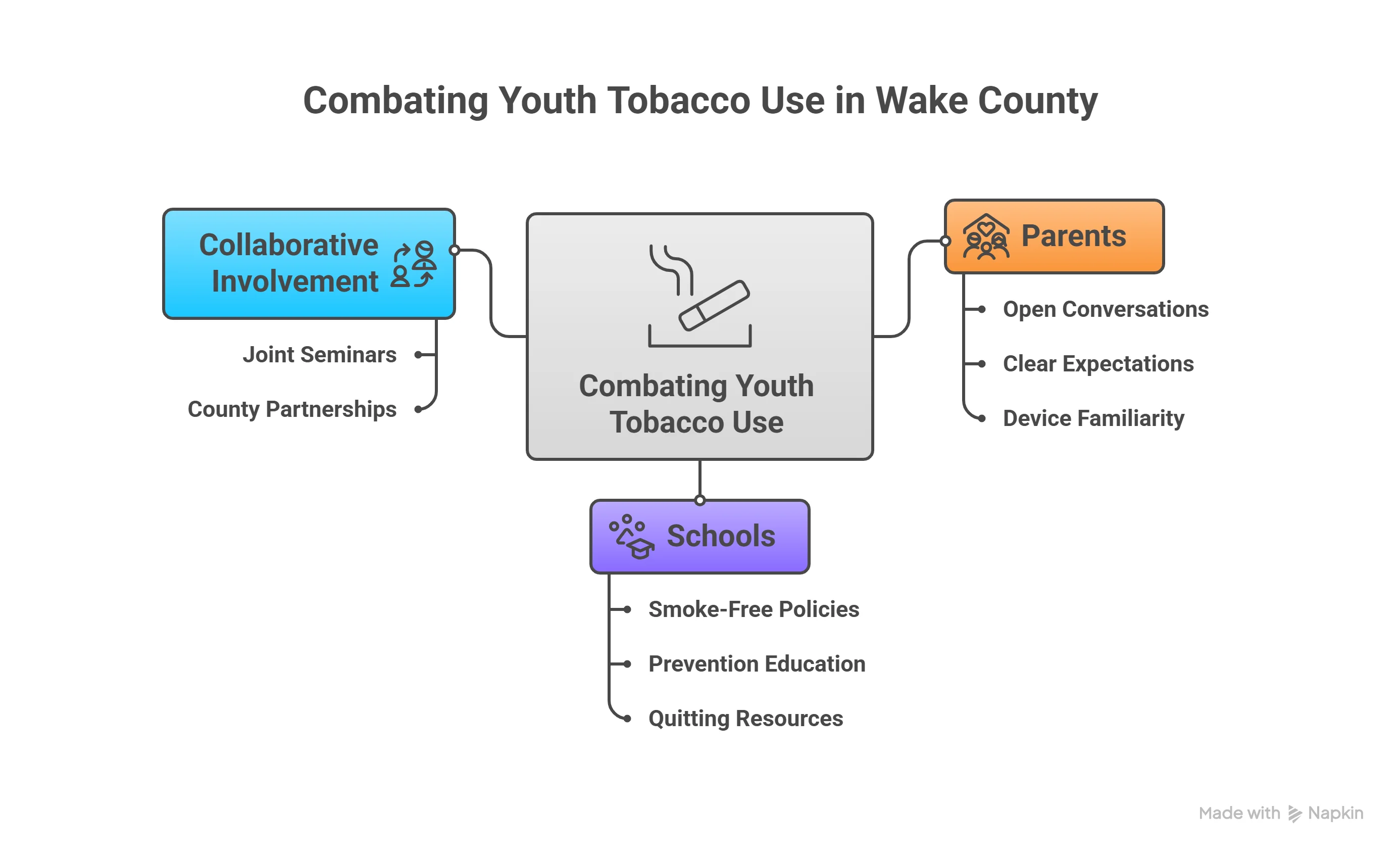
Parents and schools play a decisive role in halting the rise of youth tobacco use in Wake County. Parents should initiate open, honest conversations about tobacco and vaping risks, set clear expectations, and become familiar with the latest devices. Schools should enforce smoke free policies while providing up-to-date, age-appropriate prevention education and readily accessible quitting resources.
Collaborative involvement, such as joint prevention seminars and partnerships with the county’s prevention and control branch, reinforces consistent, supportive messaging for students across both home and school environments.
Are there successful tobacco prevention models Wake County could adopt?
Yes, Wake County can look to nearby counties for successful prevention models to tailor and implement. For example, Orange County combines strict school bans with afterschool counseling, Mecklenburg focuses on retailer enforcement, and Durham emphasizes peer-to-peer youth advocacy. Wake County could create a hybrid model, tapping into the strengths of its own public health infrastructure, the Poe Center, and youth advocacy council, to address its unique local challenges in youth tobacco use.
FAQ – Youth Tobacco Use Wake County
How can I get involved in Wake County tobacco prevention?
Engage with the Youth Advocacy Council, volunteer for the Poe Center’s outreach events, or join community forums on tobacco prevention led by the county’s control branch. Your voice and participation can drive positive change.What resources exist for teens trying to quit?
Quitting support for teens includes confidential text and call quitlines, free counseling services through Wake County Public Health, and tailored group sessions run by the Poe Center for Health Education. Schools may also offer additional resources and peer-led support.Does Wake County offer support for parents?
Yes, parents can access workshops, information sessions, and family support groups funded or facilitated by Wake County tobacco prevention and control programs. The control branch also provides educational materials specific to the needs of parents and guardians.-

Key Takeaways: Reflections and Urgency for Youth Tobacco Use Wake County
Youth tobacco use in Wake County is growing and demands urgent action
Existing prevention and control efforts need reform and investment
Community participation can accelerate effective change

Get Involved to End the Youth Tobacco Use Wake County Crisis
Confronting youth tobacco use Wake County is a shared responsibility. Parents, educators, students, and community leaders must unite for targeted, persistent prevention and control.
Get informed. Speak up. Support local initiatives and call for stronger investment in effective county tobacco prevention. The time to act is now, before another generation is lost to nicotine.
If you’re passionate about building a healthier future for Wake County’s youth, consider broadening your perspective on community wellness. Exploring topics like holistic approaches to wellness and preventive care can offer valuable insights into how interconnected our health challenges truly are.
By understanding the bigger picture, you’ll be better equipped to advocate for comprehensive solutions—whether it’s tobacco prevention, mental health support, or access to innovative healthcare resources.
Take the next step and discover how a community-wide commitment to wellness can create lasting change for generations to come.
Sources
Youth tobacco use in Wake County is a pressing public health concern, with recent data indicating a significant rise in vaping among middle and high school students.
The Wake County Tobacco-Free Community Forum 2025, organized by the Poe Center for Health Education, aims to address this issue by bringing together youth, parents, and community leaders to discuss current trends, health impacts, and effective policies for creating tobacco-free environments. (poehealth.org)
To support teens in quitting tobacco, programs like Live Vape Free and the EX Program offer interactive, text-based cessation resources tailored for youth aged 13 and up. These initiatives provide 24/7 support, personalized recommendations, and access to expert advice, empowering young individuals to overcome nicotine addiction. (quitlinenc.dph.ncdhhs.gov)
If you’re committed to combating youth tobacco use in Wake County, these resources offer valuable insights and support to make a meaningful difference. NCWellnessHub.com



Write A Comment