


Feeling overwhelmed in Raleigh isn't just in your head—it's a shared reality. Mental health struggles touch us all, but help exists. Recognizing this truth is the first step to healing and accessing effective mental health services in North Carolina. Discover how local mental health resources North Carolina can empower you to reclaim peace and resilience today.
Why Stress and Mental Health Struggles Are Prevalent in Raleigh, North Carolina
"In the storm of overwhelm, recognition is your lighthouse. Acknowledging the waves is the first step to calm shores."

Raleigh has become one of the fastest-growing cities in the United States, celebrated for its cultural diversity and economic opportunities. However, with this rapid growth comes increased pressure—rising housing costs, competitive job markets, busy school environments, and heavier traffic all contribute to heightened daily stress. For many, these modern stressors lead to anxiety, depression, and feelings of isolation, especially if adequate mental health resources and behavioral health services in North Carolina are not known or easily accessible.
Recent years have seen an uptick in reports of burnout among working professionals and students alike in Raleigh. While the city’s reputation for opportunity and community is well-deserved, it’s essential to recognize the lived experience of those struggling quietly. The stress is not simply individual—it reflects broader societal and economic trends, making collective solutions even more important. Understanding and accessing appropriate mental health services and behavioral health support, including tailored plans, to address these unique local challenges gives Raleigh residents the best chance at well-being.
What You'll Learn About Mental Health Resources North Carolina
Key causes of stress and mental health challenges in Raleigh
Overview of mental health resources North Carolina offers
Step-by-step guide to accessing mental health services
Role of primary care providers in behavioral health support
How to find tailored plans for specific needs, including developmental disabilities and substance abuse
This guide equips you with practical tools for finding effective mental health support and care providers in Raleigh and across North Carolina. We’ll cover the warning signs, outline the types of help available, and highlight steps to take for immediate and long-term care. You’ll also learn how primary care and specialized care providers are key partners on your road to recovery.
As you explore the different types of mental health challenges, it's important to recognize that not all struggles look the same—some individuals may experience shyness, while others face more complex conditions like avoidant personality disorder. For a deeper understanding of these distinctions and how they impact daily life, you might find it helpful to review the key differences between shyness and avoidant personality and how each can influence your approach to seeking support.
Understanding Mental Health, Mental Illness, and Developmental Disabilities in North Carolina
Defining Mental Health, Mental Illness, and Developmental Disabilities

Mental health means more than just the absence of disease; it’s the ability to handle daily stress, build healthy relationships, and live productively. Mental illness refers to diagnosable disorders such as depression, anxiety, bipolar disorder, and schizophrenia that significantly impact mood, thinking, or behavior.
In North Carolina, understanding these definitions also includes recognizing developmental disabilities, which are lifelong conditions impacting cognitive or physical functioning, like autism spectrum disorder or Down syndrome.
North Carolina’s mental health resources and health services are designed to address these broad challenges. Treatment options often combine behavioral health services, peer support programs, individualized counseling, and tailored plans for those also facing traumatic brain injury, substance abuse, or dual diagnoses. A coordinated approach—often beginning with a trusted primary care provider—helps residents access both routine mental health care and emergency behavioral health support as needed.
Mental Health in Raleigh and Across North Carolina
Mental Health Trends: North Carolina vs. National Averages
North Carolina |
National Average (U.S.) |
|
|---|---|---|
% of adults with mental illness |
21.7% |
19.1% |
% of youth with at least one major depressive episode |
16.2% |
14.4% |
% reporting frequent stress |
28.3% |
25.7% |
% who could not access needed mental health services |
16% |
11.8% |
Data shows mental health challenges are common in North Carolina, and access to mental health services is still a struggle for many—making awareness of available resources more important than ever.
Types of Mental Health Resources North Carolina Residents Can Access
Public and Private Health Services: Local and Statewide Options
Counseling centers
Support groups
Online behavioral health platforms
Mental health crisis hotlines

From counseling centers in Raleigh’s communities to statewide telehealth options, North Carolinians have access to a rich tapestry of public and private mental health services and health service providers. Crisis hotlines are available 24/7, connecting callers to immediate support, while peer support groups offer a chance for individuals with lived experience to help each other. These services are complemented by online behavioral health platforms that facilitate confidential appointments and chat-based care, now more accessible thanks to telemedicine laws.
Public-funded mental health resources, such as clinics operated by county health departments, exist alongside private practices and specialized treatment centers. Whether your need is urgent—such as a mental health crisis hotline or a mobile crisis team—or ongoing, like scheduled therapy at a managed care facility, you can find help for everything from mild stress to severe mental health issues. It’s these multiple layers of health services that make North Carolina’s system adaptable, though finding the right fit can require a tailored approach.
Primary Care Providers and Their Role in Mental Health Services
A trusted primary care provider is often your first and most important ally in accessing mental health services and managing mental illness. They can screen for symptoms of mental illness, provide initial guidance, and refer you to specialists in behavioral health. In many cases, they coordinate your treatment plan, making sure medications and therapies work together safely.
Importantly, your primary care provider will track overall wellness, considering not just mental but also physical conditions, such as a history of traumatic brain injury or chronic illnesses that affect mood. They can also provide education about preventing fraudulent text scams, which have become a concern in health service communication—never trust a request for payment by text, and always verify before sharing information. Many practices in Raleigh now offer integrated behavioral health support, including access to peer support specialists right in the clinic.
Tailored Plans: Addressing Substance Abuse and Developmental Disabilities

Some individuals need a tailored plan, especially when facing substance abuse challenges or living with developmental disabilities, to ensure comprehensive mental health care. These plans go beyond one-size-fits-all care. In North Carolina, specialty programs within community mental health centers and state-funded agencies offer team-based approaches—bringing together therapists, peer support specialists, social workers, and medical professionals for holistic support.
Accessing peer support is especially valuable for those with lived experience in recovery from substance use disorder or adapting to life with a traumatic brain injury. Peer support groups and peer support specialists are trained to help others navigate the emotional, social, and practical challenges associated with recovery. With a tailored plan, individuals can also connect to managed care networks for medication, therapy, transportation, and help with daily life skills, ensuring comprehensive, ongoing support.
Navigating North Carolina's Health Service System
Navigating North Carolina's health service system and mental health services can feel overwhelming, but knowing where to start helps. Local managed care organizations (LME/MCOs) coordinate services in each county. They offer helplines, online directories, and guidance for people with mental illness, as well as tailored plans for those with developmental disabilities or substance abuse concerns. Start by reaching out to your county’s mental health crisis team or visiting their website to view their network of providers.
Peer support groups and mobile crisis units are accessible through local health departments and regional partners. For urgent help, you can call or text a crisis line, and in emergencies, mobile crisis teams can come to you. When choosing a care provider, check for specialization in your area of concern, such as dual-diagnosis (mental health plus substance abuse) or resources for adults with traumatic brain injury. Remember—North Carolina prioritizes access, but wait times can vary, especially for specialized services, so don’t delay reaching out if you see warning signs.
How to Access Mental Health Services in Raleigh and North Carolina
Initial Assessment: When to Seek a Primary Care Provider
Recognizing warning signs
How to approach a primary care provider
Steps after diagnosis
The starting point for many is recognizing the warning signs that it’s time to seek help. These can include persistent sadness, withdrawal from social activities, difficulty sleeping, changes in appetite, and trouble focusing. If you or a loved one notice these symptoms, schedule a visit with your primary care provider. They are trained in the early detection of mental health conditions and can perform an initial diagnosis.
After your initial appointment, your provider will discuss next steps: they may prescribe medication, refer you to a behavioral health specialist, or suggest local peer support or a support group. In urgent situations, such as threats of self-harm, they may direct you to a mobile crisis unit or call or text a specific local or national mental health hotline. Mental health support often involves multiple professionals, so expect a care plan tailored to your unique needs.
Working With Care Providers: Building a Support Network

Building a strong support network means connecting with a team of care providers—therapists, social workers, nurses, and peer support specialists—who work in partnership for your recovery. Successful mental health care in North Carolina deeply values communication and collaboration.
Once you find a mental health or care provider you trust, attend regular appointments, be honest about symptoms, and keep the lines of communication open. You can strengthen outcomes by bringing in family or friends to offer additional perspective and encouragement. Support groups, in-person or online, connect you with people who have navigated similar journeys and provide valuable lived experience. Embracing the full circle of behavioral health services paves the way for lasting improvement.
Insurance, Free Options, and Financial Support for Mental Health Services
Finances shouldn’t be a barrier to gaining mental health support. In North Carolina, many community mental health services operate on a sliding scale based on income. Medicaid, Medicare, and private insurance plans often cover core services, including therapy, medication, and inpatient or outpatient care. For people without insurance, city and county clinics frequently offer free or low-cost options, and many counseling centers provide payment assistance or charitable support.
Be cautious of fraudulent text scams claiming to provide free health services but then request payment by text—always verify the organization directly. The state’s network of vetted care providers and managed care options means you can get help safely and affordably. Don’t hesitate to ask about available grants, nonprofit programs, or peer-support-based financial aid as you explore your options.
People Also Ask: Key Questions on Mental Health Resources North Carolina
Does North Carolina have free mental health services?
Answer: Explore options for free and sliding-scale mental health services, eligibility criteria, and how to apply in North Carolina.
Yes, North Carolina offers a range of free and sliding-scale mental health services, especially through county health departments, non-profit counseling centers, and community clinics. Eligibility is typically based on income and residency. To apply, contact your local health department, visit their website, or call the statewide behavioral health helpline. Emergency mobile crisis units are available at no cost, and online platforms may offer initial consultations for free. Peer support and group therapy options are commonly provided at reduced or no cost for qualifying residents.
What is the 3 month rule in mental health?
Answer: Explanation of the "3 month rule," its relevance to ongoing care, and how it applies within North Carolina’s mental health system.
The "3 month rule" in mental health typically refers to the need for continuous care or assessment over three months before a diagnosis moves from "provisional" to "confirmed." This is important for conditions such as depression or anxiety, ensuring the diagnosis is accurate and treatment is appropriate. In North Carolina, adhering to this rule allows providers to implement a tailored plan and helps patients access longer-term behavioral health services, including insurance and Medicaid coverage options.
Does North Carolina have good mental health services?
Answer: Objective overview of system strengths, challenges, and expert viewpoints on mental health services in North Carolina.
North Carolina's mental health services system offers a broad array of support, including public clinics, private therapists, and innovative programs like peer support specialists and mobile crisis teams. Strengths include diversity of services and community integration. Challenges remain, such as provider shortages in rural areas and wait times for specialized care. However, the state’s commitment to improving access and reducing stigma is evident, and experts urge continued investment in integrated, community-based mental health support.
What are the four types of mental health services?
Answer:
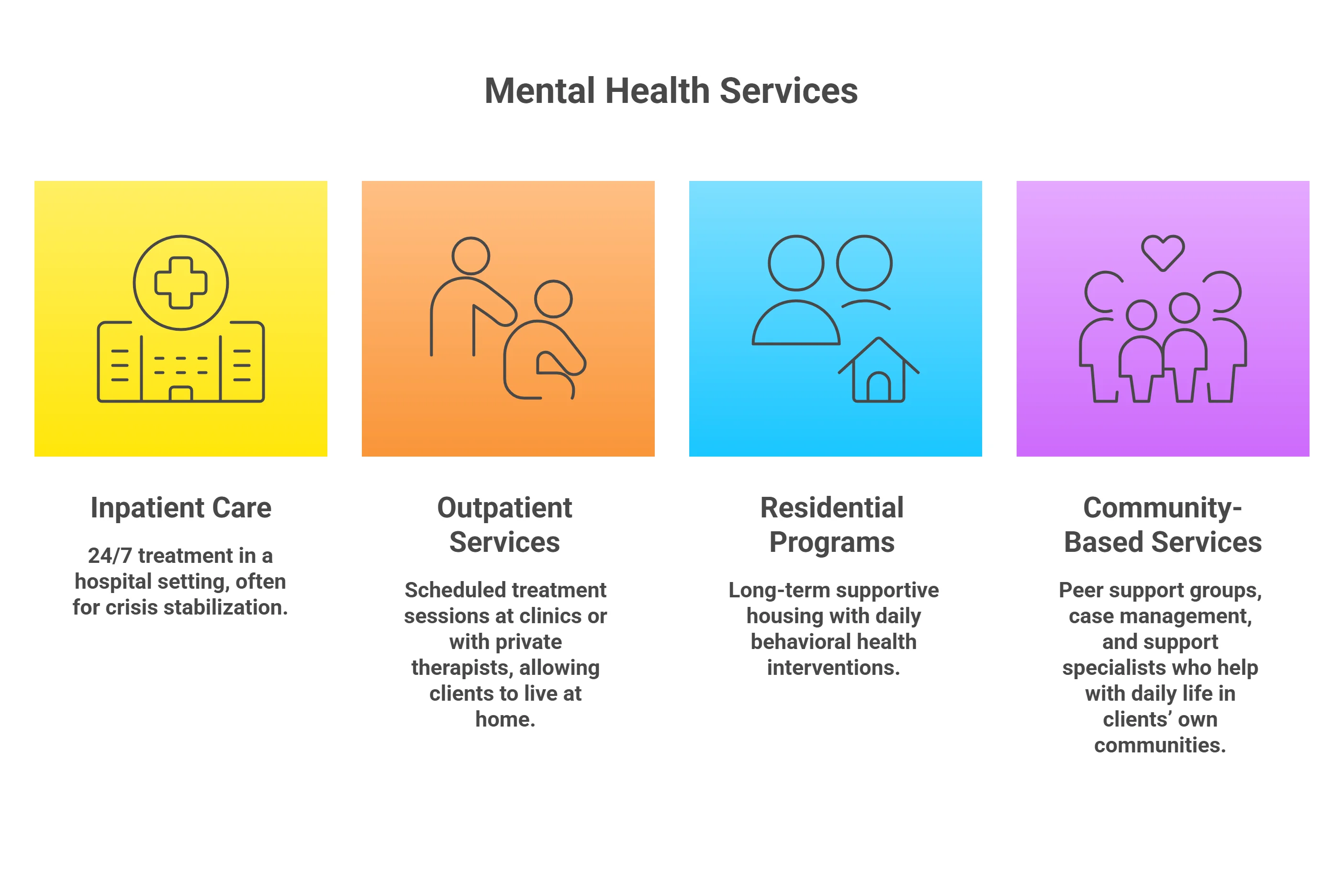
North Carolina offers four primary types of mental health services:
Inpatient care—24/7 treatment in a hospital setting, often for crisis stabilization.
Outpatient services—Scheduled treatment sessions at clinics or with private therapists, allowing clients to live at home.
Residential programs—Long-term supportive housing with daily behavioral health interventions.
Community-based services—Peer support groups, case management, and support specialists who help with daily life in clients’ own communities.
Key Takeaways: Navigating Mental Health Services in North Carolina
Use of local health services yields effective support
Early intervention, especially via primary care providers, greatly improves outcomes
Free and affordable care options are available statewide
Specialized resources exist for developmental disabilities and substance abuse
FAQs About Mental Health Resources North Carolina
How do I find a mental health care provider in Raleigh?
Start by asking your primary care provider for a referral or use online directories provided by your county’s LME/MCO (Local Management Entity/Managed Care Organization). Community clinics and non-profit groups like NAMI North Carolina can help match you with peer support, therapy, or a specialist based on your needs.Are developmental disabilities services available through mental health resources North Carolina?
Yes, North Carolina’s mental health services include comprehensive support for developmental disabilities. Specialized clinics, tailored plans, and care coordinators offer resources for both children and adults—these include therapy, life skills training, and family support.What emergency contacts are available for mental health crises?
In a mental health emergency, you can call or text the NC Suicide and Crisis Lifeline (988), your county’s crisis hotline, or reach out to a mobile crisis team. Hospitals and many clinics have on-call behavioral health staff 24/7, and national resources like the Crisis Text Line (text HOME to 741741) are also available.
The Importance of Using Mental Health Resources in North Carolina
"Access to comprehensive mental health services in North Carolina is one of the most significant factors in overcoming the stigma and barriers surrounding mental illness."
Local experts routinely highlight that seeking help—whether from primary care providers, peer support specialists, or a support group—makes a tangible difference in recovery. Removing the barriers, prioritizing communication, and using the whole spectrum of behavioral health resources are major keys to community and individual resilience.
Conclusion: Taking the First Step Toward Better Mental Health with North Carolina Resources
Empower Yourself—Reach Out to a Mental Health Provider Near You Today

Taking one small step—reaching out to a mental health provider, calling a crisis hotline, or joining a peer support group—can change your life. North Carolina’s compassionate, accessible resources are here for you, every step of the way.
If you’re interested in how mental health support is evolving in North Carolina, especially for younger populations, you’ll want to explore how innovative school telehealth programs are making a difference. Discover how remote therapy is being integrated into local schools and what this means for early intervention and long-term well-being by reading about Cone Health’s leadership in school telehealth and remote therapy.
Expanding your knowledge of these forward-thinking solutions can help you or your loved ones access care more easily and stay ahead of the curve in mental wellness. Embracing new approaches and staying informed ensures you’re prepared to make the most of North Carolina’s growing network of mental health resources.
Experience moving stories from North Carolina residents who have faced stress, sought help, and found new hope through local support services and caring professionals.
Watch this guide for hands-on tips to find, contact, and access the right mental health providers in Raleigh and across North Carolina.
Sources
NC Department of Health and Human Services – https://www.ncdhhs.gov
Substance Abuse and Mental Health Services Administration – https://www.samhsa.gov
Accessing mental health resources in North Carolina is crucial for individuals seeking support. The North Carolina Department of Health and Human Services offers comprehensive crisis services, including 24/7 helplines and mobile crisis teams, ensuring immediate assistance is available statewide. (ncdhhs.gov)
In addition, the National Alliance on Mental Illness (NAMI) North Carolina provides support groups, educational resources, and advocacy for those affected by mental health conditions. (naminc.org)
For healthcare providers, the North Carolina Psychiatry Access Line (NC-PAL) offers mental health consultation and education to enhance care for children, youth, and families. (ncpal.org)
These resources collectively contribute to a robust support system for mental health across the state.
For more mental health related topics, you may find this LINK helpful.




Write A Comment