

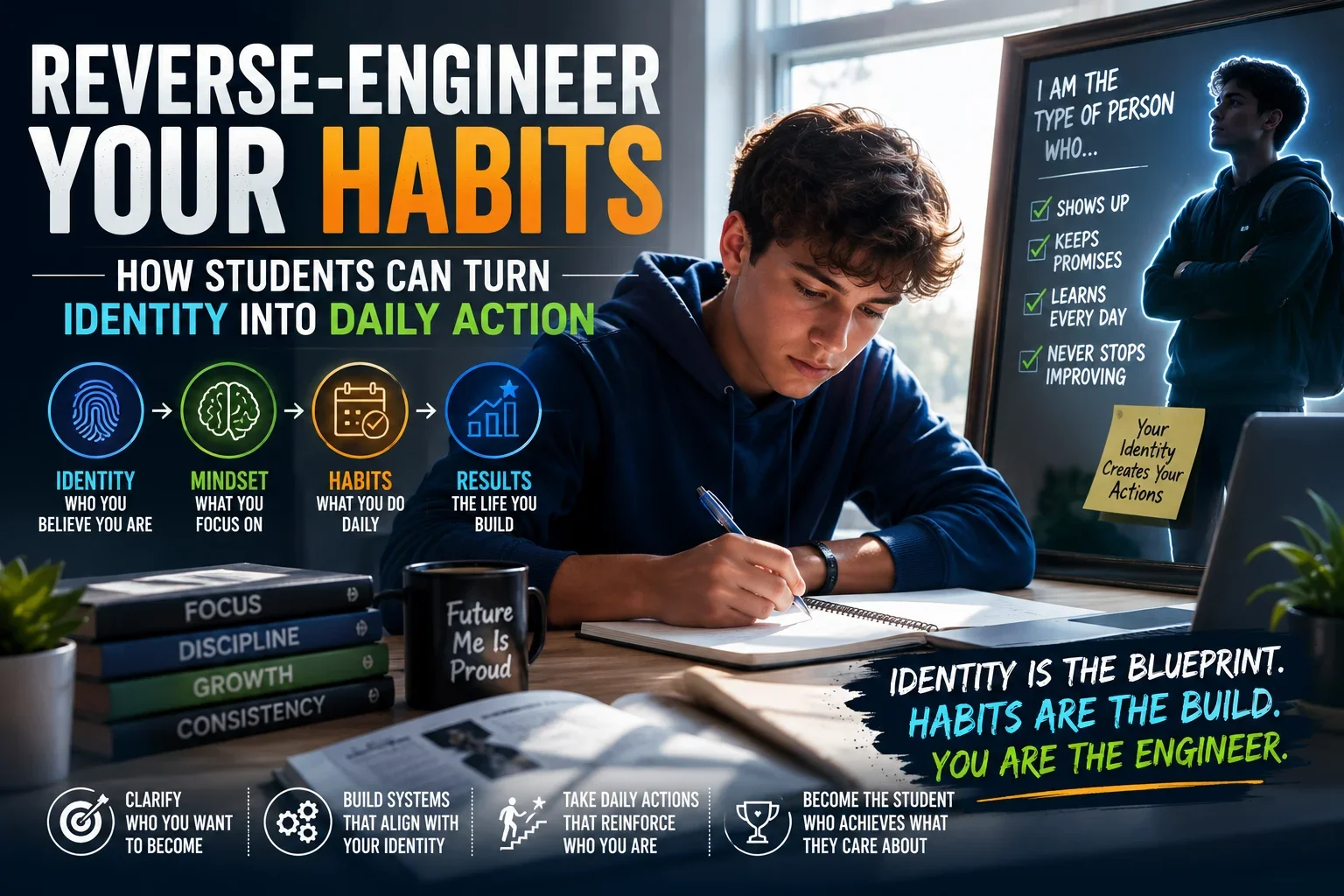
What if changing your daily actions could reshape your entire identity? Discover how students can harness identity based habits for students to transform routines into lasting success.
Ready to unlock your full potential by rewiring your habits at the core? This guide unpacks why identity, not willpower, is the engineering solution to successful student routines—and how you can become the type of person who achieves the things you care about most.
Rewiring Success: The Identity Based Habits Paradigm for Students
Most students typically set goals this year such as “get better grades” or “study every night. ” But here’s the trap: sticking to your goals requires more than just motivation or willpower. Without an anchored identity, these goals are fragile—one stressful week and the system collapses.
Identity based habits for students challenge the traditional approach by focusing not just on what you do, but on who you believe yourself to be. If you see yourself as an organized, disciplined learner, your daily actions naturally serve as “votes” for this identity, making lasting behavior change much more probable.
This paradigm shift transforms habits from a checklist of tasks into a set of automatic behaviors tied to your inner narrative. Instead of exhausting willpower to stick to your goals, evidence from your consistent actions gradually builds your desired identity.
The engineering logic is clear: systems—and the identity they support—outperform sporadic efforts and goal-chasing. By rewiring your habits at the source, you set yourself up for small wins that become foundational proof in your personal identity architecture.

Unlocking Potential: Why Habits Are Stronger When Rooted in Identity
Traditional habits often fall apart because they are treated as isolated tasks, detached from the student's self-image. When behaviors stem from core beliefs—your sense of being a disciplined student, curious learner, or active participant—they create a feedback loop.
Each small win, like reviewing notes or arriving early, reinforces your identity as a proactive student, making these habits easier to repeat. This behavioral evidence continually proves to yourself that you are the type of person who succeeds.
Imagine identity as the foundation and habits as the structure built upon it. Habits based on identity are more resilient, because when setbacks happen, your underlying sense of self remains intact.
This structure not only helps you start small, but also makes you great at remembering and sustaining change even when motivation wanes. In practice, it’s not just about what you want to achieve—the real engine is the type of person you believe you are becoming, reinforced by continuous, tangible evidence from your daily actions.
For students eager to put these principles into practice, exploring actionable frameworks on how to build habits that stick for lasting change can provide step-by-step strategies to reinforce your identity and make new routines truly sustainable.
The Willpower Trap: Why Goal-First Habits Fail Without Identity Anchors
Many students fall into the “willpower trap,” attempting to force themselves into new routines purely through determination. The problem is, motivation fluctuates, and high-friction goals quickly exhaust even the most dedicated. Setting “study four hours every night” as a standalone goal works—until it collides with fatigue or competing priorities. Without an identity anchor, these habits remain fragile. The result? Burnout, disappointment, and the sense of always falling short of results and start worrying about your efforts.
By contrast, identity based habits for students offer a system engineered for endurance. Emphasizing identity triggers at the outset dramatically reduces the energy required to maintain new behaviors.
Instead of starting with lofty outcomes, students build habits that are small, repeatable, and anchored to a narrative: “I am the type of person who reads my notes after class,” or “I am a student good at remembering important concepts. ” This shift makes the system robust—small wins accumulate as evidence, and external setbacks lose their power to disrupt your progress.
What You'll Learn: Mastering Identity Based Habits for Students
Understand the logic behind identity based habits for students
How behavioral evidence creates lasting change
Practical frameworks to design and reverse-engineer identity based habits
How to avoid the common pitfalls of goal exhaustion

The Science and Structure of Identity Based Habits for Students
To engineer effective behavior change, it’s critical to understand the science behind identity based habits for students. Behavioral research shows that habits stick best when anchored to self-image, leveraging “evidence loops” and neurological triggers.
When a student repeatedly performs a behavior—no matter how small—these actions serve as data points, confirming their self-perception. Over time, consistent feedback from small wins cements this belief, imprinting new neural pathways and creating durable behavioral routines.
The core architecture works like an engineering blueprint: recognize a desired identity, break it down into specific actions, and establish feedback systems that provide continuous evidence.
Rather than relying on external rewards or occasional willpower, students systematically shift their self-concept through small, deliberate behaviors. The goal is not quick results, but the gradual emergence of a new, sustainable identity—one that can outlast setbacks, low motivation, and even temporary failure.
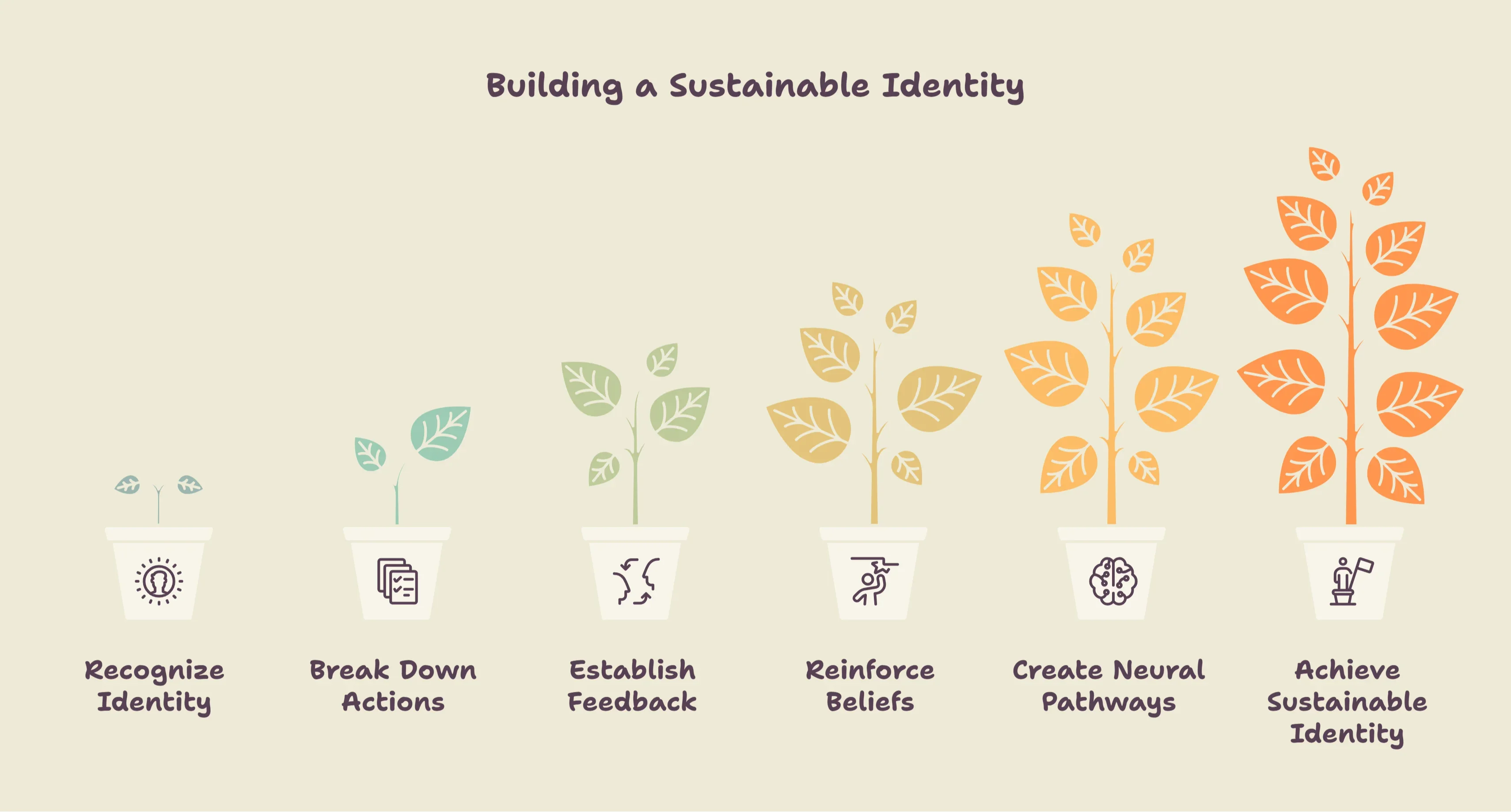
Behavior Change: The Flow from Identity to Action
The identity-action framework flips the usual habit-building model. Instead of asking, “What do I want to accomplish?” students start by asking, “Who do I want to become?” This process—known as identity architecture—allows every action to serve as a “vote” for your intended persona. Each time you follow through with a productive behavior, it’s not merely a task completed, but evidence collected for the type of person you wish to embody.
This paradigm produces more resilient behavior change. If your current behaviors aren’t aligned with your goals, instead of blaming willpower, adjust your identity cues and accompanying votes. Over time, these cumulative actions hardwire what you’re good at remembering, automate positive routines, and lower the cognitive friction required to sustain them, making true transformation possible for every student.
Identity Architecture: Building a Foundation for Habitual Success
Think of identity architecture as crafting a blueprint for your academic and personal growth. This involves consciously selecting student attributes—such as curiosity, organization, or resilience—and intentionally reinforcing them through repeated, observable actions. By starting small and reinforcing each “vote” for your identity, you create a system that evolves with you, rather than a rigid plan prone to collapse.
For example, a student striving to become more proactive can begin by organizing their workspace each morning or reviewing a short set of notes daily. These actions, though seemingly minor, are meaningful as behavioral proof. Over time, the habit is no longer something you force yourself to do—it becomes a seamless extension of your self-view, baked into your daily operating system.

Neurological Triggers and Evidence Loops in Identity Based Habits
Behavior change occurs at the neural level: each repetitive action fires and strengthens specific brain synapses. These neurological triggers operate like evidence loops. For students, every “vote” is a data point—a journaling session, a classroom hand-raise, a completed assignment—that signals to your brain the reality of your evolving identity. The more frequently these cues occur, the stronger the underlying connections, turning the desired behavior from effortful task to automatic routine.
A key insight for students is that current identity is a product of accumulated evidence. Change your behavior, and your identity catches up. These loops not only drive what you’re good at remembering, but also what you begin to expect of yourself.
The process is incremental; each small win rewires your internal wiring, steadily shifting your self-image from someone who “tries to study” to “the type of person who always shows up prepared. ”
From Goal Exhaustion to Evidence-Driven Habits: An Engineering Perspective
Traditional approaches to student success can lead to goal exhaustion: the point where willpower and checklists fail, and setbacks turn into discouragement. Why? Because without a unifying architecture—an identity-first framework—each goal exists in isolation, unsupported by underlying beliefs or evidence. The engineering solution is simple and powerful: reverse-engineer habits by anchoring them to the type of person you aspire to be.
This approach reduces energy leaks, increases intrinsic motivation, and makes habits stick. By treating every behavior as a data-backed engineering experiment, you can test, iterate, and improve your identity cues. The focus becomes less about chasing fleeting outcomes and more on building repeatable systems that reinforce a resilient student identity, one behavior change at a time.
Why Relying on Willpower Breaks Students’ Progress
Relying on willpower is like using a manual override on a machine that should be automated. While it can provide a quick surge, it’s unsustainable—particularly under stress, fatigue, or distraction.
Students who depend solely on pushing through tough days with sheer effort end up frustrated, often losing faith in their ability to stick to goals. This cycle reinforces a negative self-image, making it even harder to restart productive behaviors after setbacks.
Identity based habits for students systematically remove this failure loop. By embedding triggers and cues into your environment—and designing habits that “cast votes” for a stronger, healthier identity—you create new default settings.
Over time, what once required massive effort becomes automatic, unlocking small wins that are both measurable and meaningful. In the process, you change your identity by proving to yourself that you are a person who can achieve the things that matter most.

Votes for the Identity: Actions as Behavioral Proof
Each action you take as a student is a “vote” for a certain type of person. Do you regularly review your notes? That’s a vote for being consistent. Do you ask questions in class? That’s a vote for being engaged and curious. These are not just isolated events—they are powerful evidence loops that shape your current identity and reinforce your behavior patterns.
The magic lies in accumulation. Even when you miss a day, the sum of your actions over time tells the story. Focus on collecting votes through small, achievable behaviors that reflect the person who can achieve the things you desire—whether it’s mastering a subject, becoming more disciplined, or fostering real life connections. Ultimately, the system rewards consistency over perfection: the more votes you collect, the more automatic and identity-reinforcing your habits become.
Step-by-Step: How to Build Identity Based Habits for Students
Engineering identity based habits for students is a tactical process, not wishful thinking. Start by defining the student you want to become, then reverse-engineer small, repeatable actions that serve as proof.
The key steps involve clearly identifying your desired attributes, aligning behaviors as evidence for these traits, and strategically reducing friction to increase the likelihood of habit repetition. Think of each step as a design iteration refining your identity blueprint until it becomes second nature.
This means focusing on process—systems and cues—rather than fixating on outcomes. By starting small and building incrementally, you create robust identity triggers that stack over time. With each repeating cycle, new neural pathways are forged and old ones pruned, making the new behaviors ever more automatic and resistant to lapses.
Change Your Identity: Define the Student You Want to Become
List your desired student attributes (curious, disciplined, growth-focused)
Analyze actions that 'cast votes' for your new identity
Reduce friction to make each vote easy and repeatable
Begin by clearly describing the type of person you want to be: “I want to be a curious learner” or “a student who is great at remembering key facts. ” Next, brainstorm simple, observable actions that serve as evidence. For example, dedicating five minutes each morning to review is a vote for being consistent.
Finally, make it effortless: layout your notebook before bed, set reminders, or stack the new habit onto an old one (like reviewing notes with your morning coffee). This systematic approach helps you not only change your behavior, but also consistently update your identity through small, repeated wins.
Designing Identity Based Habits: The Trigger-Action-Reward Cycle
Effective habit engineering follows the Trigger-Action-Reward model. Set up an obvious cue (trigger), a simple action (behavior), and an immediate benefit (reward). Repetition solidifies the loop. For students, a trigger might be the end of class, the action is reviewing or summarizing notes, and the reward could be experiencing relief at feeling well-prepared later.
Stack these cycles by linking to existing routines—finish breakfast, read five key points, then listen to your favorite song as a reward. Start small and accumulate wins to automate the evidence collection process.
The reward should reinforce both the action and the identity shift (“I am now the type of person who reviews, not crams”). Over time, the loop shifts from external motivation to intrinsic satisfaction: each cycle not only builds memory but confirms a core belief about your abilities and character as a student.

Habit Stacking: Building on Existing Identity Cues
Habit stacking is an engineering tactic that leverages your current behaviors as platforms for new identity-driven routines. Attach desired habits onto established cues—if you already check your planner each morning, stack a quick note review immediately after. This chaining effect drastically reduces friction, lowers the risk of forgetting, and bolsters consistency with less conscious effort.
By piggybacking on ingrained routines, small wins build momentum, and each repetition serves as additional identity evidence. Over time, these stacks create reliable identity triggers, forming the backbone of an automated, resilient student system. The goal is not to make huge changes overnight, but to continuously make a change in micro-increments that together lead to massive, sustainable transformation.
Examples and Blueprints: Identity Based Habits for Students in Action
Real life application of identity based habits for students goes far beyond theory. The most successful students engineer their routines by prioritizing small acts that affirm their chosen identity. Below are practical, actionable examples showing how daily evidence becomes foundational proof for behavior change. By focusing on small wins, students move from aspiring to be successful to embodying the type of person who achieves success in high school, college, and beyond.
The blueprints below are your toolkit for turning identity-based reflection into automatic action. Each example demonstrates how students design their environments, routines, and mindsets to collect consistent identity evidence, rather than relying on fleeting motivational bursts or willpower alone.
Academic Identity Habits: What Top Students Do Differently
Arriving early to study (vote: I am proactive)
Active participation in class (vote: I am engaged)
Daily review of notes (vote: I am consistent)
Top students aren’t superhuman. They’re engineers—they build and reinforce their academic identity through relentless collection of small wins. Each time they arrive early, it’s a physical vote for proactivity; every hand raised in class is a social cue for engagement. These behaviors are easy to repeat, offer immediate feedback, and double as both markers of achievement and evidence for a strengthened identity.

Behavior Change: Social and Emotional Identity Habits
Identity based habits for students extend into social and emotional domains. For instance, a student striving to become a supportive friend can regularly check in with a peer or join group study sessions after school.
These actions are micro “votes” for being a dependable and empathetic classmate. Each instance adds evidence to the desired self-image and helps automate social behaviors, making it easier to remember birthdays, support friends, or maintain an inclusive presence in extracurricular activities.
Beyond academics, embedding identity cues around social and emotional strengths ensures students experience holistic behavior change, not just academic improvement. In the long term, this creates well-rounded individuals who are good at remembering commitments, staying connected, and providing support—skills vital for real life success.
Good at Remembering: Memory Triggers Built on Identity
Some students believe they’re not good at remembering, but memory itself is a reflection of your current identity and habits. To engineer better recall, identify yourself as someone “great at remembering” and design daily rituals to reinforce this belief.
Set up memory cues—like reviewing flashcards after lunch, recapping material for a friend, or summarizing concepts in your own words every day. Each action becomes another “vote” for the identity you want, building a memory system that is automatic and reliable.
Linking memory triggers to identity ensures you don’t just practice rote repetition but anchor recall to your idea of self. Over time, the process of making a change becomes less about effort and more about being the type of person who naturally returns to key information—transforming how you remember not just words every day, but concepts for exams, projects, and daily life.
Case Studies: Real-World Identity Based Habits for Students
Case studies reveal how engineering identity based habits transforms outcomes for students who once struggled to stick to their goals. Real life examples allow you to reverse-engineer strategies that can be customized to match your unique attributes, proving there’s no one-size-fits-all approach.
Whether you’re transitioning out of last-minute cramming or working to build consistent motivation, these blueprints can be adapted for any student pursuing robust identity change.
Blueprint #1: Shifting from Cramming to Daily Review
Meet Emily, a high school student notorious for last-minute study marathons. By redefining her identity as “the type of person who reviews every day,” Emily started with just five minutes of note review after school.
Each daily review was a small win, gradually building neural connections and proving her new self-image. Over several weeks, cramming became unnecessary; sustained, low-friction habits eliminated stress and improved her academic results, confirming the power of identity-driven routines.

Blueprint #2: Building Identity Based Habits for Consistent Motivation
Consider Nathan, whose motivation would spike and plummet with different assignments. Shifting his focus from chasing results to accumulating votes for the identity of a “self-motivated student,” he introduced micro-habits: setting up his study space each morning, giving himself a small reward after fifteen minutes of focused work, and checking off a habit tracker for each completed session.
Consistent, low-stakes behaviors replaced his reliance on willpower. Over time, these daily identity cues automated his motivation—even on days he didn’t feel like studying, his system kept him on track without significant mental effort.
Table: Identity Based Habits vs. Goal Based Habits
Feature |
Identity Based Habits |
Goal Based Habits |
|---|---|---|
Root Philosophy |
Actions are evidence for the type of person you wish to become |
Actions are driven by desired outcomes and external results |
Triggers |
Identity cues and repeated context (“I am a proactive student”) |
To-do lists, deadlines, and checklists |
Results |
Automatic, resilient habits; internal motivation; behavioral proof |
Frequent burnout, reliance on willpower; goal exhaustion |
Longevity |
Sustainable, long-term systems |
Short-lived, easily disrupted |
Expert Voices: Quotes on Identity Based Habits for Students
“Every action you take is a vote for the type of person you wish to become.” — James Clear
“Students who treat habits as identity evidence create change that sticks.” — Dr. Emily Carter
Common Pitfalls: Mistakes Students Make When Trying to Stick to Their Goals
Even the best systems fail if implemented without understanding. Many students try to stick to your goals by copying the schedules or behaviors of top students, rather than building their own identity triggers first.
This common pitfall creates a fragile framework that collapses under minor setbacks, leading to burnout or disappointment. To avoid this, focus on engineering habits from your core identity outwards, rather than grafting external routines onto an unchanged self-image.
Additionally, students often focus solely on outcomes rather than the daily accumulation of behavioral evidence. By setting lofty targets without supporting infrastructure (environmental cues, low-friction routines), even the most motivated students struggle to maintain progress. Sustainable change comes from consistent, repeatable systems that produce small wins, not from high-stakes pressure to “hit big goals” out of the gate.
Trying to Adopt Schedules of Top Students Without Changing Identity
Imitating top performers without shifting your identity is like attempting to run code written for a different operating system: it doesn’t fit your context, and soon glitches appear. The real solution is to identify the operating principles behind their success—namely, a robust identity framework—and reverse-engineer small, context-appropriate behaviors that fit your environment and goals.
Copying calendars or routines may work briefly, but without underlying identity cues, friction remains high. Long-lasting progress comes when every repeated behavior feels true to your desired self, rather than a checklist borrowed from someone else’s life.
Focusing on Outcomes Instead of Behavioral Evidence
Students often fall into the trap of measuring progress by external benchmarks: grades, competition, or comparison. Such focus on outcomes can amp up anxiety, fuel negative self-comparisons, and undermine self-confidence when inevitable setbacks occur. Rather than worrying about results and start worrying, it is better to shift attention to accumulating actions that prove your evolving identity.
Small wins, replicated over time, are stronger indicators of identity evolution than any single outcome. By concentrating on what you do daily as behavioral proof, you insulate yourself from the volatility of external validation and keep your core motivation intrinsic and sustainable.

Failing to Reduce Entry Friction in New Habits
One of the most common reasons habits fail is high entry friction—too many steps, complicated planning, or ambiguous triggers. Students who want to make a change must focus on simplifying each step. Begin by minimizing effort: put materials within arm’s reach, set clear cues, and ensure actions can be completed in less than two minutes if necessary. The easier the vote for your new identity, the more votes you’ll cast and the faster your self-image evolves.
This design choice is essential for building stickiness: low friction and high repeatability make habits resilient—even when time is short, stress is high, or energy is low. Over time, streamlined routines ensure that “being the type of person who…” isn’t just a goal, but an everyday reality.
How to Make Identity Based Habits Stick for a Lifetime
To engineer permanent change, students should focus on tracking small wins (votes for identity) and leveraging social or environmental identity triggers. The goal is to intertwine your self-perception with repeated, low-friction habits, supported by peers who reinforce positive identity cues. Systematically reviewing progress and celebrating consistency—rather than perfection—builds confidence in the system, making habits sticky for the long haul.
Tracking Small Wins as Identity Evidence
As an engineer of your own development, meticulously track every small win: check off tasks, mark calendars, or reflect in a journal. Visualization of progress is vital. Each streak, every tick mark, is more than a momentary success—it’s behavioral evidence that you’re the type of person capable of change. Over weeks and months, the accumulation of small wins transforms identity far more powerfully than dramatic, episodic goals ever could.

Making Habits Social: Leverage Peer Identity Triggers
Peer influence is a high-leverage engineering tool for identity change. Join study groups, share habit trackers, or set micro-challenges with friends. When habits are embedded in your social context, every positive action serves as both personal and group-based proof, amplifying your behavioral evidence loops and accelerating transformation. Surrounding yourself with peers who reinforce your desired identity significantly increases the odds of sticking with new routines long-term.
Strategically arranging your environment and peer group ensures identity cues remain visible and habit-friendly. Over time, social reinforcement complements internal motivation, creating a community of students all collecting votes for the type of person they each want to become.
People Also Ask: Identity Based Habits for Students
Can you give me some examples of identity-based habits?
Yes: Arriving early to study signals the identity of being proactive; participating in class proves you are engaged; reviewing notes daily is evidence for being consistent; and helping a classmate illustrates the identity of a supportive friend. Each action, no matter how minor, is a vote for the type of person you aspire to be as a student.
Identity Based Habits for Students: Examples and Implementation
Implementation involves designing daily routines that generate repeated behavioral proof for your chosen identity. Begin by deciding what type of person you want to be, select one micro-behavior (such as preparing your backpack the night before), and repeat it until it feels automatic. Gradually add or stack new habits, continually reinforcing the core identity you wish to build.
What is the 3–3–3 rule for habits?
The “3–3–3 rule” is a simple identity-engineering tactic: Repeat a new habit 3 times daily, for 3 days in a row, over the course of 3 weeks. The rule helps students build small wins, lowering friction and establishing a routine before expanding to more complex behaviors. This phased repetition cements behavioral evidence and accelerates identity transformation.
Understanding the 3–3–3 Rule in Identity Based Habits for Students
Applied to identity based habits for students, the 3–3–3 rule encourages consistent, low-stakes repetition. Instead of overwhelming yourself with large-scale changes, use this rule to accumulate sufficient evidence each week, so the new identity feels natural and sustainable. Engineering small, repeated “votes” builds momentum for larger shifts over time.
How to teach identity to students?
Teaching identity to students involves guiding them to reflect on their current behaviors and understand how those actions define their self-image. Using practical frameworks—like identity evidence loops and habit stacking—empowers students to see behavior change as a process of collecting votes for the person they wish to be, rather than chasing isolated outcomes.
Best Practices for Teaching Identity Based Habits for Students
Encourage students to articulate desired traits, break goals into daily actions, track progress visually, and celebrate small wins. Facilitate peer collaboration and group habit challenges to create shared identity cues. Remind students that change is incremental, and every action contributes to a larger identity blueprint.
What does James Clear say about identity-based habits?
James Clear, a leading habit expert, states that “Every action you take is a vote for the type of person you wish to become. ” He emphasizes that building habits on identity—rather than outcomes—creates lasting behavior change, as the evidence collected through small daily actions rewires your self-perception and automates routines.
Key Insights from James Clear on Identity Based Habits for Students
Clear suggests students focus on proving their desired identity through daily behaviors, start small, and use environmental cues to make new habits stick. He advocates for tracking small wins and surrounding yourself with supportive peers, as these strategies maximize evidence loops and ensure long-term change that survives setbacks.

FAQs About Identity Based Habits for Students
How do I start identity-based habits as a student?
Begin by defining your desired identity (e.g., “I’m a consistent learner”), then start with a small, repeatable action. Track your progress, stack habits onto existing routines, and visualize your small wins as proof of your evolving identity.What is the difference between identity based and goal based habits?
Identity based habits focus on who you become through repeated actions (votes for a new you); goal based habits focus on reaching specific results. The former emphasizes internal transformation, while the latter can lead to burnout without a supporting system.How can I make my habits stick to my identity long term?
Reduce entry friction, celebrate small wins, use visual habit tracking, and involve supportive peers. Consistency is more important than perfection—focus on accumulating behavioral evidence over time.
Key Takeaways: How Students Can Master Identity Based Habits
View each action as a vote for your desired identity
Focus on systems, not just outcomes
Reduce friction for habits you want to build
Surround yourself with peers who reinforce positive identity cues
Ready to Build the Evidence?
Stay curious and informed—discover more trusted information like this at: NCWellnessHub.com
Conclusion: Small wins collected daily are the foundation for identity change. Approach your habits like an engineer—design, test, and reinforce routines that prove the student you want to become. The evidence you build each day is your ticket to lasting success.
If you’re ready to take your growth even further, consider how resilience and adaptability play a role in sustaining identity-based habits over time. Learning to bounce back from setbacks is just as crucial as building new routines.
For a deeper dive into science-backed strategies that help students recover and thrive after challenges, explore these expert insights on overcoming setbacks. By mastering both habit formation and recovery, you’ll be equipped to navigate any academic journey with confidence and lasting momentum.


Write A Comment