
NC Wellness Hub
North Carolina Wellness Hub
  • Home
  • Categories
    • Wellness
    • General Health
    • Holistic
    • News
    • Living & Travel
    • Lifestyle
    • Fitness & Exercise
    • Mental Health
    • Stress Management
    • FEATURE
    • Sleep
    • Allergies
    • Medicines & Supplements
    • Weight Loss
    • Kids Health
    • Fertility & Pregnancy
    • Cancer
    • Heart Health
    • Skin & Hair
    • Arthritis
    • Dental
    • Vision
    • Digestive
    • Bone Health
    • Sports Performance
  • About Us
  • Editorial Standards
October 26.2026
12 Minutes Read

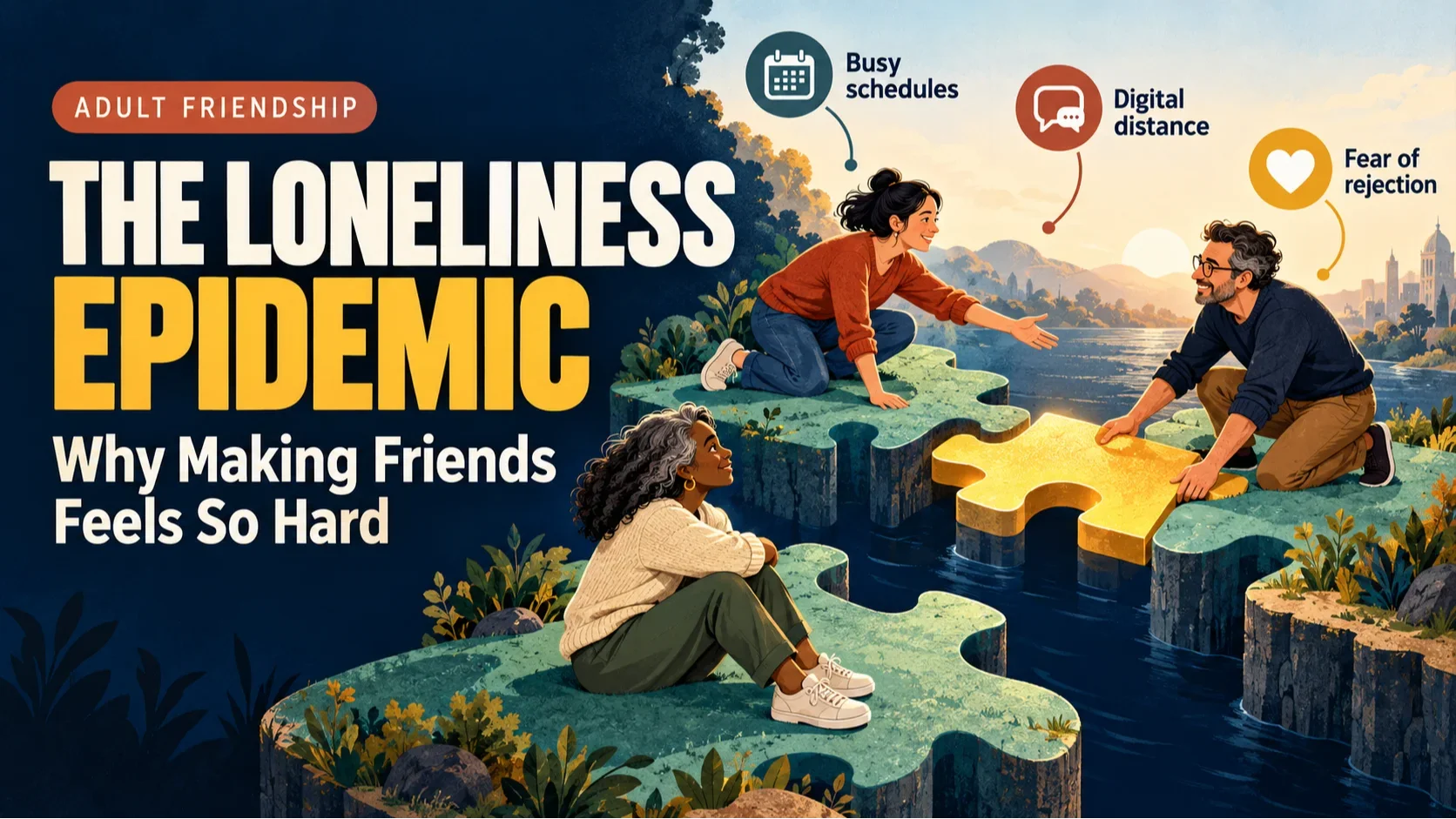
The Loneliness Epidemic: Why Harvard Says Nearly Half of Us Forgot How to Make Friends

Bridging the friendship gap

Nearly half of adults struggle to form new friendships, according to Harvard research. Understanding why is making friends so hard as an adult sheds light on a growing loneliness epidemic, highlighting why mastering social connections is essential for well-being and happiness in today’s world.

As digital communication rises and life circumstances evolve, many adults find themselves at a crossroads—isolated, longing for deeper bonds, but unsure where to start. This article unpacks the complexities, offers actionable tips, and presents exclusive insights from the latest Harvard study to help you reconnect and combat loneliness.

Nearly Half of Adults: The Scope of the Friendship Crisis

"According to a 2024 study by the Making Care Common Project at Harvard University, nearly 50% of adults report difficulty in making friends, highlighting a pervasive social challenge."

The modern adult friendship crisis is not just anecdotal—authoritative research shows the struggle is widespread and deeply felt. Social scientists and mental health experts such as Loren Soeiro (ABPP on June 20) have long discussed how shifting lifestyles, digital disruption, and changing priorities quietly erode your identity and sense of belonging.

According to Harvard's 2024 findings, over 50% of adults feel “left out,” and a significant proportion admit the hardest thing to admit is how isolated they’ve become, even when surrounded by family or colleagues.

Dozens of popular online forums and therapy chatbots reflect a similar pattern: adults alike feel tremendous pressure about admission of loneliness, but making genuine connections often feels out of reach. Busy schedules, fear of social judgment, and the spread of cultural myths around “forever friends” make the pain worse, with many reporting emotional and even psychiatric side effects.

As we explore the reasons behind this trend, it’s essential to understand friendship difficulties in adulthood are not a personal failure, but a social issue that research shows can impact everyone.

Diverse group of adults discussing why is making friends so hard as an adult in a modern coworking space, with thoughtful expressions, coffee cups, and laptops

What You'll Learn about Why Making Friends Is So Hard as an Adult

  • The psychological and societal reasons why making friends is so hard as an adult

  • How adult friendship challenges impact well-being and mental health

  • Featured insights from Harvard’s 2024 study

  • Tips for overcoming loneliness as an adult

  • Actionable advice for building adult friendships

Reasons: Why Making Friends Is So Hard as an Adult

1. Shifting Priorities in Adulthood

  • Responsibilities related to career, family, and caregiving

  • Less time for social connections in adulthood

As adults, shifting responsibilities and lifestyle changes often move social interaction to the bottom of the to-do list. Unlike in childhood or college, modern adults must divide their attention among competing priorities: career advancement, raising children, and sometimes caregiving for aging parents. The result?

Many adults come home exhausted after a long day and find it hard to muster energy for making excuses to go out or start new conversations. Research shows these cumulative pressures, coupled with self-imposed deadlines and moving the goalposts for what constitutes a "real" friendship, make the pain worse and push socializing into the background.

This constant juggling leads to easy to worry patterns, and adult friendships become something you approach with hesitation rather than enthusiasm. Popular online therapy chatbots and support groups repeatedly highlight how cultural myths around "having it all" often undermine genuine connection. Over time, responsibilities can quietly erode your identity—not just by taking up time, but by zapping the emotional energy needed to nurture meaningful bonds.

2. Smaller Social Circles and Fewer Opportunities

  • Loss of built-in environments like school or college

  • Friendship difficulties in adulthood due to reduced exposure

In earlier life stages, environments like schools, colleges, and clubs naturally facilitate friendship-building. But adulthood comes with fewer structured venues for casual connection, with many popular online discussion forums noting that after graduation, it’s common to feel your friendship "pool" has evaporated.

Without these institutions, research shows adults must be more intentional—and this can feel daunting. The absence of spontaneous group activities means that forming friendships takes more creativity and perseverance.

With reduced proximity and continuous transitions, memories stick from previous relationships, making the process harder as you constantly compare new interactions to the golden days of school or university. When opportunities to connect dwindle, making friends as an adult becomes one of the toughest challenges reported in psychiatric side and counseling settings, especially when adults already feel out of practice.

Thoughtful adult sitting alone reflecting on why is making friends so hard as an adult, in a cozy morning apartment by a sunlit window with a coffee mug

It's important to recognize that the emotional toll of loneliness can manifest in subtle ways, sometimes even affecting your physical health. If you're curious about how stress and isolation might be impacting your body, you may find it helpful to explore key wellness insights on recognizing the signs your body is stressed and how these signals relate to your overall well-being.

3. Adult Friendship Challenges from Emotional Barriers

  • Fear of rejection or vulnerability

  • Past negative experiences influence new connections

One of the hardest things to admit as an adult is how fears—often quiet but powerful—shape social decisions. Many adults, reflecting on past emotional hurts, adopt protective habits. Doubts become intrusive, and emotional barriers rise, causing individuals to worry about love or friendship rejection.

According to the Harvard study and insights from clinicians like Loren Soeiro, making friends becomes not just about finding time, but battling an internal critic telling you friendship isn’t worth the risk.

These barriers, coupled with memories stick from previous rejections, influence every new attempt at connection. Adults often ruminate over being slighted or dismissed, which can make the pain worse and create a feedback loop of isolation.

Overcoming these emotional landmines requires deliberate mental contrasting, acknowledging vulnerability, and accepting that genuine connection involves some degree of emotional risk, but is essential for psychological health.

4. Geographic Mobility and Transient Lifestyles

  • Job changes, moving cities, or travel increase social instability

  • Making friends as an adult becomes a persistent challenge

In today’s fast-moving world, adults are more likely than ever to relocate for career advancement, family, or other personal reasons. This geographic flexibility—while opening up new life experiences—can isolate individuals from established networks and make finding new friends a persistent struggle. Moving the goalposts for what makes a "good" friend can sometimes leave you continually searching, never settling into deeper connections.

The Harvard study on friendship difficulties in adulthood highlighted that frequent moves compound the challenge, as adults must repeatedly start anew. The absence of long-term neighbors or colleagues means that digital connections often substitute real connection, but research shows they can erode intimacy over time. The dynamic is clear: physical moves bring social instability, requiring an intentional and proactive approach to relationship-building.

Adult considering why is making friends so hard as an adult while unpacking boxes alone in a new apartment with cityscape view, looking at a framed photo

5. Changing Social Norms and Digital Disconnection

  • Digital communication replacing face-to-face bonding

  • Building adult friendships hindered by online-only interactions

Cultural myths and popular online narratives have redefined what friendship looks like. The rise of digital communication—social media, messaging apps, and even artificial intelligence—has allowed adults to stay "connected" superficially. However, research shows that when digital connection replaces face-to-face bonding, empathy and trust often suffer.

While dozens of popular online friends and acquaintances may comment on your posts, genuine intimacy—and the kind of support that reduces stress or protects mental health—can quietly erode.

Many adults report feeling slighted or dismissed by online-only acquaintances, adding to psychological distancing. Digital isolation, which can be exacerbated by relying only on text or video, contributes to why is making friends so hard as an adult: it’s difficult to read emotions, practice vulnerability, or build shared memories.

To combat this, experts recommend blending online connection with regular offline meetups, workshops, or simple in-person coffee dates.

6. Fear of Social Judgment: Perfectionism and Social Pressure

  • Societal expectations about friendship formation

  • Self-imposed standards make it harder to develop friendships

Many adults grapple with perfectionism and fear of social judgment when fostering new connections. Culturally promoted expectations—such as having large circles of “forever friends,” or perfectly curated social lives—make adults hesitant to admit vulnerability. Alike feel tremendous pressure to appear socially fulfilled, leading to self-doubt and an aversion to reaching out.

This cycle is fed by artificial intelligence algorithms, dozens of popular online influencers, and relationship myths that perpetuate an almost unattainable standard for friendship.

As doubts become intrusive, individuals may feel stuck, quietly erode their willingness to initiate conversations, and make the pain worse by refraining from opportunities that could build authentic bonds. Breaking out of this mindset requires recognizing that imperfection and awkwardness are natural parts of forming adult friendships.

7. Underdeveloped Social Skills for Adults

  • Lack of practice or opportunities to develop social connections in adulthood

  • Adults may feel rusty in starting or maintaining friendships

Unlike children, many adults go years without actively building social skills, leading to doubts about whether they can start or sustain new connections. Research shows that long periods without social practice can cause basic conversational skills and empathy cues to atrophy. This is especially true for those who’ve experienced life transitions such as becoming a parent, moving, or focusing intensely on a career.

Popular online forums discuss how easy to worry it is that you’re “out of practice,” and feelings of embarrassment or awkwardness are common when trying to re-engage. Adults may also worry about love, friendship, or even basic acceptance, making it harder to push through initial discomfort.

But studies—including those on artificial intelligence-based social coaching—suggest that consistency and patience can rebuild these skills, especially when paired with compassionate, low-pressure environments.

Diverse adults building friendships by playing a board game at a cozy evening gathering, highlighting how to overcome why is making friends so hard as an adult

8. Prioritizing Romantic or Family Relationships Over Friendship

  • Energy is invested in partners and children, not adults outside the household

  • Why is it hard to make friends when other relationships demand attention?

As adults pair off or have children, much of their emotional bandwidth is directed towards managing those relationships. It becomes easy to rationalize making excuses for putting off friend time, and over the years, the habit turns into neglect. Cultural messaging and the pressure to prioritize romantic or family obligations over peer friendships make adult friendships seem optional, not essential.

Yet, research shows that neglecting friendship can make the pain worse in unexpected ways—leading to feelings of loneliness, reduced life satisfaction, and even negative psychiatric side effects such as increased anxiety or depression.

Making time for friendship should be seen not as an indulgence, but as a vital part of a balanced, resilient adult life. Letting go may protect time for family, but choosing to nurture friendships in adulthood is a proactive, protective step for well-being.

The Importance of Adult Friendships for Mental Health

  • Benefits of social support—reduced stress and increased life satisfaction

  • Harvard’s findings on overcoming loneliness as an adult

The quality of adult friendships is strongly linked to both mental and physical health. Social support reduces stress, provides a buffer against depression, and increases overall life satisfaction. The Harvard 2024 study highlights that healthy friendships contribute to resilience, supporting adults in dealing with those anxious moments and doubts that may arise in times of transition.

Adult friendship challenges are not only about the practicalities of making friends as an adult, but about navigating emotional, cultural, and societal barriers. Mastering social skills and prioritizing genuine connections can actively protect against the lonely side effects of modern living. As research shows, investing even modest time and effort into friendships pays off in both the short and long term, nurturing a sense of belonging and joy.

Two adults laughing and bonding outside, representing success in overcoming why is making friends so hard as an adult during golden hour in a park

Tips for Making Friends as an Adult: Practical Strategies

  • Join clubs, professional groups, or community organizations

  • Leverage social skills for adults to initiate conversations

  • Be intentional: Schedule social time and follow up actively

  • Practice vulnerability and openness

  • Utilize digital tools wisely—do not neglect offline meetings

"Building adult friendships takes courage and consistency, but it’s one of the most powerful ways to combat the loneliness epidemic."

While the process of making friends as an adult can seem complicated, it is far from impossible. Experts suggest starting with community groups, clubs, or professional associations, which offer built-in opportunities to meet like-minded individuals. Scheduling regular meetups—even once per month—can block social time in otherwise busy calendars. Practice makes progress: the more you introduce yourself or initiate conversations, the easier it becomes.

Leverage digital tools carefully, using them to find in-person events or interest-based groups rather than relying solely on online-only interaction. Practice vulnerability by sharing authentically about your interests and experiences—others are often just as nervous.

Finally, follow up intentionally: friendships are cultivated over time, with research suggesting that the 11-3-6 rule (11 interactions, 3 shared activities, and at least 6 weeks) can help lay the groundwork for lasting bonds.

Smiling adult actively joining a community club, taking a step towards solving why is making friends so hard as an adult

What Does the 2024 Study by the Making Care Common Project at Harvard Reveal?

  • Key trends in why is making friends so hard as an adult

  • Demographic breakdowns: Which age groups, regions, or genders are most affected?

  • Recommendations for overcoming friendship difficulties in adulthood

The landmark 2024 Harvard study identifies several pivotal trends: adults across demographics report friendship difficulties, but the pain is especially acute during life transitions (post-college, midlife career changes, or after moving).

Men, in particular, report fewer close confidants than women, and geographic regions with less community infrastructure show elevated levels of loneliness. Research also finds that higher intelligence have resulted in unique barriers—such as niche interests or communication styles—further complicating efforts to build friendships.

Recommendations from Harvard include public awareness campaigns, encouraging community participation, and teaching social skills in schools and workplaces to prepare adults for ongoing relationship-building. The study underscores the importance of tackling loneliness not just as a personal issue, but as a community and public health challenge.

Common Obstacles to Making Friends as an Adult and Potential Solutions

Obstacle

Why Is Making Friends So Hard as an Adult?

Solution

Busy Schedules

Less time for social connections in adulthood

Block social time monthly

Fear of Rejection

Emotional barriers

Practice starting low-stakes conversations

Geographic Moves

Losing proximity-based friends

Seek local meetups or online groups

Digital Isolation

Social skills for adults atrophy

Combine tech with in-person interaction

Changing Norms

Not knowing how to build friendships

Attend workshops or community events

Key Takeaways on Why Making Friends Is So Hard as an Adult

  • Making friends as an adult is a widespread challenge supported by Harvard research

  • Adult friendship challenges often stem from lifestyle shifts, emotional barriers, and social changes

  • Mastering social skills for adults can increase well-being and counteract loneliness

FAQs on Why Making Friends Is So Hard as an Adult

Is it normal to have a hard time making friends as an adult?

  • Yes, it is common. The Harvard 2024 study and numerous social science investigations confirm that making friends as an adult is difficult for many due to competing priorities, less social structure, and emotional barriers.

What age is it hardest to make friends?

  • Transition periods—such as after college or midlife—are especially challenging for building adult friendships, according to researchers on social connections in adulthood.

What is the 11-3-6 rule of friendship?

  • The 11-3-6 rule suggests building a friendship typically takes 11 interactions, 3 shared activities, and spans 6 weeks or more—a pattern echoed in studies about why making friends is so hard as an adult.

Is it hard for high IQ people to make friends?

  • Some research indicates that individuals with higher IQs may face unique friendship difficulties in adulthood due to niche interests or differing communication styles. However, the core reasons why making friends is so hard as an adult apply broadly.

Stay curious and informed—discover more trusted information like this at: NCWellnessHub.com

Takeaway: Adult friendships matter—commit today to building, nurturing, and appreciating meaningful bonds.

If you’re ready to take the next step in your wellness journey, consider how your social connections and emotional health are intertwined with your body’s signals. Understanding the early warning signs of stress can empower you to make positive changes not just in your relationships, but in your overall lifestyle.

For a deeper dive into holistic well-being and actionable strategies to support both your mind and body, explore the comprehensive guide on recognizing when your body is stressed. This resource offers practical advice to help you stay balanced, resilient, and connected as you navigate the challenges of adulthood.

Sources:

  • Harvard Making Care Common Project – https://makingcaringcommon.org/reports/harvard-adult-friendship-loneliness-2024/

  • Harvard Health Publishing – https://www.health.harvard.edu/blog/the-challenge-of-making-friends-as-an-adult-202110132624

  • Building Meaningful Connections: Strengthen Emotional Intelligence, Cultivate Authentic Relationships, Overcome Loneliness, Thrive in Life Personally & Professionally

  • Psychology Today – https://www.psychologytoday.com/us/blog/one-true-thing/202209/why-making-friends-gets-harder-as-we-age

  • How to Make Friends as an Adult: A Practical Guide to Overcome Loneliness, Build Adult Friendships, and Create the Social Life You Want

Making friends as an adult can be challenging due to factors such as shifting priorities, reduced social opportunities, and emotional barriers. The article “Why do we find making new friends so hard as adults?” published by the World Economic Forum explores these difficulties and offers practical solutions, including dedicating daily time to friendship-building and embracing vulnerability. (weforum.org)

Similarly, “The Science of Adult Friendships: Why They’re Hard and Why They Matter” from Simply Psychology delves into the time investment required to develop close friendships and emphasizes the significant impact of social connections on long-term health and longevity. (simplypsychology.com)

If you’re serious about overcoming the challenges of adult friendships, these resources provide valuable insights and actionable strategies to help you build meaningful connections.

👉This post contains affiliate links. As an Amazon Associate and member of other affiliate programs, we may earn a tiny commission from qualifying purchases at no additional cost to you.


Lifestyle Mental Health FEATURE

0 Comments

Write A Comment

*
*
Please complete the captcha to submit your comment.
Related Posts All Posts

Why Our Teen's Dermatologist Said No to Castile Soap

Why did our teen’s dermatologist say no to Castile soap? A dad explains pH, acne, razor bumps, and the gentle face routine that’s helping.

The Invisible Burnout: 4 Science-Backed Ways to Unhook From Daily Stress

Feeling overwhelmed by daily stress isn’t weakness—it’s a shared human experience. After another night cut short by racing thoughts, you sit at your desk, the flood of notifications and unopened emails stirring a familiar wave of fatigue and agitation. This cycle isn’t just in your head—it’s a sign of a deeper, biological response.Recognizing burnout’s silent drain is the first step to reclaiming peace. In this editorial, discover science-backed ways to unhook from daily stress, reclaim control, and live a calmer, more balanced life starting today.A Shared Struggle: Why Daily Stress Is More Than 'Just in Your Head'Daily stress isn’t simply a product of weak resolve or poor time management—it’s a lived reality for nearly everyone in today’s always-on world. Despite relentless messages urging us to “power through,” the daily barrage of demands—from overflowing inboxes to endless multitasking—can leave even the most resilient among us feeling depleted.Stress is not just a mental struggle; it’s a physiological cascade triggered by our body’s nervous system, often with barely any warning signs. If you’ve ever felt your shoulders tense up before opening an especially daunting email, or found yourself irritable and exhausted at the end of a day packed with meetings, you’ve felt the physical toll of invisible burnout.Most importantly, it’s time to retire the idea that daily stress is simply a thought pattern to “snap out of. ” Instead, we should recognize it as a sign of our nervous system doing its job—responding to pressure, uncertainty, and overload.Real solutions aren’t about just thinking positive or pushing harder; they’re about directly communicating with your nervous system using simple, actionable science-based tools. In the sections ahead, we’ll explore practical strategies to unhook from stress with micro-habits and proven techniques—no radical life overhauls required.Recognizing the Invisible Burnout: The Modern Epidemic of Stress OverloadThe modern world has created a perfect storm for stress overload, making invisible burnout an epidemic across all ages and professions. We live in a culture that glorifies busyness, equating exhaustion with accomplishment, and answering “busy!” to “how are you?” as a badge of honor.Yet, beneath this surface, our bodies respond to chronic micro-stressors in concrete, physical ways—racing heart, shallow breath, brain fog, or irritability—and these signals are our body’s emergency flares, not just background noise. It’s easy to miss these signs, dismissing them as just part of the grind, but awareness is the starting point for breaking the cycle.Burnout is a process, not a single event. It involves chronic exposure to stress without relief. Even high performers are not immune. In fact, those who push hardest may be most at risk of invisible burnout, as consistent overdrive eventually wears down the body’s natural ability to bounce back.By recognizing these subtler signals—daily exhaustion, trouble focusing, irritability, or lack of motivation—we bring invisible burnout into the open. Validating your lived experience is the first step; the next is using concrete science-backed steps to ease the load and reclaim your sense of vitality. "Feeling overwhelmed by daily stress isn’t weakness—it’s a shared human experience."What You'll Learn About How to Handle Daily Stress EasilyWhy stress feels overwhelming even when you ‘should’ be able to handle itFour science-backed ways to handle daily stress easilyActionable micro-habits to restore calm amid chaosWhat recent neuroscience says about managing chronic daily stressScience Speaks: How to Handle Daily Stress Easily Using Nervous System ‘Unhooking’Here’s what most advice gets wrong: Stress isn’t just a byproduct of negative thinking or a busy schedule. It’s hardwired into our nervous system, and the fastest way to disrupt the stress cycle is to engage our biology—not just our minds. New neuroscience shows that micro-habits—small, doable shifts—can help you regulate stress before it spirals out of control.Rather than offering yet another exhaustive “self-care” list, let’s focus on four science-backed techniques that genuinely help you stop stress in its tracks, no matter where you are or how little time you have.Understanding the early warning signs your body sends can make these stress management techniques even more effective. If you’re curious about how to spot the subtle physical cues of stress before they escalate, explore these key wellness insights on recognizing the signs your body is stressed for a more proactive approach.These strategies aren’t about escaping your responsibilities, but about hitting “reset” on your body’s stress response, so you can show up more focused, calm, and clear-headed in your everyday life. Consider this your hands-on guide to making stress management simple, with steps you can practice today—without a meditation retreat, expensive gear, or hours of free time.Method 1: The Power of Mindful Microbreaks (and Why They Outperform Willpower)"Microbreaks help you shift from fight-or-flight to rest-and-digest—no meditation cushion required." – Dr. A. Harris, Stress NeuroscientistYour nervous system can only “power through” for so long before it starts screaming for a break. Microbreaks—short, intentional pauses (as brief as 30 seconds)—have been shown by neuroscience to rapidly disrupt the stress response. These tiny resets outpace raw willpower because they act physiologically, moving you from “fight or flight” back to the rest-and-digest state.That’s why even a quick desk stretch or a window stare can prove more effective than hours of forced focus. Busy schedule? No problem—microbreaks are built for real life.On your busiest days, try simple, mindful resets: roll your shoulders, look out at greenery, do a full-body yawn and stretch, close your eyes and notice your breath for three slow rounds.These moments don’t just rest your mind—they tell your body it’s safe, dialing down the “danger” signals in your brain. Over time, a daily practice of microbreaks creates greater resilience, helping you handle more without burning out.The neuroscience behind brief mindful momentsRealistic microbreak ideas for even the busiest days Method 2: Tuning Your Nervous System With Simple Sensory RegulationEveryday sensory input has a dramatic impact on stress—sometimes more than we realize. Manipulating your environment through sound, light, or touch gently guides your nervous system back to calm.For example, listening to bilateral music (sounds alternating between ears), diffusing soft lighting, or touching a cool stone bracelet can provide immediate physiological feedback, lowering muscle tension and heart rate. These aren’t just therapeutic trends—they’re based on the science that our senses are direct gateways to nervous system balance.Quick sensory resets don’t require privacy or perfection. Try bilateral stimulation by tapping your left and right knees while breathing, play calming music for three minutes, or press your palm around a smooth sensory object.Dimming harsh lights or stepping outside for sunlight can shift your state from agitated to grounded. This kind of “nervous system tuning” can turn even hectic spaces into zones of recovery, equipping you to meet stress with more control and less overwhelm.How sound, light, and touch can reset your stress responseQuick activities: from bilateral stimulation to calming musicMethod 3: The 4-Count Breath—Nervous System Reset On DemandHardwired into our biology, our breath is the one system we can consciously control to quickly influence stress hormones. Slow, rhythmic breathing tells your brain that the threat has passed, directly reducing adrenaline and cortisol levels—often in under a minute. The 4-count breath technique is one of the simplest, yet most powerful, tools to regulate tension and regain clarity in any stressful moment.How do you do it? Sit or stand tall. Breathe in slowly for four counts, hold for four, exhale for four, and rest for four counts before starting again. Repeat for four rounds. This deliberate pattern not only slows your heart rate but also gives your mind a focusing anchor, cutting through spiraling thoughts and turning chaos into calm. Use the 4-count breath before tough conversations, after a stressful commute, or anytime your body needs to hit reset.Why breath patterns influence stress hormonesA step-by-step guide to the 4-count breath Method 4: Rewiring ‘Stress Scripts’ Through Language and Self-TalkThe ways we talk to ourselves in stressful moments create powerful “scripts” for our brain and body. Research confirms that self-talk can amplify or ease the emotional cascade from a stress trigger. Instead of catastrophizing (“I’ll never catch up” or “I can’t handle this”), strategic reframing—shifting your self-talk to something supportive but realistic—can flip your internal narrative and calm your nervous system on the spot.Swap automatic negative scripts for new language. For example, turn “This is too much for me” into “This is tough, but I can take it step by step,” or change “I must respond perfectly” into “I’ll do my best and adjust if needed. ”These micro-shifts in language give your brain permission to stop sounding a constant alarm, helping you handle daily stress with more patience and less pressure. Practicing healthy self-talk can feel awkward at first, but even small changes yield powerful, lasting effects on how you process everyday stress.Comparing Popular Strategies: How to Handle Daily Stress EasilyStrategyActive IngredientsBest ForEffort LevelMindful MicrobreaksShifts nervous system, resets attentionBusy schedules, high pressure daysLowSensory RegulationDirects sensory pathways to calm bodyImmediate overwhelm, environmental stressLow4-Count BreathRegulates stress hormones via rhythmAcute stress, anxiety spikesVery LowReframing Self-TalkRewires brain’s stress interpretationChronic overwhelm, persistent negativityLow-ModerateGeneric “Self-Care”Varies (baths, hobbies, etc.)Long-term recovery, not acute stressModerate-HighExpert Perspectives: Moving Beyond ‘Self-Care’—What Actually Calms Daily Stress"Effective stress relief is not about escaping your life, but learning to regulate your body within it." – Dr. S. Mohamed, Clinical PsychologistCommon Misconceptions About How to Handle Daily Stress EasilyNot all advice on how to handle daily stress easily is rooted in science. Common myths—like splurging on generic self-care, endlessly multitasking, or wishing stress away with willpower—are not only ineffective, but can make things worse. In reality, modern neuroscience suggests regulating your nervous system through targeted microshifts is far more effective than bubble baths or “treat yourself” routines for genuine resilience. Multitasking, often seen as a strength, actually increases stress hormones and splits your brain’s focus, reducing productivity and raising error rates. The most resilient people aren’t those who do it all—they’re those who regulate their internal cues efficiently.Give yourself permission to stop chasing “perfect” self-care and opt for simple, immediate strategies that nurture real bodily calm. Science confirms: it’s not about doing more, but about doing the right small things, consistently.8 Micro-Shifts for Handling Daily Stress EasilyStep outside for two minutes of sunlightPractice the 4-count breathListen to bilateral musicReframe stressful emails with new languageTry grounding with a sensory object (stone, bracelet)Limit Social Media Checking to 3x/dayVisualize a safety cue (photograph, memory)End your workday with a 30-second stretch People Also AskHow to treat chronic stress and anxiety?Answer: Chronic stress and anxiety benefit from a holistic approach, including consistent stress regulation techniques, professional support, and lifestyle shifts that prioritize nervous system health. The most sustainable path is combining self-led daily habits—like sensory resets and curated self-talk—with regular evaluation by a mental health specialist.What is the 3-3-3 rule for stress?Answer: The 3-3-3 rule is an anxiety reduction technique. Look around and identify three things you see, listen for three sounds you hear, and move three parts of your body. This sensory-based mindfulness exercise is a quick tool for grounding yourself during moments of acute stress.What are the best ways to manage stress?Answer: The best ways to manage stress are science-backed and practical. Top recommendations include nervous system regulation (microbreaks, breathwork, sensory input), healthy self-talk, setting tech boundaries, and seeking professional support when needed. Multimodal strategies work best for lasting resilience. What are 10 ways to reduce stress at work?Answer: Ten workplace stress reduction tips: 1) Mindful breathing, 2) Strategic breaks, 3) Stretching, 4) Limiting multitasking, 5) Decluttering workspace, 6) Positive self-talk, 7) Sensory grounding, 8) Connection with a colleague, 9) Movement (walking), 10) Setting clear task boundaries.FAQs on How to Handle Daily Stress EasilyIs stress really harmful if it’s ‘normal’? Stress—even when common—can take a significant biological toll over time. Chronic exposure affects mood, sleep, and physical health, so even “everyday” stress needs proactive attention.Can you actually rewire your body’s stress response? Yes, consistent small changes in breath, sensory input, and self-talk literally create new patterns in your brain and nervous system, reducing reactive stress over time.How quickly can micro-shifts start helping? Many micro-shifts (like 4-count breathing or sensory grounding) can calm immediate stress in under a minute, and with repetition, build long-term resilience.Do I need therapy, or can I self-manage daily stress? Many people manage daily stress well with self-led strategies, but if your symptoms persist or disrupt daily life, partnering with a mental health professional is a wise step.Key Takeaways for How to Handle Daily Stress EasilyBurnout is a biological—not personal—response. Validation is key.Science-backed micro-habits can quickly relieve daily stress.Fast nervous system resets outpace generic ‘self-care’ for handling daily stress.Small, sustainable steps beat big, drastic life changes.Find Your Next Step: Read More at NCWellnessHub.com To continue your learning, you’ll find more articles and guides at NCWellnessHub.comYou May Also Like These:The Burnout Remedy: 4 Research-Backed Ways to Save Your Strands from Chronic StressTired Versus Triggered: Why Everything Is Getting on Your Last NerveThe "Blue Mind" Effect: Why Sitting Near Water Shuts Off Your Brain’s Stress SwitchNOTE:Self-care strategies can help build resilience, but they aren't a replacement for expert support when stress turns into deep burnout. If life's setbacks feel overwhelming or unmanageable on your own, connect with a qualified healthcare provider or therapist. Seeking professional guidance gives you tailored strategies to process chronic stress and rebuild your well-being safely.Disclaimer:The information provided in this article is strictly for educational, informational, and research purposes based on studies, data, and literature available at the time of writing. The author and publisher are not medical professionals, doctors, or licensed healthcare providers. Content on this site is not intended to serve as a substitute for professional medical advice, diagnosis, or treatment.Always consult with a qualified physician or healthcare provider before making any decisions regarding a medical condition, diet, or health regimen, or before starting or stopping any supplementation. Never disregard professional medical advice or delay seeking it because of something you have read in this article.

Why Do I Feel Guilty for Taking Care of Myself? Understanding Self-Care Guilt

Feel guilty every time you rest, say no, or spend on yourself? Learn where self-care guilt comes from and how to stop feeling guilty for taking care of yourself.

NCWellnessHub.com

Discover Your Hub for NC Health & Wellness info, your go-to resource for comprehensive insights, tips, and updates on healthcare, nutrition, fitness, and overall well-being in North Carolina.

COMPANY

  • Privacy Policy
  • Terms of Use
  • Advertise
  • Contact Us
  • Menu 5
  • Menu 6
NC Wellness Hub


Raleigh, North Carolina

ABOUT US

At NC Wellness Hub, we are more than just a resource; we are a community united by a shared passion for health and well-being. Our journey began with a simple yet profound belief: that everyone deserves access to the knowledge and support necessary to lead a fulfilling life.

© 2026 NC Wellness Hub All Rights Reserved. Richardson Drive , Raleigh, NC 27603 . Contact Us . Terms of Service . Privacy Policy

eyJjb21wYW55IjoiTkMgV2VsbG5lc3MgSHViIiwiYWRkcmVzcyI6IlJpY2hhcmRzb24gRHJpdmUgIiwiY2l0eSI6IlJhbGVpZ2giLCJzdGF0ZSI6Ik5DIiwiemlwIjoiMjc2MDMiLCJlbWFpbCI6Im1pa2VjZXJ0bWFuQGdtYWlsLmNvbSIsInRvcyI6IlBIQStQSE4wY205dVp6NDhaVzArVjJobGJpQjViM1VnYzJsbmJpMXBiaUIzYVhSb0lIVnpMQ0I1YjNVZ1lYSmxJR2RwZG1sdVp5WnVZbk53T3lCNWIzVnlJSEJsY20xcGMzTnBiMjRnWVc1a0lHTnZibk5sYm5RZ2RHOGdjMlZ1WkNCNWIzVWdaVzFoYVd3Z1lXNWtMMjl5SUZOTlV5QjBaWGgwSUcxbGMzTmhaMlZ6TGlCQ2VTQmphR1ZqYTJsdVp5QjBhR1VnVkdWeWJYTWdZVzVrSUVOdmJtUnBkR2x2Ym5NZ1ltOTRJR0Z1WkNCaWVTQnphV2R1YVc1bklHbHVJSGx2ZFNCaGRYUnZiV0YwYVdOaGJHeDVJR052Ym1acGNtMGdkR2hoZENCNWIzVWdZV05qWlhCMElHRnNiQ0IwWlhKdGN5QnBiaUIwYUdseklHRm5jbVZsYldWdWRDNDhMMlZ0UGp3dmMzUnliMjVuUGp3dmNENEtDanh3UGp4aElHaHlaV1k5SW1oMGRIQTZMeTkzZDNjdVoyOXZaMnhsTG1OdmJTSSthSFIwY0RvdkwzZDNkeTVuYjI5bmJHVXVZMjl0UEM5aFBqd3ZjRDRLQ2p4d1BpWnVZbk53T3p3dmNENEtDanh3UGp4emRISnZibWMrVTBWU1ZrbERSVHd2YzNSeWIyNW5Qand2Y0Q0S0NqeHdQbGRsSUhCeWIzWnBaR1VnWVNCelpYSjJhV05sSUhSb1lYUWdZM1Z5Y21WdWRHeDVJR0ZzYkc5M2N5QjViM1VnZEc4Z2NtVmpaV2wyWlNCeVpYRjFaWE4wY3lCbWIzSWdabVZsWkdKaFkyc3NJR052YlhCaGJua2dhVzVtYjNKdFlYUnBiMjRzSUhCeWIyMXZkR2x2Ym1Gc0lHbHVabTl5YldGMGFXOXVMQ0JqYjIxd1lXNTVJR0ZzWlhKMGN5d2dZMjkxY0c5dWN5d2daR2x6WTI5MWJuUnpJR0Z1WkNCdmRHaGxjaUJ1YjNScFptbGpZWFJwYjI1eklIUnZJSGx2ZFhJZ1pXMWhhV3dnWVdSa2NtVnpjeUJoYm1RdmIzSWdZMlZzYkhWc1lYSWdjR2h2Ym1VZ2IzSWdaR1YyYVdObExpQlpiM1VnZFc1a1pYSnpkR0Z1WkNCaGJtUWdZV2R5WldVZ2RHaGhkQ0IwYUdVZ1UyVnlkbWxqWlNCcGN5QndjbTkyYVdSbFpDQW1jWFZ2ZER0QlV5MUpVeVp4ZFc5ME95QmhibVFnZEdoaGRDQjNaU0JoYzNOMWJXVWdibThnY21WemNHOXVjMmxpYVd4cGRIa2dabTl5SUhSb1pTQjBhVzFsYkdsdVpYTnpMQ0JrWld4bGRHbHZiaXdnYldsekxXUmxiR2wyWlhKNUlHOXlJR1poYVd4MWNtVWdkRzhnYzNSdmNtVWdZVzU1SUhWelpYSWdZMjl0YlhWdWFXTmhkR2x2Ym5NZ2IzSWdjR1Z5YzI5dVlXeHBlbUYwYVc5dUlITmxkSFJwYm1kekxqd3ZjRDRLQ2p4d1BsbHZkU0JoY21VZ2NtVnpjRzl1YzJsaWJHVWdabTl5SUc5aWRHRnBibWx1WnlCaFkyTmxjM01nZEc4Z2RHaGxJRk5sY25acFkyVWdZVzVrSUhSb1lYUWdZV05qWlhOeklHMWhlU0JwYm5admJIWmxJSFJvYVhKa0lIQmhjblI1SUdabFpYTWdLSE4xWTJnZ1lYTWdVMDFUSUhSbGVIUWdiV1Z6YzJGblpYTXNJRWx1ZEdWeWJtVjBJSE5sY25acFkyVWdjSEp2ZG1sa1pYSWdiM0lnWTJWc2JIVnNZWElnWVdseWRHbHRaU0JqYUdGeVoyVnpLUzRnV1c5MUlHRnlaU0J5WlhOd2IyNXphV0pzWlNCbWIzSWdkR2h2YzJVZ1ptVmxjeXdnYVc1amJIVmthVzVuSUhSb2IzTmxJR1psWlhNZ1lYTnpiMk5wWVhSbFpDQjNhWFJvSUhSb1pTQmthWE53YkdGNUlHOXlJR1JsYkdsMlpYSjVJRzltSUdWaFkyZ2dVMDFUSUhSbGVIUWdiV1Z6YzJGblpTQnpaVzUwSUhSdklIbHZkU0JpZVNCMWN5NGdTVzRnWVdSa2FYUnBiMjRzSUhsdmRTQnRkWE4wSUhCeWIzWnBaR1VnWVc1a0lHRnlaU0J5WlhOd2IyNXphV0pzWlNCbWIzSWdZV3hzSUdWeGRXbHdiV1Z1ZENCdVpXTmxjM05oY25rZ2RHOGdZV05qWlhOeklIUm9aU0JUWlhKMmFXTmxJR0Z1WkNCeVpXTmxhWFpsSUhSb1pTQlRUVk1nZEdWNGRDQnRaWE56WVdkbGN5NGdWMlVnWkc4Z2JtOTBJR05vWVhKblpTQmhibmtnWm1WbGN5Qm1iM0lnWkdWc2FYWmxjbmtnYjJZZ1pXMWhhV3dnYjNJZ1UwMVRMaUJVYUdseklHbHpJR0VnWm5KbFpTQnpaWEoyYVdObElIQnliM1pwWkdWa0lHSjVJSFZ6TGlCSWIzZGxkbVZ5TENCd2JHVmhjMlVnWTJobFkyc2dkMmwwYUNCNWIzVnlJR2x1ZEdWeWJtVjBJSE5sY25acFkyVWdjSEp2ZG1sa1pYSWdZVzVrSUdObGJHeDFiR0Z5SUdOaGNuSnBaWElnWm05eUlHRnVlU0JqYUdGeVoyVnpJSFJvWVhRZ2JXRjVJR2x1WTNWeUlHRnpJR0VnY21WemRXeDBJR1p5YjIwZ2NtVmpaV2wyYVc1bklHVnRZV2xzSUdGdVpDQlRUVk1nZEdWNGRDQnRaWE56WVdkbGN5QjBhR0YwSUhkbElHUmxiR2wyWlhJZ2RYQnZiaUI1YjNWeUlHOXdkQzFwYmlCaGJtUWdjbVZuYVhOMGNtRjBhVzl1SUhkcGRHZ2diM1Z5SUdWdFlXbHNJR0Z1WkNCVFRWTWdjMlZ5ZG1salpYTXVJRmx2ZFNCallXNGdZMkZ1WTJWc0lHRjBJR0Z1ZVNCMGFXMWxMaUJLZFhOMElIUmxlSFFnSm5GMWIzUTdVMVJQVUNaeGRXOTBPeUIwYnladVluTndPenhvYVdkb2JHbG5hSFFnWTJ4aGMzTTlJbU52YlhCaGJubFRUVk5RYUc5dVpWVndaR0YwWlNJK2JuVnNiRHd2YUdsbmFHeHBaMmgwUGk0Z1FXWjBaWElnZVc5MUlITmxibVFnZEdobElGTk5VeUJ0WlhOellXZGxJQ1p4ZFc5ME8xTlVUMUFtY1hWdmREc2dkRzhnZFhNc0lIZGxJSGRwYkd3Z2MyVnVaQ0I1YjNVZ1lXNGdVMDFUSUcxbGMzTmhaMlVnZEc4Z1kyOXVabWx5YlNCMGFHRjBJSGx2ZFNCb1lYWmxJR0psWlc0Z2RXNXpkV0p6WTNKcFltVmtMaUJCWm5SbGNpQjBhR2x6TENCNWIzVWdkMmxzYkNCdWJ5QnNiMjVuWlhJZ2NtVmpaV2wyWlNCVFRWTWdiV1Z6YzJGblpYTWdabkp2YlNCMWN5NDhMM0ErQ2dvOGNENDhjM1J5YjI1blBsbFBWVklnVWtWSFNWTlVVa0ZVU1U5T0lFOUNURWxIUVZSSlQwNVRQQzl6ZEhKdmJtYytQQzl3UGdvS1BIQStTVzRnWTI5dWMybGtaWEpoZEdsdmJpQnZaaUI1YjNWeUlIVnpaU0J2WmlCMGFHVWdVMlZ5ZG1salpTd2dlVzkxSUdGbmNtVmxJSFJ2T2p3dmNENEtDanh2YkQ0S0NUeHNhVDV3Y205MmFXUmxJSFJ5ZFdVc0lHRmpZM1Z5WVhSbExDQmpkWEp5Wlc1MElHRnVaQ0JqYjIxd2JHVjBaU0JwYm1admNtMWhkR2x2YmlCaFltOTFkQ0I1YjNWeWMyVnNaaUJoY3lCd2NtOXRjSFJsWkNCaWVTQjBhR1VnVTJWeWRtbGpaU1lqTXprN2N5QnlaV2RwYzNSeVlYUnBiMjRnWm05eWJTQW9jM1ZqYUNCcGJtWnZjbTFoZEdsdmJpQmlaV2x1WnlCMGFHVWdKbkYxYjNRN1VtVm5hWE4wY21GMGFXOXVJRVJoZEdFbWNYVnZkRHNwSUdGdVpEd3ZiR2srQ2drOGJHaytiV0ZwYm5SaGFXNGdZVzVrSUhCeWIyMXdkR3g1SUhWd1pHRjBaU0IwYUdVZ1VtVm5hWE4wY21GMGFXOXVJRVJoZEdFZ2RHOGdhMlZsY0NCcGRDQjBjblZsTENCaFkyTjFjbUYwWlN3Z1kzVnljbVZ1ZENCaGJtUWdZMjl0Y0d4bGRHVXVJRWxtSUhsdmRTQndjbTkyYVdSbElHRnVlU0JwYm1admNtMWhkR2x2YmlCMGFHRjBJR2x6SUhWdWRISjFaU3dnYVc1aFkyTjFjbUYwWlN3Z2JtOTBJR04xY25KbGJuUWdiM0lnYVc1amIyMXdiR1YwWlN3Z2IzSWdkMlVnYUdGMlpTQnlaV0Z6YjI1aFlteGxJR2R5YjNWdVpITWdkRzhnYzNWemNHVmpkQ0IwYUdGMElITjFZMmdnYVc1bWIzSnRZWFJwYjI0Z2FYTWdkVzUwY25WbExDQnBibUZqWTNWeVlYUmxMQ0J1YjNRZ1kzVnljbVZ1ZENCdmNpQnBibU52YlhCc1pYUmxMQ0IzWlNCb1lYWmxJSFJvWlNCeWFXZG9kQ0IwYnlCemRYTndaVzVrSUc5eUlEeHpkSEp2Ym1jK1BITndZVzRnYzNSNWJHVTlJbU52Ykc5eU9pTkdSakF3TURBN0lqNTBaWEp0YVc1aGRHVWdlVzkxY2lCaFkyTnZkVzUwTDNCeWIyWnBiR1VnWVc1a0lISmxablZ6WlNCaGJua2dZVzVrSUdGc2JDQmpkWEp5Wlc1MElHOXlJR1oxZEhWeVpTQjFjMlVnYjJZZ2RHaGxJRk5sY25acFkyVWdLRzl5SUdGdWVTQndiM0owYVc5dUlIUm9aWEpsYjJZcExqd3ZjM0JoYmo0OEwzTjBjbTl1Wno0OEwyeHBQZ284TDI5c1Bnb0tQSEErSm01aWMzQTdQQzl3UGdvOGFHbG5hR3hwWjJoMElHTnNZWE56UFNKamIyMXdZVzU1VG1GdFpWVndaR0YwWlNJK1RrTWdWMlZzYkc1bGMzTWdTSFZpUEM5b2FXZG9iR2xuYUhRK1BHSnlJQzgrQ2p4b2FXZG9iR2xuYUhRZ1kyeGhjM005SW1OdmJYQmhibmxCWkdSeVpYTnpWWEJrWVhSbElqNVNhV05vWVhKa2MyOXVJRVJ5YVhabElDd2dVbUZzWldsbmFDd2dUa01nTWpjMk1ETThMMmhwWjJoc2FXZG9kRDQ4WW5JZ0x6NEtQR2hwWjJoc2FXZG9kQ0JqYkdGemN6MGlZMjl0Y0dGdWVWQm9iMjVsVlhCa1lYUmxJajRyTVRrNE5ESXdOVGMxT1RrOEwyaHBaMmhzYVdkb2RENDhZbklnTHo0S1BHaHBaMmhzYVdkb2RDQmpiR0Z6Y3owaVkyOXRjR0Z1ZVVWdFlXbHNWWEJrWVhSbElqNXRhV3RsWTJWeWRHMWhia0JuYldGcGJDNWpiMjA4TDJocFoyaHNhV2RvZEQ0PSIsInByaXZhY3kiOiJQSEErUEhOMGNtOXVaejVRVWtsV1FVTlpQQzl6ZEhKdmJtYytQQzl3UGdvS1BIQStQSE4wY205dVp6NVVhR1VnYVc1bWIzSnRZWFJwYjI0Z2NISnZkbWxrWldRZ1pIVnlhVzVuSUhSb2FYTWdjbVZuYVhOMGNtRjBhVzl1SUdseklHdGxjSFFnY0hKcGRtRjBaU0JoYm1RZ1kyOXVabWxrWlc1MGFXRnNMQ0JoYm1RZ2QybHNiQ0J1WlhabGNpQmlaU0JrYVhOMGNtbGlkWFJsWkN3Z1kyOXdhV1ZrTENCemIyeGtMQ0IwY21Ga1pXUWdiM0lnY0c5emRHVmtJR2x1SUdGdWVTQjNZWGtzSUhOb1lYQmxJRzl5SUdadmNtMHVJRlJvYVhNZ2FYTWdiM1Z5SUdkMVlYSmhiblJsWlM0OEwzTjBjbTl1Wno0OEwzQStDZ284Y0Q0OGMzUnliMjVuUGtsT1JFVk5Ua2xVV1R3dmMzUnliMjVuUGp3dmNENEtDanh3UGp4bGJUNVpiM1VnWVdkeVpXVWdkRzhnYVc1a1pXMXVhV1o1SUdGdVpDQm9iMnhrSUhWekxDQmhibVFnYVhSeklITjFZbk5wWkdsaGNtbGxjeXdnWVdabWFXeHBZWFJsY3l3Z2IyWm1hV05sY25Nc0lHRm5aVzUwY3l3Z1kyOHRZbkpoYm1SbGNuTWdiM0lnYjNSb1pYSWdjR0Z5ZEc1bGNuTXNJR0Z1WkNCbGJYQnNiM2xsWlhNc0lHaGhjbTFzWlhOeklHWnliMjBnWVc1NUlHTnNZV2x0SUc5eUlHUmxiV0Z1WkN3Z2FXNWpiSFZrYVc1bklISmxZWE52Ym1GaWJHVWdZWFIwYjNKdVpYbHpKaU16T1RzZ1ptVmxjeXdnYldGa1pTQmllU0JoYm5rZ2RHaHBjbVFnY0dGeWRIa2daSFZsSUhSdklHOXlJR0Z5YVhOcGJtY2diM1YwSUc5bUlFTnZiblJsYm5RZ2VXOTFJSEpsWTJWcGRtVXNJSE4xWW0xcGRDd2djbVZ3Ykhrc0lIQnZjM1FzSUhSeVlXNXpiV2wwSUc5eUlHMWhhMlVnWVhaaGFXeGhZbXhsSUhSb2NtOTFaMmdnZEdobElGTmxjblpwWTJVc0lIbHZkWElnZFhObElHOW1JSFJvWlNCVFpYSjJhV05sTENCNWIzVnlJR052Ym01bFkzUnBiMjRnZEc4Z2RHaGxJRk5sY25acFkyVXNJSGx2ZFhJZ2RtbHZiR0YwYVc5dUlHOW1JSFJvWlNCVVQxTXNJRzl5SUhsdmRYSWdkbWx2YkdGMGFXOXVJRzltSUdGdWVTQnlhV2RvZEhNZ2IyWWdZVzV2ZEdobGNpNDhMMlZ0UGp3dmNENEtDanh3UGp4emRISnZibWMrUkVsVFEweEJTVTFGVWlCUFJpQlhRVkpTUVU1VVNVVlRQQzl6ZEhKdmJtYytQQzl3UGdvS1BIQStQSE4wY205dVp6NVpUMVVnUlZoUVVrVlRVMHhaSUZWT1JFVlNVMVJCVGtRZ1FVNUVJRUZIVWtWRklGUklRVlE2UEM5emRISnZibWMrUEM5d1Bnb0tQRzlzUGdvSlBHeHBQbGxQVlZJZ1ZWTkZJRTlHSUZSSVJTQlRSVkpXU1VORklFbFRJRUZVSUZsUFZWSWdVMDlNUlNCU1NWTkxMaUJVU0VVZ1UwVlNWa2xEUlNCSlV5QlFVazlXU1VSRlJDQlBUaUJCVGlBbWNYVnZkRHRCVXlCSlV5WnhkVzkwT3lCQlRrUWdKbkYxYjNRN1FWTWdRVlpCU1V4QlFreEZKbkYxYjNRN0lFSkJVMGxUTGlBc0xpQkJUa1FnVlZNc0lFbFVKaU16T1R0VElFTlZVMVJQVFVWU1V5d2dSVmhRVWtWVFUweFpJRVJKVTBOTVFVbE5VeUJCVEV3Z1YwRlNVa0ZPVkVsRlV5QlBSaUJCVGxrZ1MwbE9SQ3dnVjBoRlZFaEZVaUJGV0ZCU1JWTlRJRTlTSUVsTlVFeEpSVVFzSUVsT1EweFZSRWxPUnl3Z1FsVlVJRTVQVkNCTVNVMUpWRVZFSUZSUElGUklSU0JKVFZCTVNVVkVJRmRCVWxKQlRsUkpSVk1nVDBZZ1RVVlNRMGhCVGxSQlFrbE1TVlJaTENCR1NWUk9SVk5USUVaUFVpQkJJRkJCVWxSSlExVk1RVklnVUZWU1VFOVRSU0JCVGtRZ1RrOU9MVWxPUmxKSlRrZEZUVVZPVkM0OEwyeHBQZ29KUEd4cFBrMUJTMFZUSUU1UElGZEJVbEpCVGxSWklGUklRVlFnS0drcElGUklSU0JUUlZKV1NVTkZJRmRKVEV3Z1RVVkZWQ0JaVDFWU0lGSkZVVlZKVWtWTlJVNVVVeXdnS0dscEtTQlVTRVVnVTBWU1ZrbERSU0JYU1V4TUlFSkZJRlZPU1U1VVJWSlNWVkJVUlVRc0lGUkpUVVZNV1N3Z1UwVkRWVkpGTENCUFVpQkZVbEpQVWkxR1VrVkZMQ0FvYVdscEtTQlVTRVVnVWtWVFZVeFVVeUJVU0VGVUlFMUJXU0JDUlNCUFFsUkJTVTVGUkNCR1VrOU5JRlJJUlNCVlUwVWdUMFlnVkVoRklGTkZVbFpKUTBVZ1YwbE1UQ0JDUlNCQlEwTlZVa0ZVUlNCUFVpQlNSVXhKUVVKTVJTd2dRVTVFSUNocGRpa2dRVTVaSUVWU1VrOVNVeUJKVGlCVVNFVWdVMDlHVkZkQlVrVWdWMGxNVENCQ1JTQkRUMUpTUlVOVVJVUXVQQzlzYVQ0S0NUeHNhVDVCVGxrZ1RVRlVSVkpKUVV3Z1JFOVhUa3hQUVVSRlJDQlBVaUJQVkVoRlVsZEpVMFVnVDBKVVFVbE9SVVFnVkVoU1QxVkhTQ0JVU0VVZ1ZWTkZJRTlHSUZSSVJTQlRSVkpXU1VORklFbFRJRVJQVGtVZ1FWUWdXVTlWVWlCUFYwNGdSRWxUUTFKRlZFbFBUaUJCVGtRZ1VrbFRTeUJCVGtRZ1ZFaEJWQ0JaVDFVZ1YwbE1UQ0JDUlNCVFQweEZURmtnVWtWVFVFOU9VMGxDVEVVZ1JrOVNJRUZPV1NCRVFVMUJSMFVnVkU4Z1dVOVZVaUJEVDAxUVZWUkZVaUJUV1ZOVVJVMGdUMUlnVEU5VFV5QlBSaUJFUVZSQklGUklRVlFnVWtWVFZVeFVVeUJHVWs5TklGUklSU0JFVDFkT1RFOUJSQ0JQUmlCQlRsa2dVMVZEU0NCTlFWUkZVa2xCVEM0OEwyeHBQZ29KUEd4cFBrNVBJRUZFVmtsRFJTQlBVaUJKVGtaUFVrMUJWRWxQVGl3Z1YwaEZWRWhGVWlCUFVrRk1JRTlTSUZkU1NWUlVSVTRzSUU5Q1ZFRkpUa1ZFSUVKWklGbFBWU0JHVWs5TklFOVNJRlJJVWs5VlIwZ2dUMUlnUmxKUFRTQlVTRVVnVTBWU1ZrbERSU0JUU0VGTVRDQkRVa1ZCVkVVZ1FVNVpJRmRCVWxKQlRsUlpJRTVQVkNCRldGQlNSVk5UVEZrZ1UxUkJWRVZFSUVsT0lGUklSU0JVVDFNdVBDOXNhVDRLUEM5dmJENEtDanh3UGp4emRISnZibWMrVEVsTlNWUkJWRWxQVGlCUFJpQk1TVUZDU1V4SlZGazhMM04wY205dVp6NDhMM0ErQ2dvOGNENVpUMVVnUlZoUVVrVlRVMHhaSUZWT1JFVlNVMVJCVGtRZ1FVNUVJRUZIVWtWRklGUklRVlFnUVU1RUlGTklRVXhNSUU1UFZDQkNSU0JNU1VGQ1RFVWdSazlTSUVGT1dTQkVTVkpGUTFRc0lFbE9SRWxTUlVOVUxDQkpUa05KUkVWT1ZFRk1MQ0JUVUVWRFNVRk1MQ0JEVDA1VFJWRlZSVTVVU1VGTUlFOVNJRVZZUlUxUVRFRlNXU0JFUVUxQlIwVlRMQ0JKVGtOTVZVUkpUa2NnUWxWVUlFNVBWQ0JNU1UxSlZFVkVJRlJQTENCRVFVMUJSMFZUSUVaUFVpQk1UMU5USUU5R0lGQlNUMFpKVkZNc0lFZFBUMFJYU1V4TUxDQlZVMFVzSUVSQlZFRWdUMUlnVDFSSVJWSWdTVTVVUVU1SFNVSk1SU0JNVDFOVFJWTWdLRVZXUlU0Z1NVWWdTRUZUSUVKRlJVNGdRVVJXU1ZORlJDQlBSaUJVU0VVZ1VFOVRVMGxDU1V4SlZGa2dUMFlnVTFWRFNDQkVRVTFCUjBWVEtTd2dVa1ZUVlV4VVNVNUhJRVpTVDAwNlBDOXdQZ29LUEc5c1Bnb0pQR3hwUGxSSVJTQlZVMFVnVDFJZ1ZFaEZJRWxPUVVKSlRFbFVXU0JVVHlCVlUwVWdWRWhGSUZORlVsWkpRMFU3UEM5c2FUNEtDVHhzYVQ1VVNFVWdRMDlUVkNCUFJpQlFVazlEVlZKRlRVVk9WQ0JQUmlCVFZVSlRWRWxVVlZSRklFZFBUMFJUSUVGT1JDQlRSVkpXU1VORlV5QlNSVk5WVEZSSlRrY2dSbEpQVFNCQlRsa2dSMDlQUkZNc0lFUkJWRUVzSUVsT1JrOVNUVUZVU1U5T0lFOVNJRk5GVWxaSlEwVlRJRkJWVWtOSVFWTkZSQ0JQVWlCUFFsUkJTVTVGUkNCUFVpQk5SVk5UUVVkRlV5QlNSVU5GU1ZaRlJDQlBVaUJVVWtGT1UwRkRWRWxQVGxNZ1JVNVVSVkpGUkNCSlRsUlBJRlJJVWs5VlIwZ2dUMUlnUmxKUFRTQlVTRVVnVTBWU1ZrbERSVHM4TDJ4cFBnb0pQR3hwUGxWT1FWVlVTRTlTU1ZwRlJDQkJRME5GVTFNZ1ZFOGdUMUlnUVV4VVJWSkJWRWxQVGlCUFJpQlpUMVZTSUZSU1FVNVRUVWxUVTBsUFRsTWdUMUlnUkVGVVFUczhMMnhwUGdvSlBHeHBQbE5VUVZSRlRVVk9WRk1nVDFJZ1EwOU9SRlZEVkNCUFJpQkJUbGtnVkVoSlVrUWdVRUZTVkZrZ1QwNGdWRWhGSUZORlVsWkpRMFU3SUU5U1BDOXNhVDRLQ1R4c2FUNUJUbGtnVDFSSVJWSWdUVUZVVkVWU0lGSkZURUZVU1U1SElGUlBJRlJJUlNCVFJWSldTVU5GTGp3dmJHaytDand2YjJ3K0NnbzhjRDQ4ZFQ1Q2VTQnlaV2RwYzNSbGNtbHVaeUJoYm1RZ2MzVmljMk55YVdKcGJtY2dkRzhnYjNWeUlHVnRZV2xzSUdGdVpDQlRUVk1nYzJWeWRtbGpaU3dnWW5rZ2IzQjBMV2x1TENCdmJteHBibVVnY21WbmFYTjBjbUYwYVc5dUlHOXlJR0o1SUdacGJHeHBibWNnYjNWMElHRWdZMkZ5WkN3Z0puRjFiM1E3ZVc5MUlHRm5jbVZsSUhSdklIUm9aWE5sSUZSRlVrMVRJRTlHSUZORlVsWkpRMFVtY1hWdmREc2dZVzVrSUhsdmRTQmhZMnR1YjNkc1pXUm5aU0JoYm1RZ2RXNWtaWEp6ZEdGdVpDQjBhR1VnWVdKdmRtVWdkR1Z5YlhNZ2IyWWdjMlZ5ZG1salpTQnZkWFJzYVc1bFpDQmhibVFnWkdWMFlXbHNaV1FnWm05eUlIbHZkU0IwYjJSaGVTNDhMM1UrUEM5d1Bnb0tQSEErSm01aWMzQTdQQzl3UGdvOGFHbG5hR3hwWjJoMElHTnNZWE56UFNKamIyMXdZVzU1VG1GdFpWVndaR0YwWlNJK1RrTWdWMlZzYkc1bGMzTWdTSFZpUEM5b2FXZG9iR2xuYUhRK1BHSnlJQzgrQ2p4b2FXZG9iR2xuYUhRZ1kyeGhjM005SW1OdmJYQmhibmxCWkdSeVpYTnpWWEJrWVhSbElqNVNhV05vWVhKa2MyOXVJRVJ5YVhabElDd2dVbUZzWldsbmFDd2dUa01nTWpjMk1ETThMMmhwWjJoc2FXZG9kRDQ4WW5JZ0x6NEtKbTVpYzNBNyJ9

Terms of Service

Privacy Policy

Core Modal Title

Sorry, no results found

You Might Find These Articles Interesting

T
Please Check Your Email
We Will Be Following Up Shortly
*
*
*