

Did you know turf toe and gout can feel nearly identical but require very different treatments? Understanding the key differences can save you from unnecessary panic and ensure the right care. Learn how to spot the signs before you limp away in confusion. Toe pain can strike anyone, but knowing whether it's turf toe or gout can make a world of difference in your recovery—especially if you want to avoid unnecessary downtime and discomfort.
In this definitive researched guide, you'll discover what sets these two conditions apart, how to tell which is causing your symptoms, and exactly what to do next. Read on to empower yourself with up-to-date facts, expert insights, and actionable steps for better foot health.
What You’ll Learn About Turf Toe vs Gout
How to differentiate between turf toe vs gout based on symptoms, onset, and context
Essential facts for identifying turf toe and gout and when to seek medical advice
Treatment options for both turf toe and gout and how to prevent future episodes
Turf Toe vs Gout: Why It’s Important to Know the Difference
Recognizing the differences between turf toe vs gout is essential for anyone experiencing sudden toe pain. Misdiagnosis or delayed care can lead to drawn-out recovery times, increased risk of joint damage, or even chronic disability. While both conditions affect the big toe joint, their causes and treatments are dramatically different: turf toe results from a sudden sports injury or trauma to the joint, whereas gout is a form of inflammatory arthritis caused by a buildup of uric acid crystals in the joints. Left untreated, both turf toe and gout can lead to loss of function, pain, and long-term mobility issues. That’s why it’s crucial to distinguish the two right away so you can seek the proper intervention.
"Confusing turf toe with gout could delay appropriate care and prolong recovery. Each needs a unique management approach." — Dr. Karen Liu, Board-Certified Rheumatologist
Signs and Symptoms: Turf Toe vs Gout
Redness, swelling, pain: turf toe and gout compared
Key differences in pain onset, severity, and triggers
Who is most at risk: athletes vs individuals with metabolic disorders

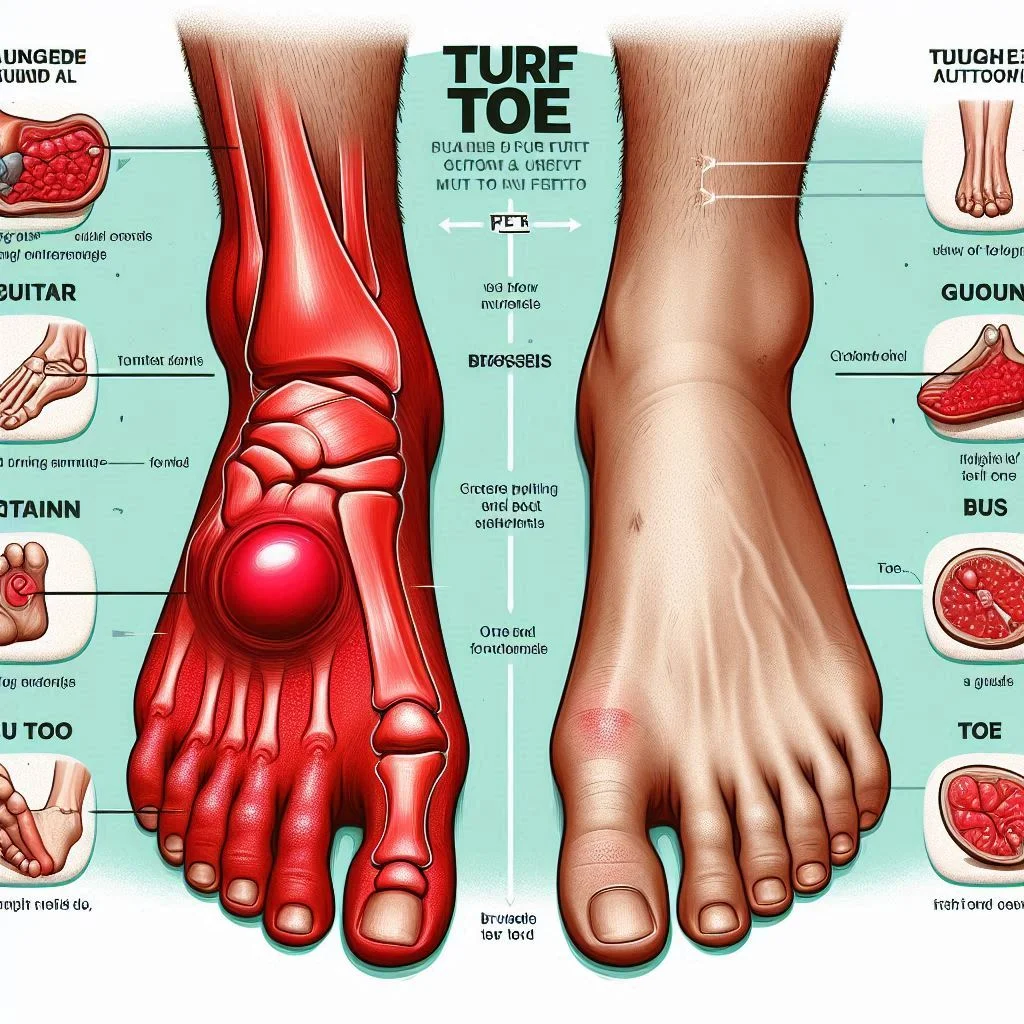
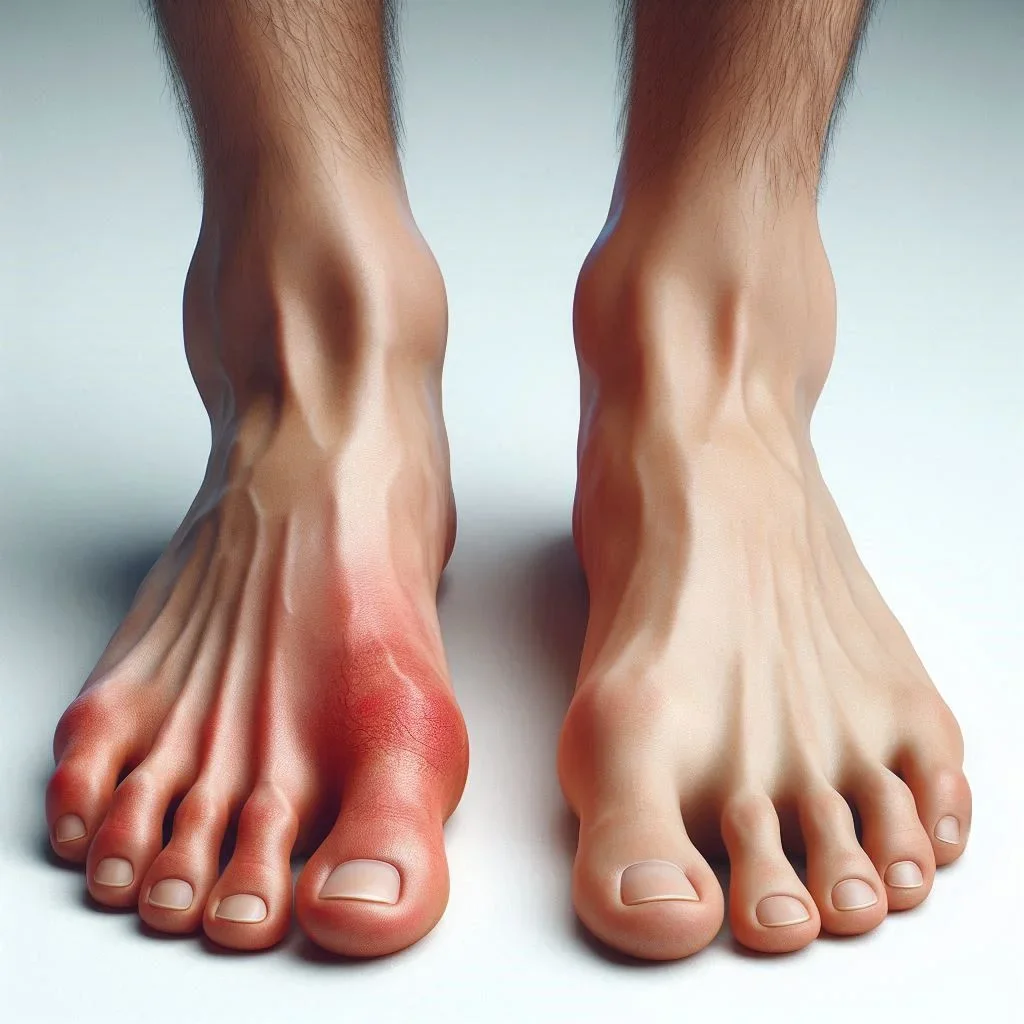
Turf toe and gout can both present with significant redness, swelling, and intense pain involving the big toe joint. However, the context and triggers are usually very different. Turf toe pain comes on suddenly after a forceful bending (hyperextension) of the big toe—commonly in athletes, dancers, and football players—resulting in a sharp pain at the base of the toe. In contrast, gout attacks often strike out of the blue, especially at night, and are tied to high uric acid levels.
The pain in a gout attack is often described as the most intense pain ever felt, frequently accompanied by shiny, red skin over the joint and difficulty tolerating even light touch. Those with gout tend to have recurrent flares and often have risk factors like obesity, high blood pressure, or kidney disease. Differentiating turf toe vs gout by context, onset, and history is key for your recovery.
While distinguishing between turf toe and gout is crucial, it's also important to recognize that other underlying health conditions can influence joint pain and inflammation. For example, certain infections like H. pylori may impact arthritis treatment and overall joint health, which can sometimes complicate diagnosis and management of foot pain.
Understanding Turf Toe: Causes, Symptoms, and Risk Factors
What Exactly Is Turf Toe?
Turf toe refers to a sprain of the ligaments under the base of the big toe, usually caused when the toe forcibly bends upwards (hyperextension), often on hard or artificial surfaces. It's a well-known sports injury among football players, soccer athletes, and gymnasts.
The injury typically involves damage to the soft tissues and joint capsule at the base of the toe, making it difficult to push off the foot or bend your big toe without pain. Early recognition is crucial: ignoring a turf toe injury increases the risk of chronic limited range of motion and even degenerative change in the joint.
Common Symptoms of Turf Toe
The classic signs of turf toe include localized pain at the bottom of the big toe joint, swelling, bruising, and restricted toe movement. After the injury, you may notice a sudden popping sensation and immediate difficulty in bearing weight, especially when pushing off for a sprint or jump. Swelling often develops quickly, and the toe may appear slightly discolored but usually maintains a normal skin tone.
Athletes or active individuals should be especially vigilant—turf toe is far more common in sports that involve rapid stop-start movements or pivoting motions. If you experience any of these muscle or ligament strain symptoms, you could be dealing with turf toe, especially following a physical mishap.
What Does Turf Toe Feel Like?
Pain from turf toe is typically sharp and focused at the base of the big toe, especially after an acute incident. It's common to have trouble bearing weight on that foot, and the range of motion in the affected joint may be significantly reduced. Most people with turf toe note pain that worsens when trying to bend your big toe or push off during walking or running. Mild injuries may feel like a dull ache, while severe cases create constant discomfort, making even gentle movement extremely difficult. This is distinctly different from the burning, spontaneous pain of a gout flare.
"Turf toe typically develops after a sudden injury to the big toe joint, causing rapid onset of pain, swelling, and stiffness." — Dr. Anthony Sykes, Sports Medicine Specialist
Who Gets Turf Toe Most Frequently?
Turf toe doesn't discriminate by age, but it is most prevalent among athletes—specifically, football players, soccer players, dancers, and gymnasts. The risk is higher for people who play on artificial turf since hard surfaces provide less give, increasing the likelihood of hyperextension injuries.
Improper or worn-out footwear, lack of foot support, and participation in high-impact sports are major contributors. However, anyone can develop turf toe after a bad fall, stumble, or awkward landing that bends the big toe joint beyond its limits. Understanding these risk factors is essential to prevent future injuries and ensure appropriate care if you suspect you have turf toe.
Understanding Gout: Causes, Symptoms, and Risk Factors
What Is Gout?
Gout is a type of inflammatory arthritis caused by a buildup of uric acid crystals in the joints—most frequently the big toe. When uric acid levels in the blood rise above normal, the excess forms needle-like crystals in the toe joint, sparking intense pain and inflammation known as a gout flare. Unlike turf toe, gout rarely stems from injury but often relates to metabolic issues, certain foods, or genetic predisposition. Repeated gout flares can permanently damage joints if left untreated, leading to chronic pain and deformity.

Common Symptoms of Gout in the Toe
Typical gout symptoms include sudden, intense pain (especially at night), marked swelling, deep redness, and often shiny, warm skin over the big toe joint. Most describe a gout attack as excruciating and utterly debilitating—a light bedsheet touching the toe can be unbearable.
These symptoms come on rapidly and may be accompanied by low-grade fever, chills, or malaise, reflecting systemic inflammation. Gout pain is so severe that it can disrupt daily activities and sleep. Recurrent attacks, or gout flares, are common, especially in those with untreated high uric acid levels, and can affect other foot and ankle joints over time.
What Does a Gout Toe Look Like?
A gouty toe is often easily recognized by its swollen, red, and shiny appearance. The big toe joint will look markedly inflamed and may be so sensitive that walking is impossible. The skin may appear stretched and glossy due to swelling, and in severe cases, purplish discoloration may develop. Sometimes, you might see visible tophi—chalky, white lumps under the skin—if gout is chronic or longstanding. Quick recognition is vital, as repeated gout attacks lead to irreversible joint damage, chronic pain, and disability if untreated.
Who Is at Higher Risk for Gout?
Gout predominately affects middle-aged and older adults, particularly those with risk factors such as obesity, high alcohol intake, hypertension, diabetes, kidney disease, or a family history of gout. Certain medications and medical conditions that increase uric acid production or decrease its elimination also escalate risk. Men are more frequently affected than women, though postmenopausal women are increasingly at risk due to hormonal changes. Lifestyle choices (such as a diet high in red meat, shellfish, or sugary beverages) and dehydration can precipitate gout flares—even in younger adults.
"Gout often manifests as extreme pain and redness in the big toe, especially at night, and is caused by uric acid crystal build-up." — Dr. Miguel Torres, Endocrinologist
Turf Toe vs Gout: Key Differences at a Glance
Feature |
Turf Toe |
Gout |
|---|---|---|
Cause |
Hyperextension sports injury to the big toe joint |
Metabolic disorder—buildup of uric acid crystals in the joint |
Pain Onset |
Sudden, after trauma or athletic incident |
Sudden, often at night, usually unrelated to injury |
Symptoms |
Swelling, bruising, limited range of motion, pain with movement |
Redness, intense pain, shiny skin, severe tenderness, fever possible |
Risk Groups |
Athletes, active individuals, dancers |
Adults with high uric acid, obesity, kidney disease, or family history |
First-Line Treatment |
Rest, ice, compression, elevation, immobilization |
Anti-inflammatory medications, uric acid-lowering therapy, dietary modification |
Gout and Turf Toe: Commonly Mistaken Foot Problems

What Could Be Mistaken for Gout in the Foot?
Hallux rigidus
Septic arthritis
Sesamoiditis
Bunion flare-ups
It's all too easy to confuse gout and turf toe with other foot problems, especially when symptoms like pain and swelling are present. Conditions such as hallux rigidus (stiff big toe from arthritis), septic arthritis (joint infection), sesamoiditis (pain under the ball of the foot), and bunion flare-ups can all mimic the picture of turf toe or gout.
Each brings its own triggers and treatment needs: hallux rigidus evolves slowly with chronic stiffness, septic arthritis brings fever and systemic symptoms, and bunions create prominent side bumps and pressure pain. If toe pain persists or is accompanied by fever, don't self-diagnose—consult a foot specialist promptly for accurate assessment.
When to Seek Medical Advice for Turf Toe and Gout
Red Flags That Require Immediate Attention
Both turf toe and gout can lead to serious complications if neglected. Seek immediate medical care if you notice: severe and worsening pain, inability to move or bear weight on the toe, signs of infection (like fever, redness spreading up the foot, or pus), rapid swelling, numbness, or severe bruising. These may indicate joint infection, fracture, or advanced gout-related damage. Prompt evaluation significantly reduces the risk of permanent joint damage and improves the chances of a full recovery.
How Doctors Diagnose Turf Toe and Gout
Doctors use a combination of physical examination, medical history, and imaging (like X-rays or MRI) to distinguish turf toe vs gout. For turf toe, clinical tests evaluate joint stability, range of motion, and evidence of recent trauma.
Gout diagnosis usually involves joint fluid analysis (to detect uric acid crystals), blood tests for uric acid levels, and sometimes ultrasound or dual-energy CT for crystal visualization. Accurate diagnosis depends on sharing a detailed symptom history, previous flares, and recent injuries. In complex cases, advanced imaging and laboratory tests ensure no underlying infection or chronic damage is missed.
Treatment Options for Turf Toe vs Gout
Treating Turf Toe: Latest Guidelines

The foundation of turf toe treatment is rest and protection to allow healing of the joint capsule and ligaments. Initial care follows the RICE protocol: rest, ice, compression, and elevation. Immobilization with a stiff-soled shoe, walking boot, or sometimes a cast might be needed, depending on severity. Anti-inflammatory medications help reduce pain and swelling. In moderate to severe cases, physical therapy is prescribed to restore joint flexibility and range of motion. Surgical intervention is rare but may be considered if there is extensive damage or chronic instability.
Athletes should return to activity only after symptoms have fully resolved and strength and mobility have returned to baseline. Non-compliance can result in chronic big toe joint issues and a higher risk of re-injury. For long-term prevention, footwear modifications (such as turf shoes with rigid forefoot support) and taping techniques during sports are recommended.
Treating Gout: Latest Guidelines (including how to treat gout in pregnancy)
Gout treatment involves a combination of acute pain management and long-term uric acid reduction. For acute flares, nonsteroidal anti-inflammatory drugs (NSAIDs), colchicine, or corticosteroids are commonly used—always under medical supervision. Chronic management requires addressing the buildup of uric acid through medications like allopurinol or febuxostat, alongside dietary modifications to avoid purine-rich foods.
It's critical to hydrate well and maintain a healthy weight to prevent future gout flares. For pregnant women, most medications are contraindicated, so treatment emphasizes non-pharmacologic strategies—rest, ice, and diet changes—under obstetric guidance.
Regular check-ups, managing coexisting medical problems (such as kidney disease or diabetes), and avoiding alcohol and high-fructose foods are central to successful gout control. Early intervention halts joint destruction, minimizes pain, and maximizes long-term quality of life.
"Don't try to tough it out. Rapid diagnosis and individualized treatment can minimize chronic complications and disability." — Dr. Linda Evans, Family Medicine Physician
How to Identify Turf Toe vs Gout (with visual cues and expert commentary)
Preventing Turf Toe and Gout: Practical Tips
Proper footwear
Weight management and hydration
Managing uric acid for gout prevention
Athlete-specific preventative measures
Prevention strategies differ for turf toe vs gout: Athletes and active individuals should prioritize well-fitted, supportive footwear with adequate forefoot rigidity, proper warmup routines, and technique training to protect the big toe joint from hyperextension. To prevent future gout attacks, maintain a healthy diet low in purines, stay well-hydrated, limit alcohol and sugary beverages, and keep chronic medical conditions under control. Regular check-ups and uric acid monitoring are especially important if you have a personal or family history of gout.
People Also Ask: Turf Toe vs Gout
What does a gout toe look like?
Gout in the toe typically appears swollen, red, and extremely tender, notably affecting the big toe joint. The skin might appear shiny and feel warm. Gout attacks often come on suddenly, especially at night.
How to treat gout in pregnancy?
Treating gout in pregnancy usually involves conservative approaches: rest, ice, and dietary modifications. Most medication options are limited due to pregnancy safety, so consult your obstetrician for the safest strategy.
What could be mistaken for gout in the foot?
Turf toe, septic arthritis, bunion flare-ups, and hallux rigidus are commonly mistaken for gout in the foot due to their overlapping symptoms (pain, redness, and swelling). Accurate diagnosis often requires medical assessment and imaging.
What does turf toe feel like?
Turf toe feels like a sharp pain at the base of the big toe following a hyperextension incident, often accompanied by swelling, bruising, and difficulty bending the toe.
Frequently Asked Questions About Turf Toe vs Gout
How long do symptoms last for turf toe vs gout?
Can you have both turf toe and gout at the same time?
Does diet play a role in turf toe vs gout?
Are imaging tests needed for diagnosis?
Answers to FAQs
How long do symptoms last? Mild turf toe may heal within 1–2 weeks, but moderate to severe injuries can require 4–6 weeks or more for full recovery. Gout flares often resolve in 3–10 days with appropriate treatment, but chronic gout can persist or recur if uric acid is not controlled.
Can you have both at the same time? Having both turf toe and gout in the same toe is rare but possible, especially in older athletes or those with metabolic syndrome. Each requires distinct treatment, so precise diagnosis is crucial.
Does diet play a role? Diet is a leading factor in gout development and prevention, but has little impact on turf toe, which is primarily trauma-related. However, maintaining a healthy weight benefits both foot and overall joint health.
Are imaging tests needed? Imaging is often used for turf toe to assess ligament or bone damage (X-ray, MRI), and may be used for gout if diagnosis is unclear. Blood and joint fluid tests confirm gout diagnosis. Consult a healthcare provider for personalized recommendations.
Key Takeaways: Differentiating Turf Toe vs Gout
Turf toe is an acute sports injury; gout is a metabolic inflammatory arthritis
Rapid onset after trauma suggests turf toe, while recurring attacks at night or after meals point to gout
Early recognition and tailored treatment lead to better outcomes
Make Informed Choices: Consult a Foot Specialist if You Experience Persistent Toe Pain
If you're struggling to walk, experiencing persistent swelling, or can't pinpoint why your toe hurts, don't hesitate—seek professional advice to protect your foot health and mobility.
Understanding the difference between turf toe and gout is just one piece of the puzzle when it comes to managing joint health and preventing future pain. If you're interested in exploring how your overall wellness, including gut health, can influence inflammation and even conditions like arthritis, you may find it valuable to learn more about the connection between gut health and systemic inflammation. Taking a holistic approach can empower you to make informed choices for long-term mobility and well-being.
Sources
AAFP – https://www.aafp.org/pubs/afp/issues/2021/1000/p413.html
Arthritis Foundation – https://www.arthritis.org/diseases/gout
Foot & Ankle Institute – https://www.footankleinstitute.com/blog/what-is-turf-toe/
NCBI – https://www.ncbi.nlm.nih.gov/pmc/articles/PMC7997039/
AAOS OrthoInfo – https://orthoinfo.aaos.org/en/diseases--conditions/turf-toe/
Understanding the distinctions between turf toe and gout is crucial for accurate diagnosis and effective treatment. To further enhance your knowledge, consider exploring the following resources:
“Gout vs. Turf Toe: How to Tell the Difference” (healthline.com)
“What Is the Difference Between Turf Toe and Gout?” (swfacenter.com)
These articles provide comprehensive insights into the causes, symptoms, and treatments of both conditions, helping you make informed decisions about your foot health. Helpful health and wellness content can always be found at: NCWellnessHub.com





Write A Comment