NC Wellness Hub
North Carolina Wellness Hub
  • Home
  • Categories
    • Wellness
    • General Health
    • Holistic
    • News
    • Living & Travel
    • Lifestyle
    • Fitness & Exercise
    • Mental Health
    • Stress Management
    • FEATURE
    • Sleep
    • Allergies
    • Medicines & Supplements
    • Weight Loss
    • Kids Health
    • Fertility & Pregnancy
    • Cancer
    • Heart Health
    • Skin & Hair
    • Arthritis
    • Dental
    • Vision
    • Digestive
    • Bone Health
    • Sports Performance
  • About Us
  • Editorial Standards
5 Minutes Read

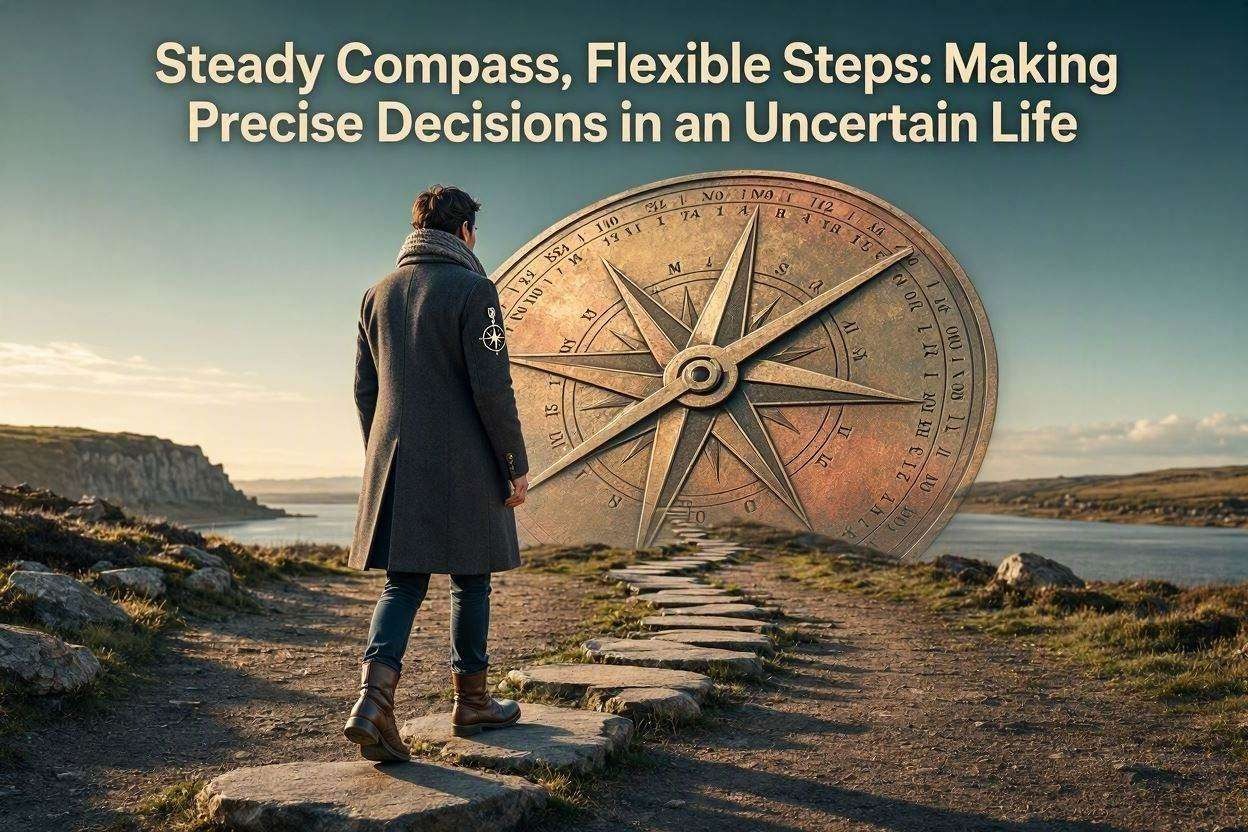
Steady Compass, Flexible Steps: Making Precise Decisions in an Uncertain Life

Precision decisions


Precision sounds like it should mean rigidity — a fixed plan, followed exactly. But the people who actually navigate life well tend to do something almost the opposite: they hold their direction steady while staying genuinely flexible about the route. That combination, not certainty alone, is what separates a life that adapts well from one that either drifts or snaps under pressure.

Getting there starts with an uncomfortable but necessary step: seeing yourself accurately enough to know what you're actually working with.

You Can't Navigate What You Can't See Clearly

Most self-assessment is really just self-narration — a story you tell about your strengths, patterns, and motivations that may or may not match reality. This gap matters more than it seems. Research on self-awareness has found that although the vast majority of people believe they understand themselves well, the number who actually meet a rigorous standard for self-awareness is dramatically smaller.

That gap between perceived and actual self-knowledge is where a lot of misdirected effort quietly happens — chasing goals that don't fit, repeating patterns that don't work, and being consistently surprised by outcomes that a clearer view of yourself could have predicted.

Closing that gap isn't about harsh self-criticism or constant introspection — both tend to produce rumination rather than insight. It's about specific, structured feedback: comparing what you expected from a decision against what actually happened, and doing it consistently enough to see real patterns instead of one-off impressions. Self-assessment done this way isn't a soft exercise in self-reflection. It's closer to data collection, and it's the foundation everything else in this process depends on.

Letting Values Actually Decide Things

Once you can see yourself more clearly, the next step is letting that clarity actually inform decisions — not just observe them afterward. A values-based decision isn't one where you feel good about the choice; it's one where the choice can be traced directly back to a specific value you've named, rather than to convenience, fear, or whoever's opinion was loudest in the room.

In practice, this means building a habit of pausing before a significant decision to ask a very specific question: which of my values does each option actually serve? Not which option is easier, safer, or more expected — which one is more honest to what you've already identified as mattering to you.

This single question does a surprising amount of work, because it shifts the decision from "what should I do" — a question with infinite competing answers — to "which of these paths is more consistent with who I've already said I want to be," which is usually much easier to answer honestly.

Precision and rigisity part ways

Why Flexibility Isn't a Betrayal of Your Values

Here's where precision and rigidity part ways: living by your values doesn't mean applying them identically in every circumstance. A value like "honesty" might mean direct feedback in one relationship and gentler timing in another, without the underlying value changing at all. Treating values as fixed rules rather than flexible directions is a common trap — it turns something meant to guide you into something that fights you, especially when life doesn't cooperate with the plan.

Psychological flexibility — the ability to stay committed to what matters while adapting how you pursue it — is what keeps values useful under pressure instead of becoming one more source of guilt when circumstances change. A goal tied to a value can be delayed, restructured, or approached differently without abandoning the value itself. The value stays constant; the method serving it doesn't have to.

This is the difference between a compass and a map. A map gives you one fixed route and breaks the moment the terrain changes. A compass just keeps pointing toward what matters, letting you adjust the actual path as many times as reality requires.

What the Experts Say

Tasha Eurich, organizational psychologist and author of Insight, has spent years studying the gap between perceived and actual self-awareness. Her research found something worth sitting with: the overwhelming majority of people believe they're self-aware, but the number who actually meet the bar is dramatically smaller.

Steven Hayes, psychologist and originator of Acceptance and Commitment Therapy, developed the concept of psychological flexibility that makes values-based living workable under real-world pressure. His summary of the balance required is direct: vision without action is a daydream, and action without vision is a nightmare.

Peter Drucker, management consultant and author of Managing Oneself, pioneered a rigorous method for closing the self-knowledge gap through structured feedback rather than assumption. His prescription is concrete: write down what you expect from a key decision, then compare it to the actual results months later — that comparison, repeated, is what reveals real strengths and blind spots.

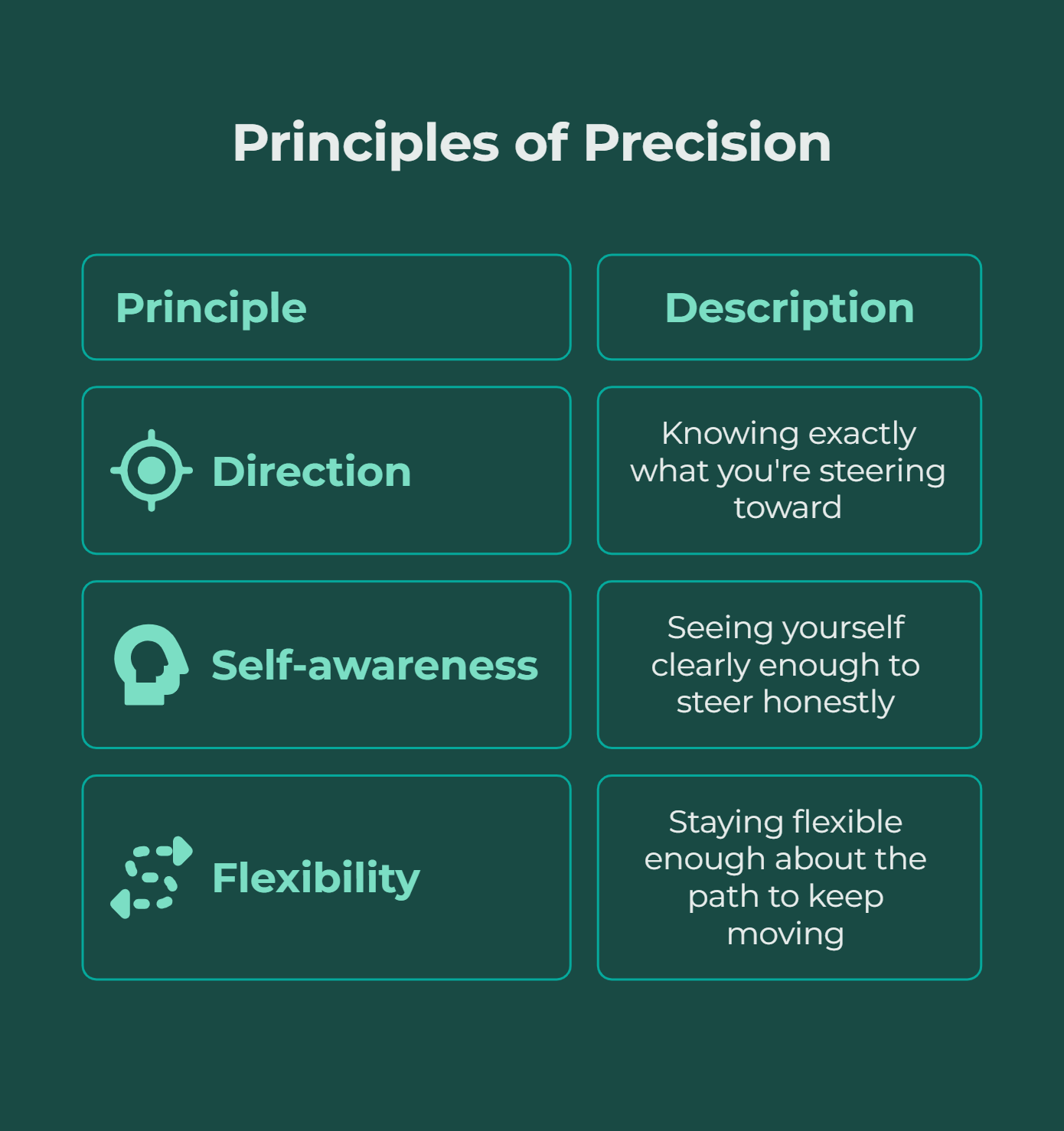
Principles of Precision

For Further Listening

  • Insight by Tasha Eurich — research-backed strategies for closing the gap between how you see yourself and how you actually are.

  • A Liberated Mind by Steven Hayes — an accessible guide to psychological flexibility and living by your values even when circumstances shift.

  • Managing Oneself by Peter Drucker — a classic, practical framework for honest self-assessment through feedback rather than assumption.

Important Takeaways

  • Most people significantly overestimate their own self-awareness; closing that gap requires structured feedback, not just introspection.

  • A values-based decision can be traced directly to a named value, rather than to convenience, fear, or outside pressure.

  • Values function best as flexible directions, not fixed rules — the same value can look different depending on circumstances without losing its meaning.

  • Psychological flexibility is what allows you to adapt your approach while staying committed to what actually matters, rather than treating any change in method as abandoning your values.

Exercises To Help You

1. The Feedback Analysis The next time you make a significant decision, write down exactly what you expect to happen as a result. Set a reminder for six to nine months out, then compare the actual outcome to your prediction. Repeated over a few decisions, this reveals real patterns in your judgment that memory alone tends to distort.

2. The Values Trace For your next meaningful decision, write down each option and, next to it, name the specific value it serves. If an option doesn't clearly serve any value on your list, that's useful information — even if it's still the option you ultimately choose.

3. The Flexibility Check Think of a value you've held rigidly in one specific way. Ask: is there another way to honor this same value that better fits my current circumstances? Practice separating the value itself from the one method you've been using to express it.

4. The Compass Reset Once a month, revisit your personal values and ask whether your recent decisions have actually tracked toward them. Adjust the route, not the destination — the goal is realignment, not starting over.


Precision isn't about locking yourself into a single plan and forcing life to comply. It's about knowing exactly what you're steering toward, seeing yourself clearly enough to steer honestly, and staying flexible enough about the path to keep moving even when the terrain changes.

NCWellnessHub.com

Living & Travel Lifestyle FEATURE

0 Comments

Write A Comment

*
*
Please complete the captcha to submit your comment.
Related Posts All Posts

Dating Apps & Dopamine: How Swiping Hooks Your Brain (And How to Reset)

Why is swiping so hard to stop? Learn how dating apps and dopamine create a habit loop, what research shows, and a 7-day plan to reset your brain.

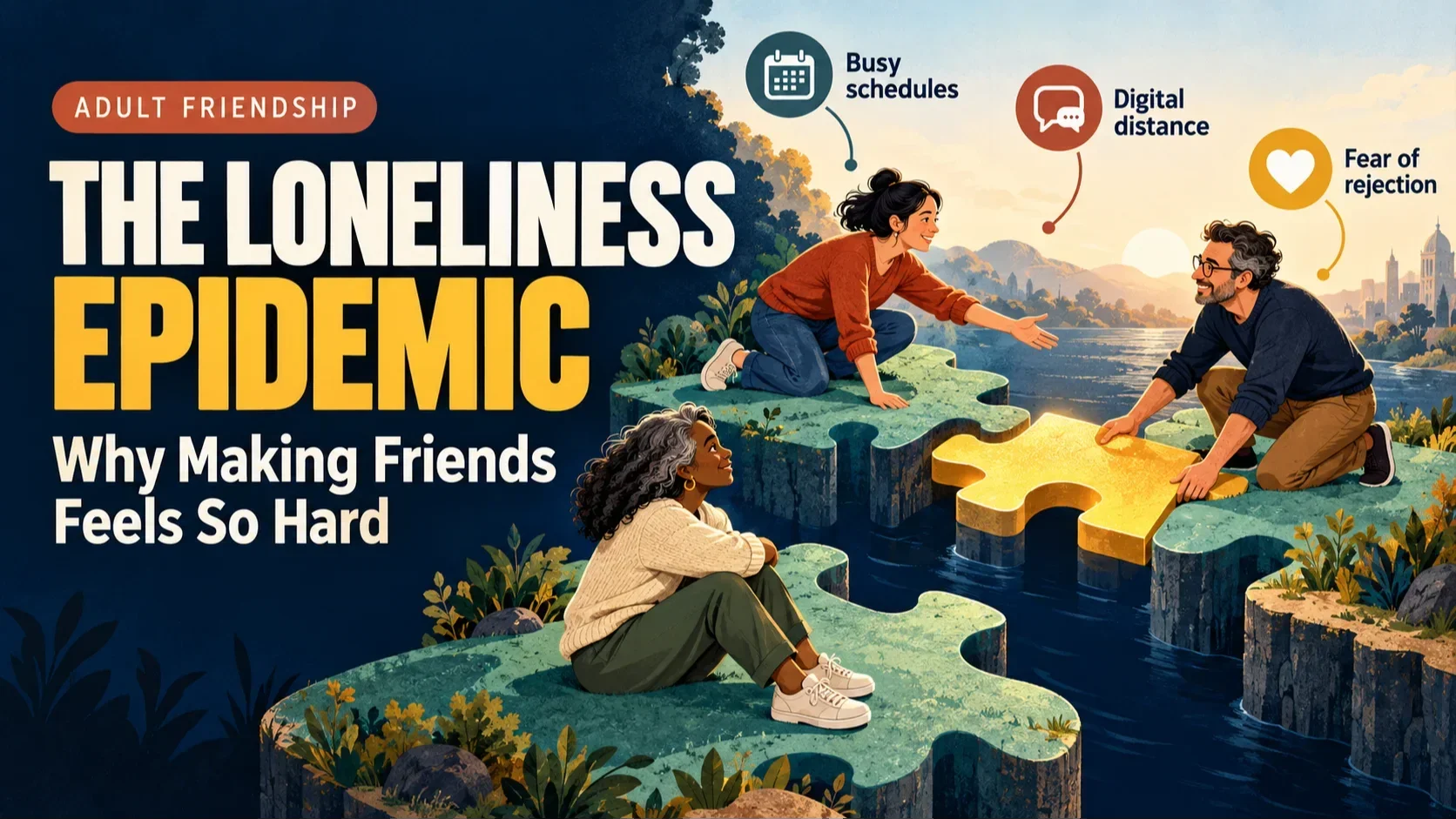
The Loneliness Epidemic: Why Harvard Says Nearly Half of Us Forgot How to Make Friends

Discover why making friends is so hard as an adult, with insights from Harvard’s latest research. Learn about the challenges adults face, the impact on well-being, and get practical advice.

The Invisible Burnout: 4 Science-Backed Ways to Unhook From Daily Stress

Feeling overwhelmed by daily stress isn’t weakness—it’s a shared human experience. After another night cut short by racing thoughts, you sit at your desk, the flood of notifications and unopened emails stirring a familiar wave of fatigue and agitation. This cycle isn’t just in your head—it’s a sign of a deeper, biological response.Recognizing burnout’s silent drain is the first step to reclaiming peace. In this editorial, discover science-backed ways to unhook from daily stress, reclaim control, and live a calmer, more balanced life starting today.A Shared Struggle: Why Daily Stress Is More Than 'Just in Your Head'Daily stress isn’t simply a product of weak resolve or poor time management—it’s a lived reality for nearly everyone in today’s always-on world. Despite relentless messages urging us to “power through,” the daily barrage of demands—from overflowing inboxes to endless multitasking—can leave even the most resilient among us feeling depleted.Stress is not just a mental struggle; it’s a physiological cascade triggered by our body’s nervous system, often with barely any warning signs. If you’ve ever felt your shoulders tense up before opening an especially daunting email, or found yourself irritable and exhausted at the end of a day packed with meetings, you’ve felt the physical toll of invisible burnout.Most importantly, it’s time to retire the idea that daily stress is simply a thought pattern to “snap out of. ” Instead, we should recognize it as a sign of our nervous system doing its job—responding to pressure, uncertainty, and overload.Real solutions aren’t about just thinking positive or pushing harder; they’re about directly communicating with your nervous system using simple, actionable science-based tools. In the sections ahead, we’ll explore practical strategies to unhook from stress with micro-habits and proven techniques—no radical life overhauls required.Recognizing the Invisible Burnout: The Modern Epidemic of Stress OverloadThe modern world has created a perfect storm for stress overload, making invisible burnout an epidemic across all ages and professions. We live in a culture that glorifies busyness, equating exhaustion with accomplishment, and answering “busy!” to “how are you?” as a badge of honor.Yet, beneath this surface, our bodies respond to chronic micro-stressors in concrete, physical ways—racing heart, shallow breath, brain fog, or irritability—and these signals are our body’s emergency flares, not just background noise. It’s easy to miss these signs, dismissing them as just part of the grind, but awareness is the starting point for breaking the cycle.Burnout is a process, not a single event. It involves chronic exposure to stress without relief. Even high performers are not immune. In fact, those who push hardest may be most at risk of invisible burnout, as consistent overdrive eventually wears down the body’s natural ability to bounce back.By recognizing these subtler signals—daily exhaustion, trouble focusing, irritability, or lack of motivation—we bring invisible burnout into the open. Validating your lived experience is the first step; the next is using concrete science-backed steps to ease the load and reclaim your sense of vitality. "Feeling overwhelmed by daily stress isn’t weakness—it’s a shared human experience."What You'll Learn About How to Handle Daily Stress EasilyWhy stress feels overwhelming even when you ‘should’ be able to handle itFour science-backed ways to handle daily stress easilyActionable micro-habits to restore calm amid chaosWhat recent neuroscience says about managing chronic daily stressScience Speaks: How to Handle Daily Stress Easily Using Nervous System ‘Unhooking’Here’s what most advice gets wrong: Stress isn’t just a byproduct of negative thinking or a busy schedule. It’s hardwired into our nervous system, and the fastest way to disrupt the stress cycle is to engage our biology—not just our minds. New neuroscience shows that micro-habits—small, doable shifts—can help you regulate stress before it spirals out of control.Rather than offering yet another exhaustive “self-care” list, let’s focus on four science-backed techniques that genuinely help you stop stress in its tracks, no matter where you are or how little time you have.Understanding the early warning signs your body sends can make these stress management techniques even more effective. If you’re curious about how to spot the subtle physical cues of stress before they escalate, explore these key wellness insights on recognizing the signs your body is stressed for a more proactive approach.These strategies aren’t about escaping your responsibilities, but about hitting “reset” on your body’s stress response, so you can show up more focused, calm, and clear-headed in your everyday life. Consider this your hands-on guide to making stress management simple, with steps you can practice today—without a meditation retreat, expensive gear, or hours of free time.Method 1: The Power of Mindful Microbreaks (and Why They Outperform Willpower)"Microbreaks help you shift from fight-or-flight to rest-and-digest—no meditation cushion required." – Dr. A. Harris, Stress NeuroscientistYour nervous system can only “power through” for so long before it starts screaming for a break. Microbreaks—short, intentional pauses (as brief as 30 seconds)—have been shown by neuroscience to rapidly disrupt the stress response. These tiny resets outpace raw willpower because they act physiologically, moving you from “fight or flight” back to the rest-and-digest state.That’s why even a quick desk stretch or a window stare can prove more effective than hours of forced focus. Busy schedule? No problem—microbreaks are built for real life.On your busiest days, try simple, mindful resets: roll your shoulders, look out at greenery, do a full-body yawn and stretch, close your eyes and notice your breath for three slow rounds.These moments don’t just rest your mind—they tell your body it’s safe, dialing down the “danger” signals in your brain. Over time, a daily practice of microbreaks creates greater resilience, helping you handle more without burning out.The neuroscience behind brief mindful momentsRealistic microbreak ideas for even the busiest days Method 2: Tuning Your Nervous System With Simple Sensory RegulationEveryday sensory input has a dramatic impact on stress—sometimes more than we realize. Manipulating your environment through sound, light, or touch gently guides your nervous system back to calm.For example, listening to bilateral music (sounds alternating between ears), diffusing soft lighting, or touching a cool stone bracelet can provide immediate physiological feedback, lowering muscle tension and heart rate. These aren’t just therapeutic trends—they’re based on the science that our senses are direct gateways to nervous system balance.Quick sensory resets don’t require privacy or perfection. Try bilateral stimulation by tapping your left and right knees while breathing, play calming music for three minutes, or press your palm around a smooth sensory object.Dimming harsh lights or stepping outside for sunlight can shift your state from agitated to grounded. This kind of “nervous system tuning” can turn even hectic spaces into zones of recovery, equipping you to meet stress with more control and less overwhelm.How sound, light, and touch can reset your stress responseQuick activities: from bilateral stimulation to calming musicMethod 3: The 4-Count Breath—Nervous System Reset On DemandHardwired into our biology, our breath is the one system we can consciously control to quickly influence stress hormones. Slow, rhythmic breathing tells your brain that the threat has passed, directly reducing adrenaline and cortisol levels—often in under a minute. The 4-count breath technique is one of the simplest, yet most powerful, tools to regulate tension and regain clarity in any stressful moment.How do you do it? Sit or stand tall. Breathe in slowly for four counts, hold for four, exhale for four, and rest for four counts before starting again. Repeat for four rounds. This deliberate pattern not only slows your heart rate but also gives your mind a focusing anchor, cutting through spiraling thoughts and turning chaos into calm. Use the 4-count breath before tough conversations, after a stressful commute, or anytime your body needs to hit reset.Why breath patterns influence stress hormonesA step-by-step guide to the 4-count breath Method 4: Rewiring ‘Stress Scripts’ Through Language and Self-TalkThe ways we talk to ourselves in stressful moments create powerful “scripts” for our brain and body. Research confirms that self-talk can amplify or ease the emotional cascade from a stress trigger. Instead of catastrophizing (“I’ll never catch up” or “I can’t handle this”), strategic reframing—shifting your self-talk to something supportive but realistic—can flip your internal narrative and calm your nervous system on the spot.Swap automatic negative scripts for new language. For example, turn “This is too much for me” into “This is tough, but I can take it step by step,” or change “I must respond perfectly” into “I’ll do my best and adjust if needed. ”These micro-shifts in language give your brain permission to stop sounding a constant alarm, helping you handle daily stress with more patience and less pressure. Practicing healthy self-talk can feel awkward at first, but even small changes yield powerful, lasting effects on how you process everyday stress.Comparing Popular Strategies: How to Handle Daily Stress EasilyStrategyActive IngredientsBest ForEffort LevelMindful MicrobreaksShifts nervous system, resets attentionBusy schedules, high pressure daysLowSensory RegulationDirects sensory pathways to calm bodyImmediate overwhelm, environmental stressLow4-Count BreathRegulates stress hormones via rhythmAcute stress, anxiety spikesVery LowReframing Self-TalkRewires brain’s stress interpretationChronic overwhelm, persistent negativityLow-ModerateGeneric “Self-Care”Varies (baths, hobbies, etc.)Long-term recovery, not acute stressModerate-HighExpert Perspectives: Moving Beyond ‘Self-Care’—What Actually Calms Daily Stress"Effective stress relief is not about escaping your life, but learning to regulate your body within it." – Dr. S. Mohamed, Clinical PsychologistCommon Misconceptions About How to Handle Daily Stress EasilyNot all advice on how to handle daily stress easily is rooted in science. Common myths—like splurging on generic self-care, endlessly multitasking, or wishing stress away with willpower—are not only ineffective, but can make things worse. In reality, modern neuroscience suggests regulating your nervous system through targeted microshifts is far more effective than bubble baths or “treat yourself” routines for genuine resilience. Multitasking, often seen as a strength, actually increases stress hormones and splits your brain’s focus, reducing productivity and raising error rates. The most resilient people aren’t those who do it all—they’re those who regulate their internal cues efficiently.Give yourself permission to stop chasing “perfect” self-care and opt for simple, immediate strategies that nurture real bodily calm. Science confirms: it’s not about doing more, but about doing the right small things, consistently.8 Micro-Shifts for Handling Daily Stress EasilyStep outside for two minutes of sunlightPractice the 4-count breathListen to bilateral musicReframe stressful emails with new languageTry grounding with a sensory object (stone, bracelet)Limit Social Media Checking to 3x/dayVisualize a safety cue (photograph, memory)End your workday with a 30-second stretch People Also AskHow to treat chronic stress and anxiety?Answer: Chronic stress and anxiety benefit from a holistic approach, including consistent stress regulation techniques, professional support, and lifestyle shifts that prioritize nervous system health. The most sustainable path is combining self-led daily habits—like sensory resets and curated self-talk—with regular evaluation by a mental health specialist.What is the 3-3-3 rule for stress?Answer: The 3-3-3 rule is an anxiety reduction technique. Look around and identify three things you see, listen for three sounds you hear, and move three parts of your body. This sensory-based mindfulness exercise is a quick tool for grounding yourself during moments of acute stress.What are the best ways to manage stress?Answer: The best ways to manage stress are science-backed and practical. Top recommendations include nervous system regulation (microbreaks, breathwork, sensory input), healthy self-talk, setting tech boundaries, and seeking professional support when needed. Multimodal strategies work best for lasting resilience. What are 10 ways to reduce stress at work?Answer: Ten workplace stress reduction tips: 1) Mindful breathing, 2) Strategic breaks, 3) Stretching, 4) Limiting multitasking, 5) Decluttering workspace, 6) Positive self-talk, 7) Sensory grounding, 8) Connection with a colleague, 9) Movement (walking), 10) Setting clear task boundaries.FAQs on How to Handle Daily Stress EasilyIs stress really harmful if it’s ‘normal’? Stress—even when common—can take a significant biological toll over time. Chronic exposure affects mood, sleep, and physical health, so even “everyday” stress needs proactive attention.Can you actually rewire your body’s stress response? Yes, consistent small changes in breath, sensory input, and self-talk literally create new patterns in your brain and nervous system, reducing reactive stress over time.How quickly can micro-shifts start helping? Many micro-shifts (like 4-count breathing or sensory grounding) can calm immediate stress in under a minute, and with repetition, build long-term resilience.Do I need therapy, or can I self-manage daily stress? Many people manage daily stress well with self-led strategies, but if your symptoms persist or disrupt daily life, partnering with a mental health professional is a wise step.Key Takeaways for How to Handle Daily Stress EasilyBurnout is a biological—not personal—response. Validation is key.Science-backed micro-habits can quickly relieve daily stress.Fast nervous system resets outpace generic ‘self-care’ for handling daily stress.Small, sustainable steps beat big, drastic life changes.Find Your Next Step: Read More at NCWellnessHub.com To continue your learning, you’ll find more articles and guides at NCWellnessHub.comYou May Also Like These:The Burnout Remedy: 4 Research-Backed Ways to Save Your Strands from Chronic StressTired Versus Triggered: Why Everything Is Getting on Your Last NerveThe "Blue Mind" Effect: Why Sitting Near Water Shuts Off Your Brain’s Stress SwitchNOTE:Self-care strategies can help build resilience, but they aren't a replacement for expert support when stress turns into deep burnout. If life's setbacks feel overwhelming or unmanageable on your own, connect with a qualified healthcare provider or therapist. Seeking professional guidance gives you tailored strategies to process chronic stress and rebuild your well-being safely.Disclaimer:The information provided in this article is strictly for educational, informational, and research purposes based on studies, data, and literature available at the time of writing. The author and publisher are not medical professionals, doctors, or licensed healthcare providers. Content on this site is not intended to serve as a substitute for professional medical advice, diagnosis, or treatment.Always consult with a qualified physician or healthcare provider before making any decisions regarding a medical condition, diet, or health regimen, or before starting or stopping any supplementation. Never disregard professional medical advice or delay seeking it because of something you have read in this article.


NCWellnessHub.com

Discover Your Hub for NC Health & Wellness info, your go-to resource for comprehensive insights, tips, and updates on healthcare, nutrition, fitness, and overall well-being in North Carolina.

COMPANY

  • Privacy Policy
  • Terms of Use
  • Advertise
  • Contact Us
  • Menu 5
  • Menu 6
NC Wellness Hub


Raleigh, North Carolina

ABOUT US

At NC Wellness Hub, we are more than just a resource; we are a community united by a shared passion for health and well-being. Our journey began with a simple yet profound belief: that everyone deserves access to the knowledge and support necessary to lead a fulfilling life.

© 2026 NC Wellness Hub All Rights Reserved. Richardson Drive , Raleigh, NC 27603 . Contact Us . Terms of Service . Privacy Policy

eyJjb21wYW55IjoiTkMgV2VsbG5lc3MgSHViIiwiYWRkcmVzcyI6IlJpY2hhcmRzb24gRHJpdmUgIiwiY2l0eSI6IlJhbGVpZ2giLCJzdGF0ZSI6Ik5DIiwiemlwIjoiMjc2MDMiLCJlbWFpbCI6Im1pa2VjZXJ0bWFuQGdtYWlsLmNvbSIsInRvcyI6IlBIQStQSE4wY205dVp6NDhaVzArVjJobGJpQjViM1VnYzJsbmJpMXBiaUIzYVhSb0lIVnpMQ0I1YjNVZ1lYSmxJR2RwZG1sdVp5WnVZbk53T3lCNWIzVnlJSEJsY20xcGMzTnBiMjRnWVc1a0lHTnZibk5sYm5RZ2RHOGdjMlZ1WkNCNWIzVWdaVzFoYVd3Z1lXNWtMMjl5SUZOTlV5QjBaWGgwSUcxbGMzTmhaMlZ6TGlCQ2VTQmphR1ZqYTJsdVp5QjBhR1VnVkdWeWJYTWdZVzVrSUVOdmJtUnBkR2x2Ym5NZ1ltOTRJR0Z1WkNCaWVTQnphV2R1YVc1bklHbHVJSGx2ZFNCaGRYUnZiV0YwYVdOaGJHeDVJR052Ym1acGNtMGdkR2hoZENCNWIzVWdZV05qWlhCMElHRnNiQ0IwWlhKdGN5QnBiaUIwYUdseklHRm5jbVZsYldWdWRDNDhMMlZ0UGp3dmMzUnliMjVuUGp3dmNENEtDanh3UGp4aElHaHlaV1k5SW1oMGRIQTZMeTkzZDNjdVoyOXZaMnhsTG1OdmJTSSthSFIwY0RvdkwzZDNkeTVuYjI5bmJHVXVZMjl0UEM5aFBqd3ZjRDRLQ2p4d1BpWnVZbk53T3p3dmNENEtDanh3UGp4emRISnZibWMrVTBWU1ZrbERSVHd2YzNSeWIyNW5Qand2Y0Q0S0NqeHdQbGRsSUhCeWIzWnBaR1VnWVNCelpYSjJhV05sSUhSb1lYUWdZM1Z5Y21WdWRHeDVJR0ZzYkc5M2N5QjViM1VnZEc4Z2NtVmpaV2wyWlNCeVpYRjFaWE4wY3lCbWIzSWdabVZsWkdKaFkyc3NJR052YlhCaGJua2dhVzVtYjNKdFlYUnBiMjRzSUhCeWIyMXZkR2x2Ym1Gc0lHbHVabTl5YldGMGFXOXVMQ0JqYjIxd1lXNTVJR0ZzWlhKMGN5d2dZMjkxY0c5dWN5d2daR2x6WTI5MWJuUnpJR0Z1WkNCdmRHaGxjaUJ1YjNScFptbGpZWFJwYjI1eklIUnZJSGx2ZFhJZ1pXMWhhV3dnWVdSa2NtVnpjeUJoYm1RdmIzSWdZMlZzYkhWc1lYSWdjR2h2Ym1VZ2IzSWdaR1YyYVdObExpQlpiM1VnZFc1a1pYSnpkR0Z1WkNCaGJtUWdZV2R5WldVZ2RHaGhkQ0IwYUdVZ1UyVnlkbWxqWlNCcGN5QndjbTkyYVdSbFpDQW1jWFZ2ZER0QlV5MUpVeVp4ZFc5ME95QmhibVFnZEdoaGRDQjNaU0JoYzNOMWJXVWdibThnY21WemNHOXVjMmxpYVd4cGRIa2dabTl5SUhSb1pTQjBhVzFsYkdsdVpYTnpMQ0JrWld4bGRHbHZiaXdnYldsekxXUmxiR2wyWlhKNUlHOXlJR1poYVd4MWNtVWdkRzhnYzNSdmNtVWdZVzU1SUhWelpYSWdZMjl0YlhWdWFXTmhkR2x2Ym5NZ2IzSWdjR1Z5YzI5dVlXeHBlbUYwYVc5dUlITmxkSFJwYm1kekxqd3ZjRDRLQ2p4d1BsbHZkU0JoY21VZ2NtVnpjRzl1YzJsaWJHVWdabTl5SUc5aWRHRnBibWx1WnlCaFkyTmxjM01nZEc4Z2RHaGxJRk5sY25acFkyVWdZVzVrSUhSb1lYUWdZV05qWlhOeklHMWhlU0JwYm5admJIWmxJSFJvYVhKa0lIQmhjblI1SUdabFpYTWdLSE4xWTJnZ1lYTWdVMDFUSUhSbGVIUWdiV1Z6YzJGblpYTXNJRWx1ZEdWeWJtVjBJSE5sY25acFkyVWdjSEp2ZG1sa1pYSWdiM0lnWTJWc2JIVnNZWElnWVdseWRHbHRaU0JqYUdGeVoyVnpLUzRnV1c5MUlHRnlaU0J5WlhOd2IyNXphV0pzWlNCbWIzSWdkR2h2YzJVZ1ptVmxjeXdnYVc1amJIVmthVzVuSUhSb2IzTmxJR1psWlhNZ1lYTnpiMk5wWVhSbFpDQjNhWFJvSUhSb1pTQmthWE53YkdGNUlHOXlJR1JsYkdsMlpYSjVJRzltSUdWaFkyZ2dVMDFUSUhSbGVIUWdiV1Z6YzJGblpTQnpaVzUwSUhSdklIbHZkU0JpZVNCMWN5NGdTVzRnWVdSa2FYUnBiMjRzSUhsdmRTQnRkWE4wSUhCeWIzWnBaR1VnWVc1a0lHRnlaU0J5WlhOd2IyNXphV0pzWlNCbWIzSWdZV3hzSUdWeGRXbHdiV1Z1ZENCdVpXTmxjM05oY25rZ2RHOGdZV05qWlhOeklIUm9aU0JUWlhKMmFXTmxJR0Z1WkNCeVpXTmxhWFpsSUhSb1pTQlRUVk1nZEdWNGRDQnRaWE56WVdkbGN5NGdWMlVnWkc4Z2JtOTBJR05vWVhKblpTQmhibmtnWm1WbGN5Qm1iM0lnWkdWc2FYWmxjbmtnYjJZZ1pXMWhhV3dnYjNJZ1UwMVRMaUJVYUdseklHbHpJR0VnWm5KbFpTQnpaWEoyYVdObElIQnliM1pwWkdWa0lHSjVJSFZ6TGlCSWIzZGxkbVZ5TENCd2JHVmhjMlVnWTJobFkyc2dkMmwwYUNCNWIzVnlJR2x1ZEdWeWJtVjBJSE5sY25acFkyVWdjSEp2ZG1sa1pYSWdZVzVrSUdObGJHeDFiR0Z5SUdOaGNuSnBaWElnWm05eUlHRnVlU0JqYUdGeVoyVnpJSFJvWVhRZ2JXRjVJR2x1WTNWeUlHRnpJR0VnY21WemRXeDBJR1p5YjIwZ2NtVmpaV2wyYVc1bklHVnRZV2xzSUdGdVpDQlRUVk1nZEdWNGRDQnRaWE56WVdkbGN5QjBhR0YwSUhkbElHUmxiR2wyWlhJZ2RYQnZiaUI1YjNWeUlHOXdkQzFwYmlCaGJtUWdjbVZuYVhOMGNtRjBhVzl1SUhkcGRHZ2diM1Z5SUdWdFlXbHNJR0Z1WkNCVFRWTWdjMlZ5ZG1salpYTXVJRmx2ZFNCallXNGdZMkZ1WTJWc0lHRjBJR0Z1ZVNCMGFXMWxMaUJLZFhOMElIUmxlSFFnSm5GMWIzUTdVMVJQVUNaeGRXOTBPeUIwYnladVluTndPenhvYVdkb2JHbG5hSFFnWTJ4aGMzTTlJbU52YlhCaGJubFRUVk5RYUc5dVpWVndaR0YwWlNJK2JuVnNiRHd2YUdsbmFHeHBaMmgwUGk0Z1FXWjBaWElnZVc5MUlITmxibVFnZEdobElGTk5VeUJ0WlhOellXZGxJQ1p4ZFc5ME8xTlVUMUFtY1hWdmREc2dkRzhnZFhNc0lIZGxJSGRwYkd3Z2MyVnVaQ0I1YjNVZ1lXNGdVMDFUSUcxbGMzTmhaMlVnZEc4Z1kyOXVabWx5YlNCMGFHRjBJSGx2ZFNCb1lYWmxJR0psWlc0Z2RXNXpkV0p6WTNKcFltVmtMaUJCWm5SbGNpQjBhR2x6TENCNWIzVWdkMmxzYkNCdWJ5QnNiMjVuWlhJZ2NtVmpaV2wyWlNCVFRWTWdiV1Z6YzJGblpYTWdabkp2YlNCMWN5NDhMM0ErQ2dvOGNENDhjM1J5YjI1blBsbFBWVklnVWtWSFNWTlVVa0ZVU1U5T0lFOUNURWxIUVZSSlQwNVRQQzl6ZEhKdmJtYytQQzl3UGdvS1BIQStTVzRnWTI5dWMybGtaWEpoZEdsdmJpQnZaaUI1YjNWeUlIVnpaU0J2WmlCMGFHVWdVMlZ5ZG1salpTd2dlVzkxSUdGbmNtVmxJSFJ2T2p3dmNENEtDanh2YkQ0S0NUeHNhVDV3Y205MmFXUmxJSFJ5ZFdVc0lHRmpZM1Z5WVhSbExDQmpkWEp5Wlc1MElHRnVaQ0JqYjIxd2JHVjBaU0JwYm1admNtMWhkR2x2YmlCaFltOTFkQ0I1YjNWeWMyVnNaaUJoY3lCd2NtOXRjSFJsWkNCaWVTQjBhR1VnVTJWeWRtbGpaU1lqTXprN2N5QnlaV2RwYzNSeVlYUnBiMjRnWm05eWJTQW9jM1ZqYUNCcGJtWnZjbTFoZEdsdmJpQmlaV2x1WnlCMGFHVWdKbkYxYjNRN1VtVm5hWE4wY21GMGFXOXVJRVJoZEdFbWNYVnZkRHNwSUdGdVpEd3ZiR2srQ2drOGJHaytiV0ZwYm5SaGFXNGdZVzVrSUhCeWIyMXdkR3g1SUhWd1pHRjBaU0IwYUdVZ1VtVm5hWE4wY21GMGFXOXVJRVJoZEdFZ2RHOGdhMlZsY0NCcGRDQjBjblZsTENCaFkyTjFjbUYwWlN3Z1kzVnljbVZ1ZENCaGJtUWdZMjl0Y0d4bGRHVXVJRWxtSUhsdmRTQndjbTkyYVdSbElHRnVlU0JwYm1admNtMWhkR2x2YmlCMGFHRjBJR2x6SUhWdWRISjFaU3dnYVc1aFkyTjFjbUYwWlN3Z2JtOTBJR04xY25KbGJuUWdiM0lnYVc1amIyMXdiR1YwWlN3Z2IzSWdkMlVnYUdGMlpTQnlaV0Z6YjI1aFlteGxJR2R5YjNWdVpITWdkRzhnYzNWemNHVmpkQ0IwYUdGMElITjFZMmdnYVc1bWIzSnRZWFJwYjI0Z2FYTWdkVzUwY25WbExDQnBibUZqWTNWeVlYUmxMQ0J1YjNRZ1kzVnljbVZ1ZENCdmNpQnBibU52YlhCc1pYUmxMQ0IzWlNCb1lYWmxJSFJvWlNCeWFXZG9kQ0IwYnlCemRYTndaVzVrSUc5eUlEeHpkSEp2Ym1jK1BITndZVzRnYzNSNWJHVTlJbU52Ykc5eU9pTkdSakF3TURBN0lqNTBaWEp0YVc1aGRHVWdlVzkxY2lCaFkyTnZkVzUwTDNCeWIyWnBiR1VnWVc1a0lISmxablZ6WlNCaGJua2dZVzVrSUdGc2JDQmpkWEp5Wlc1MElHOXlJR1oxZEhWeVpTQjFjMlVnYjJZZ2RHaGxJRk5sY25acFkyVWdLRzl5SUdGdWVTQndiM0owYVc5dUlIUm9aWEpsYjJZcExqd3ZjM0JoYmo0OEwzTjBjbTl1Wno0OEwyeHBQZ284TDI5c1Bnb0tQSEErSm01aWMzQTdQQzl3UGdvOGFHbG5hR3hwWjJoMElHTnNZWE56UFNKamIyMXdZVzU1VG1GdFpWVndaR0YwWlNJK1RrTWdWMlZzYkc1bGMzTWdTSFZpUEM5b2FXZG9iR2xuYUhRK1BHSnlJQzgrQ2p4b2FXZG9iR2xuYUhRZ1kyeGhjM005SW1OdmJYQmhibmxCWkdSeVpYTnpWWEJrWVhSbElqNVNhV05vWVhKa2MyOXVJRVJ5YVhabElDd2dVbUZzWldsbmFDd2dUa01nTWpjMk1ETThMMmhwWjJoc2FXZG9kRDQ4WW5JZ0x6NEtQR2hwWjJoc2FXZG9kQ0JqYkdGemN6MGlZMjl0Y0dGdWVWQm9iMjVsVlhCa1lYUmxJajRyTVRrNE5ESXdOVGMxT1RrOEwyaHBaMmhzYVdkb2RENDhZbklnTHo0S1BHaHBaMmhzYVdkb2RDQmpiR0Z6Y3owaVkyOXRjR0Z1ZVVWdFlXbHNWWEJrWVhSbElqNXRhV3RsWTJWeWRHMWhia0JuYldGcGJDNWpiMjA4TDJocFoyaHNhV2RvZEQ0PSIsInByaXZhY3kiOiJQSEErUEhOMGNtOXVaejVRVWtsV1FVTlpQQzl6ZEhKdmJtYytQQzl3UGdvS1BIQStQSE4wY205dVp6NVVhR1VnYVc1bWIzSnRZWFJwYjI0Z2NISnZkbWxrWldRZ1pIVnlhVzVuSUhSb2FYTWdjbVZuYVhOMGNtRjBhVzl1SUdseklHdGxjSFFnY0hKcGRtRjBaU0JoYm1RZ1kyOXVabWxrWlc1MGFXRnNMQ0JoYm1RZ2QybHNiQ0J1WlhabGNpQmlaU0JrYVhOMGNtbGlkWFJsWkN3Z1kyOXdhV1ZrTENCemIyeGtMQ0IwY21Ga1pXUWdiM0lnY0c5emRHVmtJR2x1SUdGdWVTQjNZWGtzSUhOb1lYQmxJRzl5SUdadmNtMHVJRlJvYVhNZ2FYTWdiM1Z5SUdkMVlYSmhiblJsWlM0OEwzTjBjbTl1Wno0OEwzQStDZ284Y0Q0OGMzUnliMjVuUGtsT1JFVk5Ua2xVV1R3dmMzUnliMjVuUGp3dmNENEtDanh3UGp4bGJUNVpiM1VnWVdkeVpXVWdkRzhnYVc1a1pXMXVhV1o1SUdGdVpDQm9iMnhrSUhWekxDQmhibVFnYVhSeklITjFZbk5wWkdsaGNtbGxjeXdnWVdabWFXeHBZWFJsY3l3Z2IyWm1hV05sY25Nc0lHRm5aVzUwY3l3Z1kyOHRZbkpoYm1SbGNuTWdiM0lnYjNSb1pYSWdjR0Z5ZEc1bGNuTXNJR0Z1WkNCbGJYQnNiM2xsWlhNc0lHaGhjbTFzWlhOeklHWnliMjBnWVc1NUlHTnNZV2x0SUc5eUlHUmxiV0Z1WkN3Z2FXNWpiSFZrYVc1bklISmxZWE52Ym1GaWJHVWdZWFIwYjNKdVpYbHpKaU16T1RzZ1ptVmxjeXdnYldGa1pTQmllU0JoYm5rZ2RHaHBjbVFnY0dGeWRIa2daSFZsSUhSdklHOXlJR0Z5YVhOcGJtY2diM1YwSUc5bUlFTnZiblJsYm5RZ2VXOTFJSEpsWTJWcGRtVXNJSE4xWW0xcGRDd2djbVZ3Ykhrc0lIQnZjM1FzSUhSeVlXNXpiV2wwSUc5eUlHMWhhMlVnWVhaaGFXeGhZbXhsSUhSb2NtOTFaMmdnZEdobElGTmxjblpwWTJVc0lIbHZkWElnZFhObElHOW1JSFJvWlNCVFpYSjJhV05sTENCNWIzVnlJR052Ym01bFkzUnBiMjRnZEc4Z2RHaGxJRk5sY25acFkyVXNJSGx2ZFhJZ2RtbHZiR0YwYVc5dUlHOW1JSFJvWlNCVVQxTXNJRzl5SUhsdmRYSWdkbWx2YkdGMGFXOXVJRzltSUdGdWVTQnlhV2RvZEhNZ2IyWWdZVzV2ZEdobGNpNDhMMlZ0UGp3dmNENEtDanh3UGp4emRISnZibWMrUkVsVFEweEJTVTFGVWlCUFJpQlhRVkpTUVU1VVNVVlRQQzl6ZEhKdmJtYytQQzl3UGdvS1BIQStQSE4wY205dVp6NVpUMVVnUlZoUVVrVlRVMHhaSUZWT1JFVlNVMVJCVGtRZ1FVNUVJRUZIVWtWRklGUklRVlE2UEM5emRISnZibWMrUEM5d1Bnb0tQRzlzUGdvSlBHeHBQbGxQVlZJZ1ZWTkZJRTlHSUZSSVJTQlRSVkpXU1VORklFbFRJRUZVSUZsUFZWSWdVMDlNUlNCU1NWTkxMaUJVU0VVZ1UwVlNWa2xEUlNCSlV5QlFVazlXU1VSRlJDQlBUaUJCVGlBbWNYVnZkRHRCVXlCSlV5WnhkVzkwT3lCQlRrUWdKbkYxYjNRN1FWTWdRVlpCU1V4QlFreEZKbkYxYjNRN0lFSkJVMGxUTGlBc0xpQkJUa1FnVlZNc0lFbFVKaU16T1R0VElFTlZVMVJQVFVWU1V5d2dSVmhRVWtWVFUweFpJRVJKVTBOTVFVbE5VeUJCVEV3Z1YwRlNVa0ZPVkVsRlV5QlBSaUJCVGxrZ1MwbE9SQ3dnVjBoRlZFaEZVaUJGV0ZCU1JWTlRJRTlTSUVsTlVFeEpSVVFzSUVsT1EweFZSRWxPUnl3Z1FsVlVJRTVQVkNCTVNVMUpWRVZFSUZSUElGUklSU0JKVFZCTVNVVkVJRmRCVWxKQlRsUkpSVk1nVDBZZ1RVVlNRMGhCVGxSQlFrbE1TVlJaTENCR1NWUk9SVk5USUVaUFVpQkJJRkJCVWxSSlExVk1RVklnVUZWU1VFOVRSU0JCVGtRZ1RrOU9MVWxPUmxKSlRrZEZUVVZPVkM0OEwyeHBQZ29KUEd4cFBrMUJTMFZUSUU1UElGZEJVbEpCVGxSWklGUklRVlFnS0drcElGUklSU0JUUlZKV1NVTkZJRmRKVEV3Z1RVVkZWQ0JaVDFWU0lGSkZVVlZKVWtWTlJVNVVVeXdnS0dscEtTQlVTRVVnVTBWU1ZrbERSU0JYU1V4TUlFSkZJRlZPU1U1VVJWSlNWVkJVUlVRc0lGUkpUVVZNV1N3Z1UwVkRWVkpGTENCUFVpQkZVbEpQVWkxR1VrVkZMQ0FvYVdscEtTQlVTRVVnVWtWVFZVeFVVeUJVU0VGVUlFMUJXU0JDUlNCUFFsUkJTVTVGUkNCR1VrOU5JRlJJUlNCVlUwVWdUMFlnVkVoRklGTkZVbFpKUTBVZ1YwbE1UQ0JDUlNCQlEwTlZVa0ZVUlNCUFVpQlNSVXhKUVVKTVJTd2dRVTVFSUNocGRpa2dRVTVaSUVWU1VrOVNVeUJKVGlCVVNFVWdVMDlHVkZkQlVrVWdWMGxNVENCQ1JTQkRUMUpTUlVOVVJVUXVQQzlzYVQ0S0NUeHNhVDVCVGxrZ1RVRlVSVkpKUVV3Z1JFOVhUa3hQUVVSRlJDQlBVaUJQVkVoRlVsZEpVMFVnVDBKVVFVbE9SVVFnVkVoU1QxVkhTQ0JVU0VVZ1ZWTkZJRTlHSUZSSVJTQlRSVkpXU1VORklFbFRJRVJQVGtVZ1FWUWdXVTlWVWlCUFYwNGdSRWxUUTFKRlZFbFBUaUJCVGtRZ1VrbFRTeUJCVGtRZ1ZFaEJWQ0JaVDFVZ1YwbE1UQ0JDUlNCVFQweEZURmtnVWtWVFVFOU9VMGxDVEVVZ1JrOVNJRUZPV1NCRVFVMUJSMFVnVkU4Z1dVOVZVaUJEVDAxUVZWUkZVaUJUV1ZOVVJVMGdUMUlnVEU5VFV5QlBSaUJFUVZSQklGUklRVlFnVWtWVFZVeFVVeUJHVWs5TklGUklSU0JFVDFkT1RFOUJSQ0JQUmlCQlRsa2dVMVZEU0NCTlFWUkZVa2xCVEM0OEwyeHBQZ29KUEd4cFBrNVBJRUZFVmtsRFJTQlBVaUJKVGtaUFVrMUJWRWxQVGl3Z1YwaEZWRWhGVWlCUFVrRk1JRTlTSUZkU1NWUlVSVTRzSUU5Q1ZFRkpUa1ZFSUVKWklGbFBWU0JHVWs5TklFOVNJRlJJVWs5VlIwZ2dUMUlnUmxKUFRTQlVTRVVnVTBWU1ZrbERSU0JUU0VGTVRDQkRVa1ZCVkVVZ1FVNVpJRmRCVWxKQlRsUlpJRTVQVkNCRldGQlNSVk5UVEZrZ1UxUkJWRVZFSUVsT0lGUklSU0JVVDFNdVBDOXNhVDRLUEM5dmJENEtDanh3UGp4emRISnZibWMrVEVsTlNWUkJWRWxQVGlCUFJpQk1TVUZDU1V4SlZGazhMM04wY205dVp6NDhMM0ErQ2dvOGNENVpUMVVnUlZoUVVrVlRVMHhaSUZWT1JFVlNVMVJCVGtRZ1FVNUVJRUZIVWtWRklGUklRVlFnUVU1RUlGTklRVXhNSUU1UFZDQkNSU0JNU1VGQ1RFVWdSazlTSUVGT1dTQkVTVkpGUTFRc0lFbE9SRWxTUlVOVUxDQkpUa05KUkVWT1ZFRk1MQ0JUVUVWRFNVRk1MQ0JEVDA1VFJWRlZSVTVVU1VGTUlFOVNJRVZZUlUxUVRFRlNXU0JFUVUxQlIwVlRMQ0JKVGtOTVZVUkpUa2NnUWxWVUlFNVBWQ0JNU1UxSlZFVkVJRlJQTENCRVFVMUJSMFZUSUVaUFVpQk1UMU5USUU5R0lGQlNUMFpKVkZNc0lFZFBUMFJYU1V4TUxDQlZVMFVzSUVSQlZFRWdUMUlnVDFSSVJWSWdTVTVVUVU1SFNVSk1SU0JNVDFOVFJWTWdLRVZXUlU0Z1NVWWdTRUZUSUVKRlJVNGdRVVJXU1ZORlJDQlBSaUJVU0VVZ1VFOVRVMGxDU1V4SlZGa2dUMFlnVTFWRFNDQkVRVTFCUjBWVEtTd2dVa1ZUVlV4VVNVNUhJRVpTVDAwNlBDOXdQZ29LUEc5c1Bnb0pQR3hwUGxSSVJTQlZVMFVnVDFJZ1ZFaEZJRWxPUVVKSlRFbFVXU0JVVHlCVlUwVWdWRWhGSUZORlVsWkpRMFU3UEM5c2FUNEtDVHhzYVQ1VVNFVWdRMDlUVkNCUFJpQlFVazlEVlZKRlRVVk9WQ0JQUmlCVFZVSlRWRWxVVlZSRklFZFBUMFJUSUVGT1JDQlRSVkpXU1VORlV5QlNSVk5WVEZSSlRrY2dSbEpQVFNCQlRsa2dSMDlQUkZNc0lFUkJWRUVzSUVsT1JrOVNUVUZVU1U5T0lFOVNJRk5GVWxaSlEwVlRJRkJWVWtOSVFWTkZSQ0JQVWlCUFFsUkJTVTVGUkNCUFVpQk5SVk5UUVVkRlV5QlNSVU5GU1ZaRlJDQlBVaUJVVWtGT1UwRkRWRWxQVGxNZ1JVNVVSVkpGUkNCSlRsUlBJRlJJVWs5VlIwZ2dUMUlnUmxKUFRTQlVTRVVnVTBWU1ZrbERSVHM4TDJ4cFBnb0pQR3hwUGxWT1FWVlVTRTlTU1ZwRlJDQkJRME5GVTFNZ1ZFOGdUMUlnUVV4VVJWSkJWRWxQVGlCUFJpQlpUMVZTSUZSU1FVNVRUVWxUVTBsUFRsTWdUMUlnUkVGVVFUczhMMnhwUGdvSlBHeHBQbE5VUVZSRlRVVk9WRk1nVDFJZ1EwOU9SRlZEVkNCUFJpQkJUbGtnVkVoSlVrUWdVRUZTVkZrZ1QwNGdWRWhGSUZORlVsWkpRMFU3SUU5U1BDOXNhVDRLQ1R4c2FUNUJUbGtnVDFSSVJWSWdUVUZVVkVWU0lGSkZURUZVU1U1SElGUlBJRlJJUlNCVFJWSldTVU5GTGp3dmJHaytDand2YjJ3K0NnbzhjRDQ4ZFQ1Q2VTQnlaV2RwYzNSbGNtbHVaeUJoYm1RZ2MzVmljMk55YVdKcGJtY2dkRzhnYjNWeUlHVnRZV2xzSUdGdVpDQlRUVk1nYzJWeWRtbGpaU3dnWW5rZ2IzQjBMV2x1TENCdmJteHBibVVnY21WbmFYTjBjbUYwYVc5dUlHOXlJR0o1SUdacGJHeHBibWNnYjNWMElHRWdZMkZ5WkN3Z0puRjFiM1E3ZVc5MUlHRm5jbVZsSUhSdklIUm9aWE5sSUZSRlVrMVRJRTlHSUZORlVsWkpRMFVtY1hWdmREc2dZVzVrSUhsdmRTQmhZMnR1YjNkc1pXUm5aU0JoYm1RZ2RXNWtaWEp6ZEdGdVpDQjBhR1VnWVdKdmRtVWdkR1Z5YlhNZ2IyWWdjMlZ5ZG1salpTQnZkWFJzYVc1bFpDQmhibVFnWkdWMFlXbHNaV1FnWm05eUlIbHZkU0IwYjJSaGVTNDhMM1UrUEM5d1Bnb0tQSEErSm01aWMzQTdQQzl3UGdvOGFHbG5hR3hwWjJoMElHTnNZWE56UFNKamIyMXdZVzU1VG1GdFpWVndaR0YwWlNJK1RrTWdWMlZzYkc1bGMzTWdTSFZpUEM5b2FXZG9iR2xuYUhRK1BHSnlJQzgrQ2p4b2FXZG9iR2xuYUhRZ1kyeGhjM005SW1OdmJYQmhibmxCWkdSeVpYTnpWWEJrWVhSbElqNVNhV05vWVhKa2MyOXVJRVJ5YVhabElDd2dVbUZzWldsbmFDd2dUa01nTWpjMk1ETThMMmhwWjJoc2FXZG9kRDQ4WW5JZ0x6NEtKbTVpYzNBNyJ9

Terms of Service

Privacy Policy

Core Modal Title

Sorry, no results found

You Might Find These Articles Interesting

T
Please Check Your Email
We Will Be Following Up Shortly
*
*
*